Vishay brings two eFuse reference designs to electronica
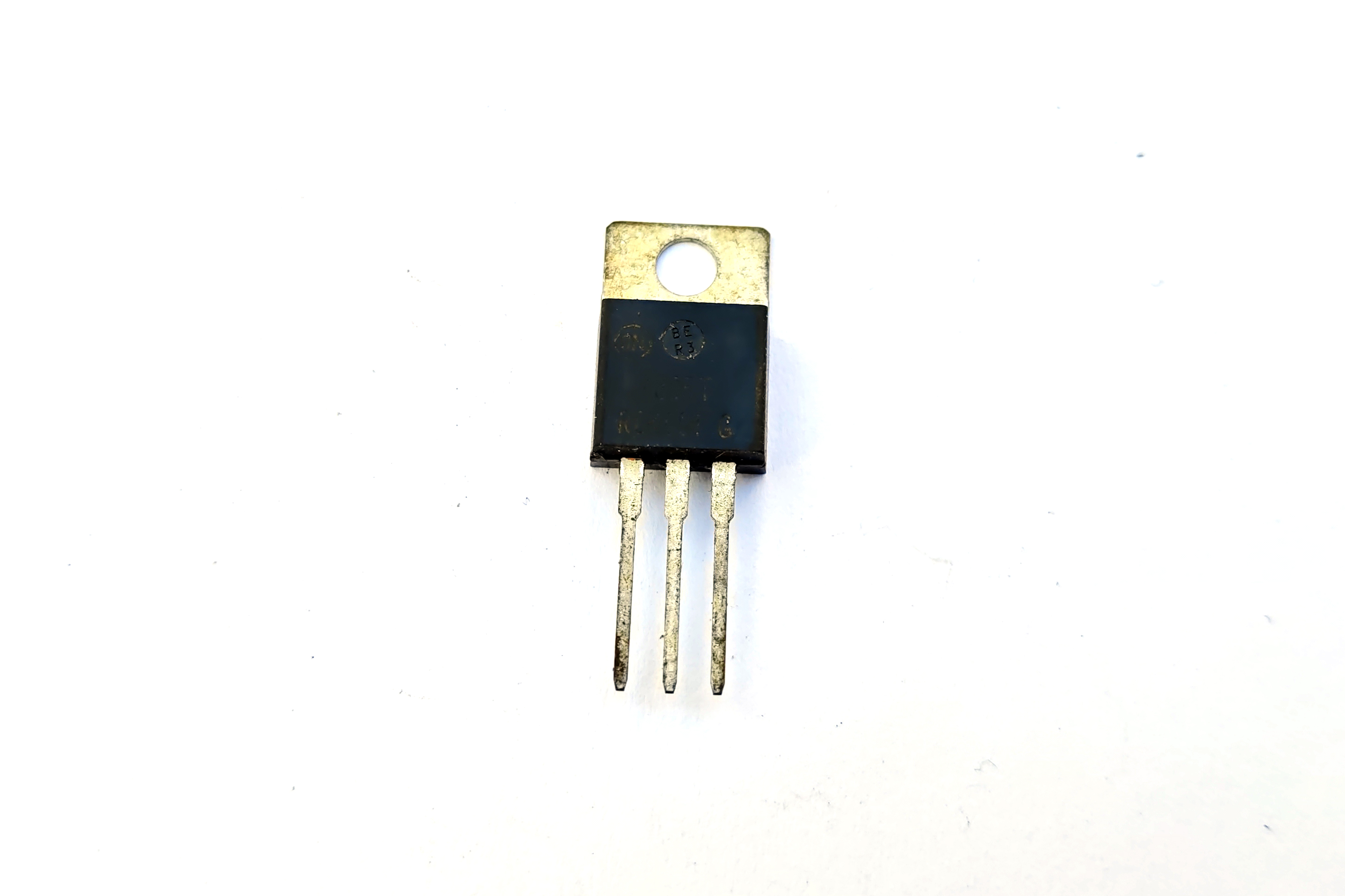
Illustrative power MOSFET. Suyash Dwivedi / Wikimedia Commons · CC BY-SA 4.0
Vishay is bringing two electronic fuse reference designs to electronica in Munich. The first, developed with Altera, uses an FPGA in a bidirectional power path; the second pairs an NXP microcontroller with a unidirectional application. They are examples of how control and protection can be implemented in different circuits, rather than two controllers being put through the same test.
The power path is where the comparison starts. A circuit carrying current in either direction may have an energy source on either side of the protection switch. How the switch blocks current when commanded off, and where the circuit measures current, therefore affect what happens when a fault occurs. In a one-way feed to a load, the normal direction of current is established in advance, although reverse blocking may still be a separate requirement. Those details belong to the circuit design; an FPGA or microcontroller does not, by itself, tell us how the switch behaves.
A useful trace from either demonstration would show the fault current, the signal that triggers shutdown and the point at which current actually stops flowing. Those events need not coincide, especially if the path contains inductance or an alternative route for current. Vishay’s preview does not give the switching topology, trip timings or the test conditions needed to compare the two. It also leaves open whether the controller is in the immediate shutdown path or supervises a separate hardware trip.
The eFuse designs are part of Vishay’s industrial and automotive power display in Hall C4 at stand 478. The company also plans to show insulation resistance monitoring for 400 V and 800 V systems and an 800 V active discharge circuit.
Sources: Vishay electronica announcement.