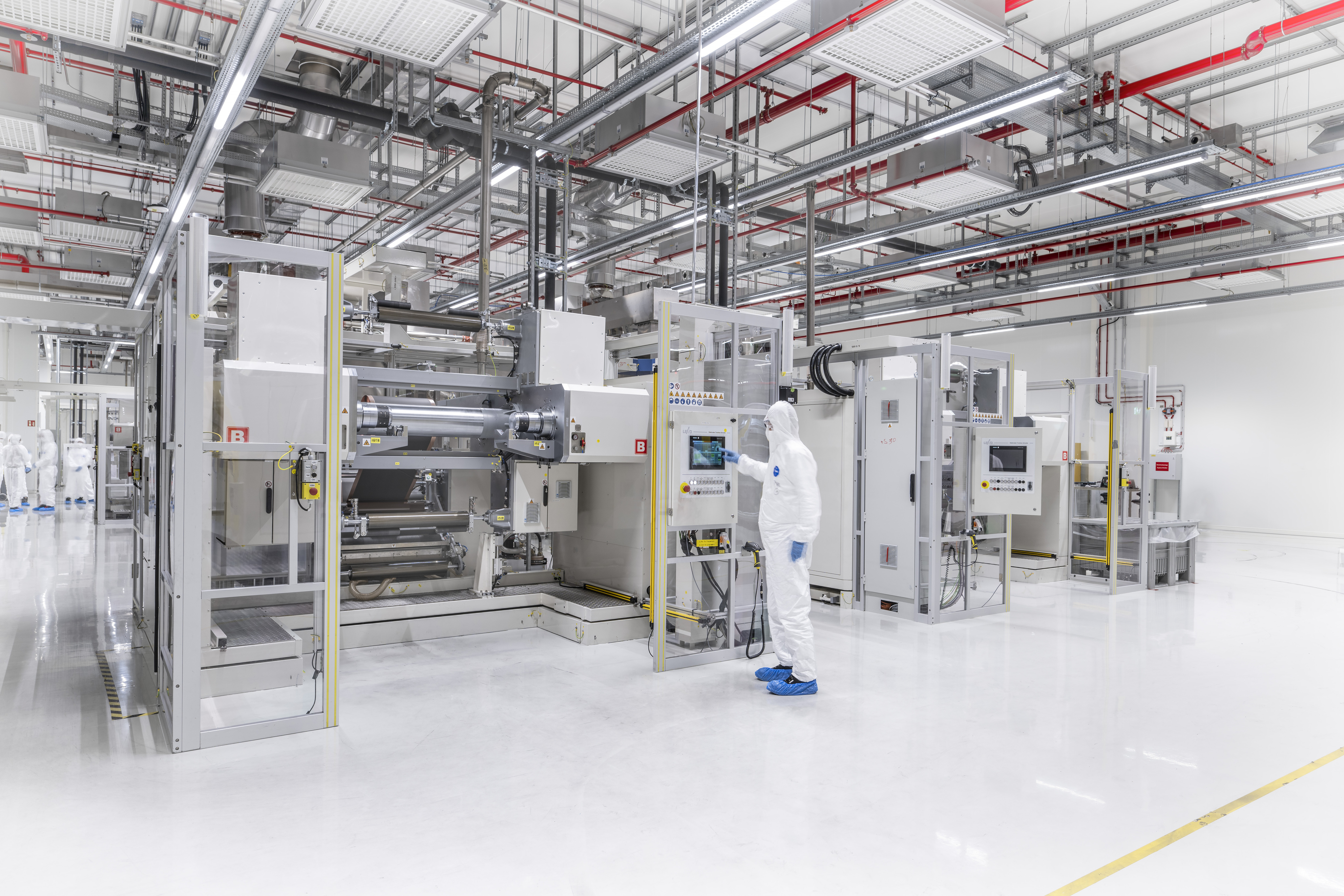
Teradyne brings LPDDR6 and DDR6 support to Magnum E2 memory test
Illustrative image: William Warby on Pexels
Teradyne has introduced a high-speed memory-test platform for emerging DRAM and NAND interfaces, including LPDDR6, DDR6, GDDR7 and enterprise SSD flash.
The Magnum E2 uses Teradyne’s Near-DUT Test architecture, placing digital instrumentation close to the device under test to reduce the length of high-speed signal paths.
Teradyne says this helps preserve signal integrity as memory interfaces move to higher data rates and more complex signalling. The performance and yield benefits remain manufacturer claims until supported by customer production data.
The system will be shown publicly at SEMICON West in San Francisco from 13 to 15 October. Teradyne has not disclosed pricing, delivery dates or named initial customers.
One platform for engineering and production
Magnum E2 will be offered in engineering and production configurations using common hardware and software.
The engineering configuration is intended for qualification and test-program development. The production system is designed to carry those programmes into high-volume manufacturing without moving to a separate platform.
Teradyne lists configurations with up to 64 test sites and 24,500 high-speed I/O pins. Greater parallelism can allow more devices to be tested during each insertion, although realised throughput will depend on the device, test programme, interface speed and handling equipment.
The system supports NRZ, PAM3 and PAM4 signalling through a programmable algorithmic pattern generator.
PAM3 uses three voltage levels to carry more information per symbol than conventional two-level NRZ signalling. That increases the importance of signal integrity, timing margin and accurate generation and capture at the tester interface.
Teradyne says its programmable approach will allow the common hardware to support current and emerging memory protocols without requiring the complete tester to be replaced. Users will need to establish the precise protocol coverage and upgrade path for their planned device generations.
Memory and logic test converge
Magnum E2 also includes logic-test capability.
This reflects a wider change in advanced memory products and packages, where memory dies may be combined with controllers, interface logic or other functions. Testing memory and logic on one platform could reduce the need for separate insertions and simplify the movement of a device from qualification into production.
The benefit will depend on the coverage available for the logic being tested and whether a consolidated programme can meet the required fault coverage without compromising throughput.
For buyers and production planners, the main questions concern configuration, handler and probe-card compatibility, software migration, support for future standards and the point at which production systems will become available.
The launch provides an early indication of how automated test equipment is being prepared for LPDDR6, DDR6 and wider use of multi-level signalling. It does not indicate that those memory standards have already reached broad volume production.