ST’s MIS2DU12 can watch for movement while the host sleeps
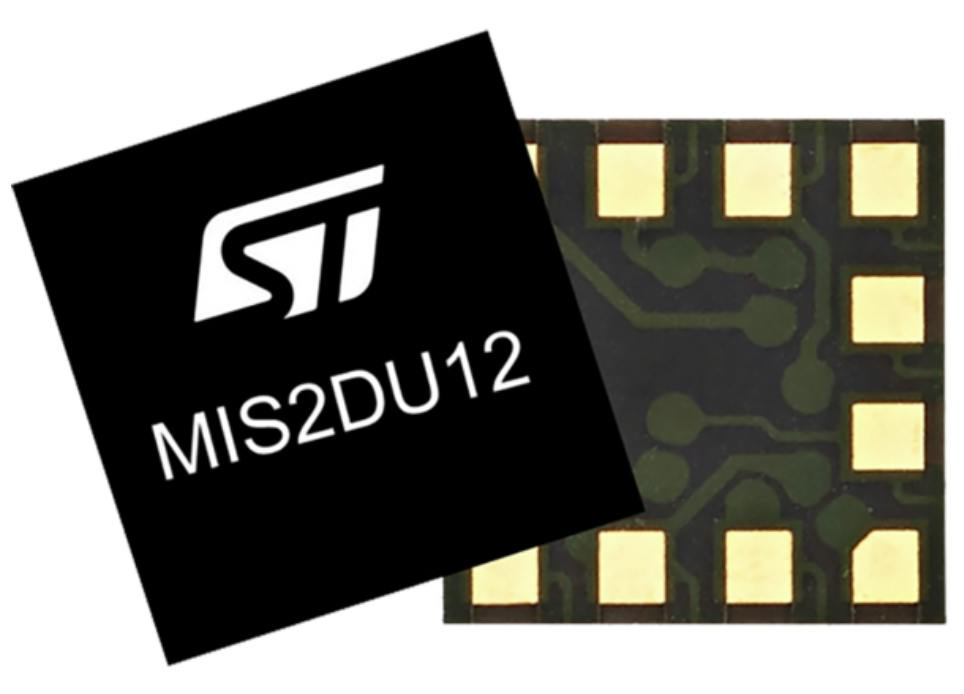
Image: Mouser Electronics
Mouser has highlighted STMicroelectronics’ MIS2DU12 in a stocking announcement for a part it already listed. The three-axis accelerometer can detect movement, inactivity or taps without asking the host to read each sample. A device that spends most of its time waiting for something to move can therefore leave the processor asleep until the sensor has an event to report.
The sampling rate determines how much detail the sensor can collect once something happens. ST quotes 0.47 µA typical in ultralow power mode at 1.6 Hz, using the ±8 g range with bandwidth set to half the output data rate. At that rate there are about 625 ms between samples, too far apart to describe the shape of a brief event. The data sheet gives 6.1 µA typical for normal mode with antialiasing at 200 Hz, measured at 1.8 V in the ±2 g range with bandwidth again set to half the output data rate. Those are two specified operating points within an overall range of 1.6 to 800 Hz and selectable full scales from ±2 g to ±16 g.
Where the host needs the readings themselves, it can let the sensor accumulate them in its FIFO and wake to read a batch. The buffer holds up to 512 accelerometer and temperature samples in high resolution or 768 acceleration samples in low resolution. That keeps the cost of waking the host separate from the rate at which the accelerometer samples. The 2 × 2 mm LGA device runs from 1.62 to 3.6 V with a separate I/O supply and supports I²C, SPI and MIPI I3C.
Sources: Mouser’s 12 November stocking announcement; Mouser’s existing product listing; STMicroelectronics MIS2DU12 data sheet.