Qualifying a second-source component without pretending it is identical
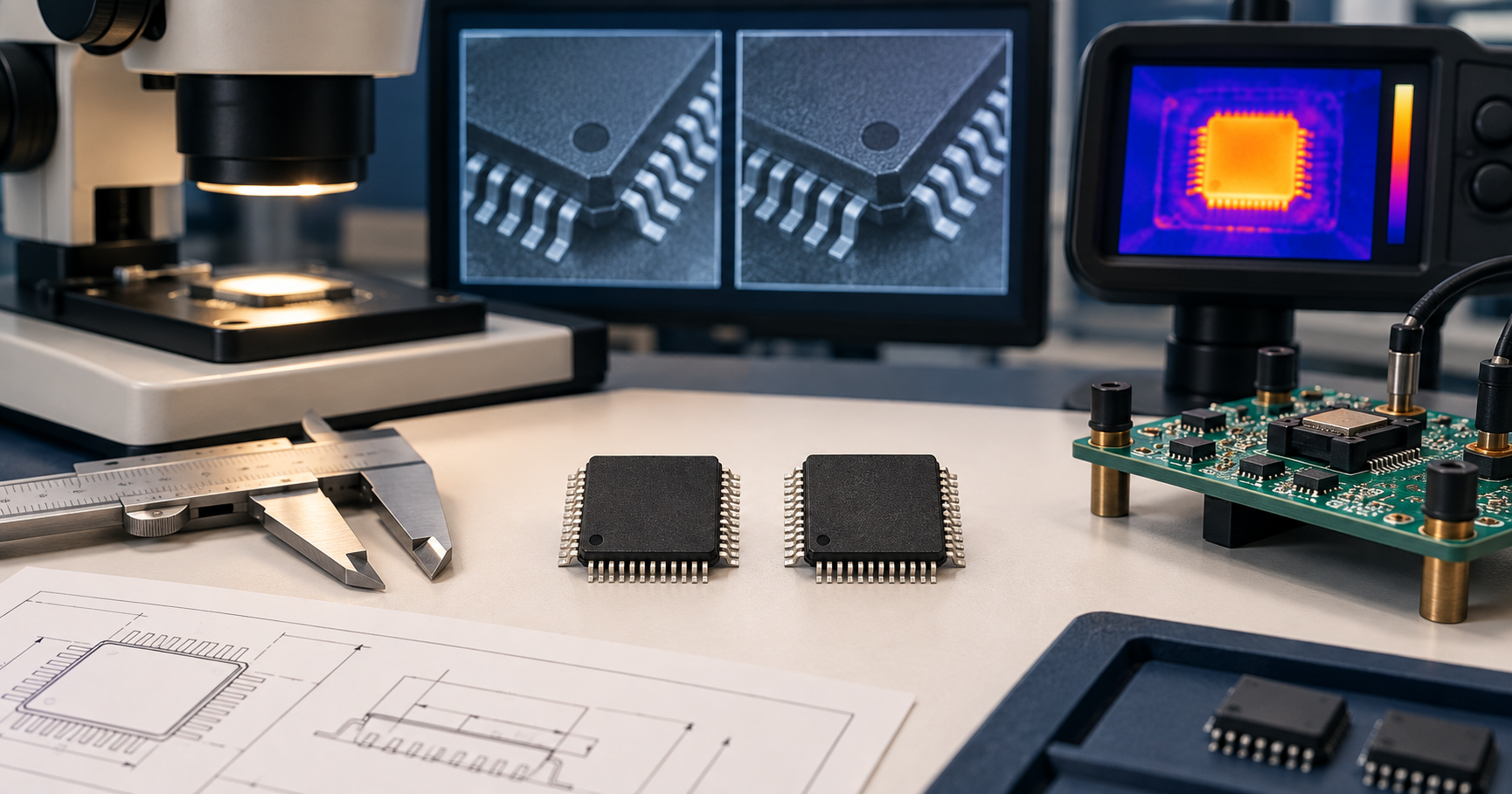
Illustration created for The Electronics Brief.
A second source can reduce supply risk, but a poorly qualified alternative can move that risk into performance, production or field reliability. The useful question is not whether two datasheets look similar. It is whether the proposed part performs acceptably in the actual design, manufacturing process and operating environment.
Establish the reason and boundary
State why the alternative is needed: resilience, cost, obsolescence, allocation or an immediate shortage. Define the products, revisions and regions in which it may be used. An emergency substitute approved for one build should not silently become a universal alternate.
Compare identity and construction
Record manufacturer part number, package, pinout, dimensions, finish, moisture-sensitivity level, temperature grade, qualification status and manufacturing locations. Check marking and packing so receiving and automated handling can distinguish the parts.
Compare limits and real behaviour
Build a side-by-side table of absolute maximum ratings and recommended operating conditions, then compare the parameters that determine behaviour in your circuit. Depending on the component, that may include switching loss, leakage, ESR, tolerance, temperature coefficient, derating, timing, start-up state, analogue performance, RF behaviour or firmware dependencies.
Typical values are not guarantees. Identify the guaranteed limits and the test conditions behind them. Where either supplier omits a parameter that matters, obtain written clarification or test the behaviour.
Validate the assembly and application
Review land pattern, stencil, reflow profile, cleaning, inspection and test coverage. Run application tests at the relevant supply, load, temperature and tolerance corners. Include fault and recovery behaviour where failure can damage another part or create a safety issue.
Qualify the source as well as the part
Confirm the authorised supply route, lifecycle status, lead time, minimum order, traceability and change-notification arrangements. Establish whether the proposed source can supply the required volume for the expected programme life.
Record a controlled decision
The approval record should state the evidence reviewed, tests completed, deviations accepted, products covered and approval owner. Update the BOM and manufacturing documentation. If the alternative is conditional, make the condition visible at ordering and build.
Record fields: part identity; package and process; electrical comparison; application tests; compliance; authorised route; lifecycle; deviations; decision and owner.