Inside European Microwave Week: 6G, radar and the push beyond 100 GHz
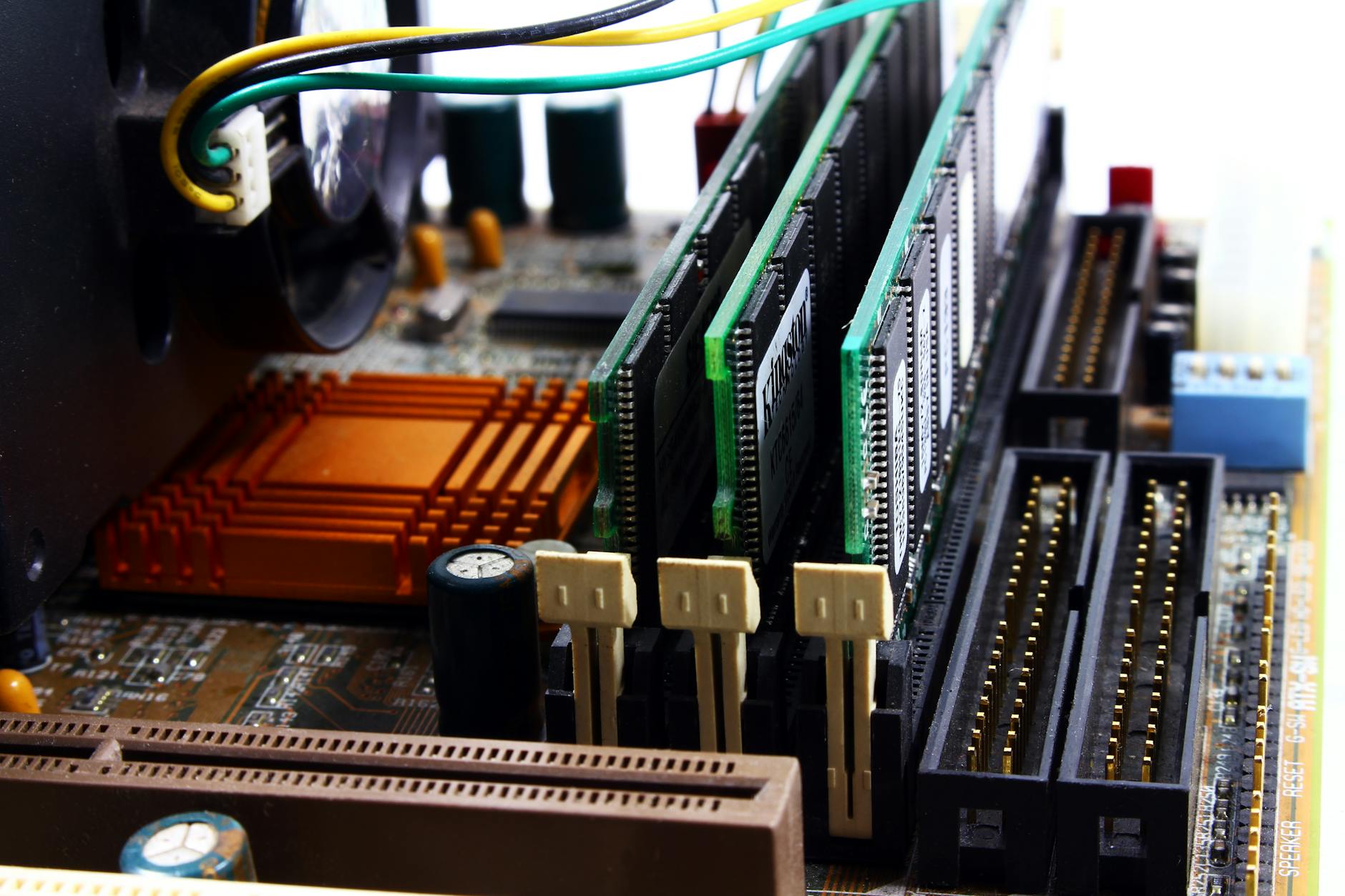
Illustrative image: Tahir Xəlfəquliyev on Pexels
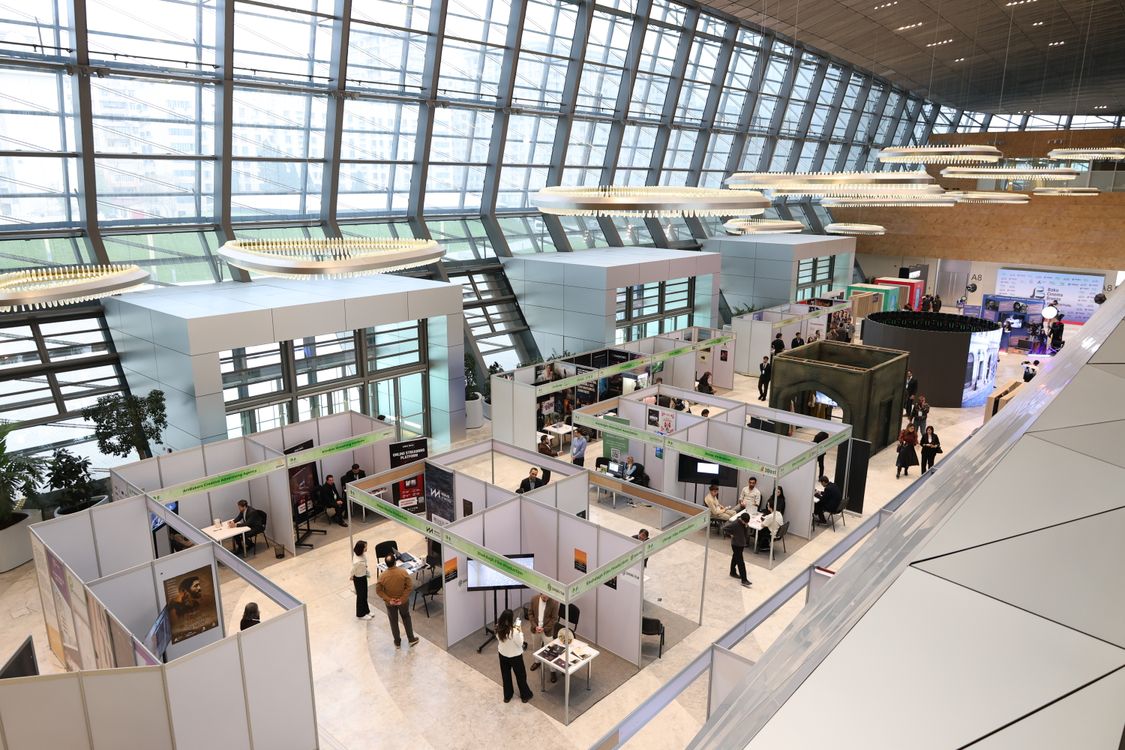
European Microwave Week has returned to London, filling ExCeL with the test equipment, components and research behind the next generation of RF systems.
The wider event runs from 4 to 9 October, while the exhibition is open from Tuesday 6 to Thursday 8 October. More than 300 international exhibitors are taking part alongside three conferences covering microwave engineering, integrated circuits and radar. Separate forums examine automotive, defence, space and 6G technologies.
There is no single product or announcement that defines this year's show. The more interesting story is how several engineering problems are beginning to overlap. Frequencies are rising, usable bandwidths are widening and antennas are becoming more tightly integrated with the electronics around them. That is making accurate characterisation harder at the same time as radar, satellite and wireless systems are being asked to operate in increasingly complex environments.
Measurement is becoming part of the design problem
Some of the busiest stands belong to the test and measurement companies, which is hardly surprising. At millimetre-wave and sub-terahertz frequencies, cables, fixtures, connectors and calibration methods can influence the result almost as much as the device under test.
Keysight Technologies is using its stand at A20 to cover that problem from several directions. Its demonstrations include vector network analysis from RF into sub-THz frequencies, the XG7 signal generator and XA6 signal analyser. It is also showing satellite-link emulation, wideband 6G waveform analysis and multi-channel MIMO evaluation.
AI appears here in a more practical role than the usual conference slogan. Keysight is applying it to design and simulation workflows, including beamformer development, while Anritsu is introducing Tensor at stand K38, which it describes as the first AI-enabled vector network analyser.
Anritsu is also demonstrating distributed measurements using its ME786xA VNA and PhaseLync technology with TMYTEK's XRifle dynamic reconfigurable intelligent surface. Moving the measurement closer to an antenna or device reduces the losses and uncertainty introduced by long high-frequency cable runs, an increasingly important consideration as test frequencies climb.
Rohde & Schwarz has one of the broadest displays at the show. At booth B10, its FSWX multi-channel signal and spectrum analyser is being used in a radar and electronic-warfare scenario to compare the input and output of a digital radio-frequency memory jammer. Another configuration extends wideband measurements into E-band and up to 110 GHz.
The company is also showing its SAM200 system amplifier for Ka- and V-band testing up to 53 GHz and the ZNB3000 vector network analyser, which can reach 330 GHz with external millimetre-wave converters. A see-through version of its ATS1800C chamber gives visitors a look inside the compact antenna test range used for over-the-air measurements of phased arrays.
6G is starting to look like a sensing platform
Much of the early discussion around 6G concentrated on data rates and new spectrum. At EuMW, sensing has become just as prominent. Integrated sensing and communication, usually shortened to ISAC, would allow communications infrastructure to detect and classify objects as well as carry data.
Rohde & Schwarz is demonstrating micro-Doppler emulation with its AREG800A radar target generator. Rather than reproducing only distance, speed and radar cross-section, the system can simulate the smaller movements associated with a rotating drone propeller or moving limbs. Keysight's contribution includes ultra-wideband waveform analysis and multi-channel MIMO testing, bringing the radio and sensing sides of the discussion closer together.
The conference programme follows the same direction. Sessions cover active integrated phased arrays, antenna and electronics co-design, millimetre-wave and terahertz communications, smart satellite apertures and advanced on-wafer characterisation. The recurring challenge is no longer just whether an individual device performs well, but whether an increasingly integrated system can be calibrated, tested and reproduced.
Radar moves beyond the familiar automotive story
The European Radar Conference begins on Wednesday 7 October, with work spanning defence, autonomous vehicles, industrial monitoring, healthcare and space-domain awareness.
Automotive radar remains a major part of the programme, but it is moving well beyond conventional forward-looking sensors. The Automotive Forum includes work on antenna-in-package designs for in-cabin radar, photonic distributed radar and AI-based 4D imaging radar. These approaches promise more detailed environmental information, but also bring more channels, more processing and a more difficult validation task.
Defence and space have separate forums for the first time in 2026. The Defence Forum covers resilient GNSS, UAV detection, electronic spectrum management, direct-sampling RF front ends and next-generation AESA systems. Qorvo is contributing a session on RF technology for smaller and more capable defence platforms, as well as taking part in the Space Forum and wider technical programme.
The component story continues beyond 100 GHz
Behind the headline instruments is a substantial component and manufacturing presence. Altum RF is showing more than 40 GaAs and GaN MMICs at booth L80, covering X-band through to frequencies above 100 GHz. Its featured devices include an 81 to 86 GHz E-band power amplifier specified at 1.6 W saturated output power in bare-die form.
Teledyne's display at stand L210 brings together RF PCB technology, microwave components and assemblies, high-reliability interconnects and semiconductor technologies for radar, satellite communications, defence and electronic warfare. QP Technologies, at booth L46, is concentrating on microelectronics packaging and assembly.
That packaging and interconnect work is easy to overlook beside a 330 GHz analyser or an AI-enabled VNA, but it is central to whether the performance seen on a data sheet survives in a finished product. Package transitions, substrate behaviour, connector repeatability and thermal conditions become less forgiving as frequency and integration increase.
That is the thread running through much of EuMW 2026. The industry is not simply pushing to a higher number on the frequency axis. It is trying to make increasingly complex RF systems measurable, manufacturable and repeatable.
The exhibition remains open at ExCeL London until 17:30 on Wednesday 7 October and from 09:30 to 16:30 on Thursday 8 October. EuRAD and the wider conference programme continue until Friday 9 October.
Sources
- European Microwave Week 2026 official website
- EuMW 2026 general information and exhibition hours
- EuMW 2026 conference and forum overview
- Keysight EuMW 2026 media advisory
- Rohde & Schwarz EuMW 2026 announcement
- Anritsu EuMW 2026 announcement
- Qorvo EuMW 2026 programme
- Altum RF EuMW 2026 announcement
- Teledyne EuMW 2026 event page