Voyager 1’s carrier signal reaches Earth after a full day in flight
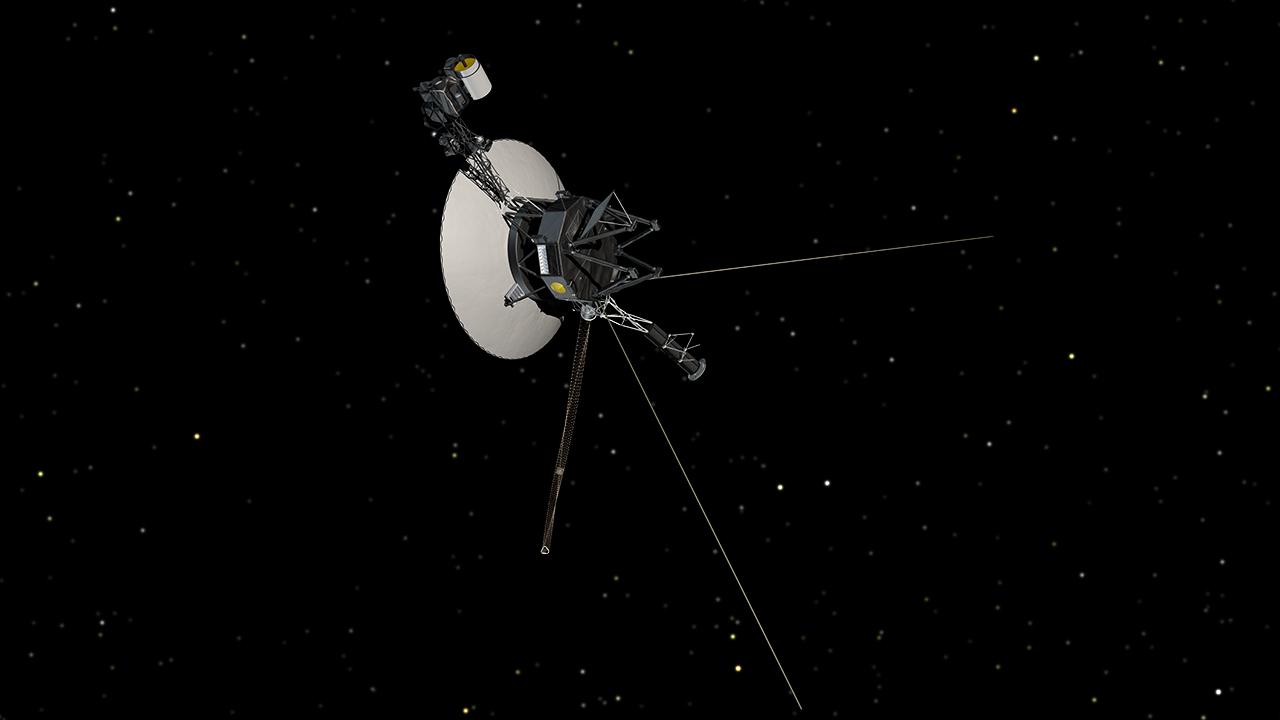
Image: Courtesy NASA/JPL-Caltech
The radio signal NASA used to confirm Voyager 1 was a light-day away reached Earth on 19 November, roughly 24 hours after the spacecraft crossed the threshold. The distance was about 25.9 billion km.
NASA combined the received carrier with its trajectory calculations to confirm the milestone. A carrier can reach a ground receiver even when that receiver gets no usable data from it. At the time of NASA’s announcement there had been no science or engineering telemetry since 14 November, following a separate outage in October when the team lost all contact for about 48 hours. Engineers are investigating whether the incidents are connected.
Voyager’s communications system uses a 3.7 m high-gain antenna, with normal science and engineering downlink carried around 8.4 GHz. By the time the signal reaches Earth, the Deep Space Network’s large dishes provide the receiving end of the link. A command sent to diagnose the fault takes a day to reach Voyager, with a further day before the receiver on Earth can pick up a response.
The radio equipment shares a shrinking power supply with the rest of the spacecraft. NASA says each probe loses about 4 W of available power a year as its radioisotope supply declines, and earlier in the year engineers switched off three devices aboard Voyager 1 in favour of lower power alternatives.
Artist’s impression of Voyager in space.