The Friday Briefing: The hardware around AI takes centre stage

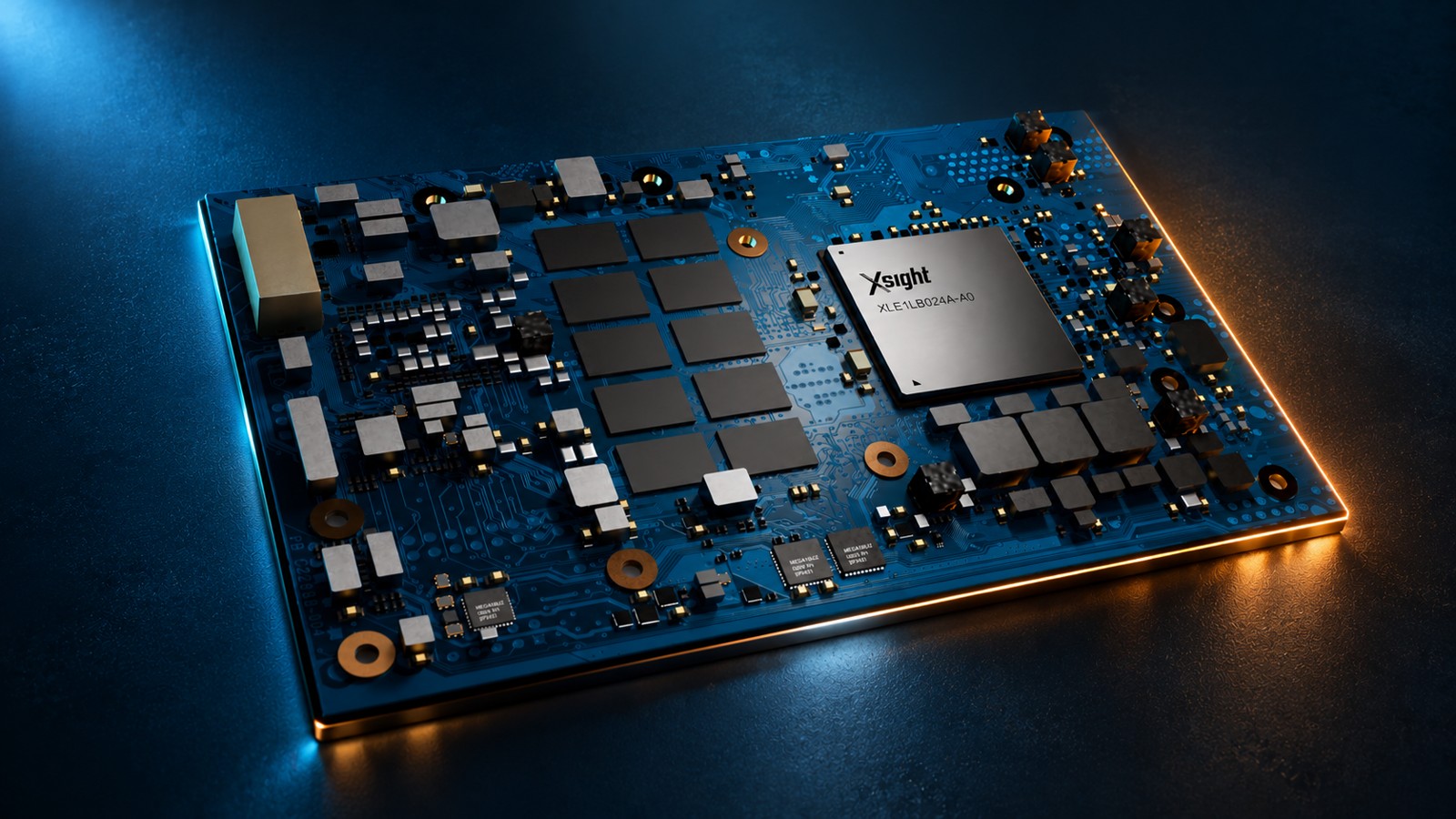
AI-generated illustration: The Electronics Brief
A new component can be exciting right up to the point where you have to design it into something.
Then the questions change. How much power will it really need? Where will the heat go? Can it be bought at the price in the cost model? And if the specification changes halfway through development, how much of the work will have to be done again?
There is room for both enthusiasm and a certain weariness in that process. A better device can open up a design that previously looked impossible. It can also mean another evaluation board, another set of measurements and another conversation about why the schedule needs some breathing room. The satisfaction comes when it all works together, particularly when the solution is simpler than the first attempt.
That perspective is useful when looking at an electronics industry whose most visible story is AI. The opportunity is substantial, but the view from a design review can be rather different from the view in a product launch. An industrial controller, a medical instrument or a piece of test equipment still has to meet its own requirements. More processing performance is only valuable if the product can afford it in power, space, cost and development time.
The wider market offers reasons for optimism. In its September survey, published on 4 October, the Electronic Components Industry Association reported stronger component sales sentiment than in August. Chief analyst Dale Ford called the results “a very pleasant upside”. It is an encouraging supply-chain signal, although a sentiment survey cannot tell us how comfortably any individual design programme is progressing.
Meanwhile, costs can reopen decisions that appeared settled. Explaining price rises for the 2GB Raspberry Pi 4 and 5 on 1 October, Eben Upton acknowledged that “price increases obviously impact your plans”. The company pointed to rising memory costs and encouraged customers to reconsider how much memory their applications actually need. That is a small but revealing example of a wider engineering tension: leave enough headroom for the future, without making today’s product unnecessarily expensive.
There is a fair challenge here for an industry that likes to measure progress in higher specifications. Are we making it easier to deliver a useful, dependable product, or simply giving the people responsible for it more to accommodate? Adding capability is exciting. Finding the time, budget and confidence to use it well is another matter.
This week’s stories are interesting because several address that second part. Microchip and Navitas are working on the power-conversion path. Infineon is adding digital power-control expertise. Lattice and Arm are tackling server management, while Keysight and Anritsu are addressing the practical work of setting up tests and measurements.
Those announcements still need to prove their value in use. But they give this Friday Briefing a more grounded kind of optimism: the prospect of better tools and components that help a team get a design finished, tested and into production. That deserves attention alongside the next headline performance figure.
800 V power moves closer to the board
Microchip and Navitas announced an 800 V DC-to-6 V DC reference design on 5 October, combining Microchip’s dsPIC33AK digital signal controller and TA100 security IC with Navitas GaNFast power devices.
The voltage change is the central feature. The companies describe a converter that combines functions otherwise handled by separate 800 V-to-50 V and 50 V-to-6 V stages. The 6 V output is an intermediate supply; further regulation is still needed for a processor’s core rails.
Digital control and authentication sit alongside the power hardware, with reference software and documentation supplied for evaluation. That gives the announcement more substance than a switching-device specification alone.
It remains a reference design, rather than evidence that 800 V racks are already widely deployed. Microchip and Navitas plan to show the platform at next week’s OCP Global Summit. The interesting step this week was making one part of the proposed power architecture available for engineers to examine.
Infineon adds intelligence to the power path
Infineon’s completed acquisition of Bengaluru-based C2i Semiconductors, also announced on 5 October, approached the same broad problem from another direction.
C2i specialises in software-defined multiphase controllers and smart power stages for AI data centres. Its team joins Infineon’s Power Systems division, adding digital control expertise to a portfolio spanning silicon, silicon carbide and gallium nitride power technologies.
That combination matters because the load is moving as well as growing. AI processors can demand rapid changes in current, making the behaviour of the regulator and its control loop important alongside conversion efficiency.
Infineon presents the deal as support for power architectures extending from the grid to the processor. The acquisition itself is complete; the next-generation products it is intended to support remain development work. It is a clear indication of the company’s priorities, rather than a finished answer to every AI power problem.
Server management gets its own architecture
Lattice’s collaboration with Arm, announced on 7 October, concentrated on the control and management hardware surrounding the server CPU.
In the proposed Arm AGI CPU server platform, Lattice FPGAs work alongside the CPU and baseboard management controller. AMI firmware provides boot and management capabilities, while the FPGAs support secure control, connectivity and platform adaptability.
The collaboration also uses the LTPI interface to connect the host processor module with the data-centre secure control module under Open Compute Project specifications. Open interfaces are an important part of the story: modular infrastructure needs its constituent parts to work together as platforms change.
The joint solution is due to be demonstrated at the OCP Global Summit on 12–15 October. For now, the announcement shows how much of a server’s architecture concerns trust, management and integration as well as processing performance.
The test lab has a physical bottleneck too
Keysight’s Velocity 4900 announcement on 7 October brought the focus back to a familiar problem: somebody still has to change the connections between test equipment.
The new Layer 1 automation switches make those physical test topologies configurable through software. Teams can save and reproduce arrangements and share equipment remotely, instead of relying on manual cable changes for each setup.
This is connectivity automation within a network test lab. It does not remove the need to define the right tests or interpret their results. Its value is in making the physical setup more repeatable and easier to incorporate into automated development workflows.
Keysight is taking orders for the initial 4902 and 4906 models, with first deliveries planned for January 2027. That timing is worth keeping in view: this week brought a product announcement, not an installed base already delivering those benefits.
RF measurement becomes easier to navigate
European Microwave Week gave the week’s measurement coverage another focus. Anritsu’s programme for the 6–8 October exhibition in London included its AI-enabled Tensor vector network analyser.
The product was announced before this week. Its relevance here was the planned demonstration of assisted workflows for amplifier, mixer and millimetre-wave measurements, including guidance on calibration, instrument commands and reporting.
That is a more grounded application of AI than treating it as a replacement for measurement expertise. An assistant can help an operator navigate a complicated setup, but the calibration, connections and measurement conditions still determine whether a result is useful.
Anritsu’s programme and Keysight’s announcement address different parts of the bench. One helps configure demanding measurements; the other changes physical connectivity. Both reflect the time and effort that can be consumed before the measurement itself begins.
The pattern beneath the announcements
Last week’s briefing looked at changes in how electronics is designed and built. This week brought several examples of the supporting work those ambitions require.
Power conversion needs control and security. Server platforms need management hardware and interfaces. Test automation needs a way to reach the physical equipment, while sophisticated instruments need workflows that people can use reliably.
The announcements do not establish that all these problems have been solved. They do show suppliers investing in them. As attention stays fixed on the latest processor, it is worth watching the less conspicuous hardware that determines whether a complete system can be powered, managed and tested.
Something you might have missed? Chips built for neural devices
MintNeuro announced a $5 million investment round on 7 October to expand its specialised semiconductor platform for neural devices.
The London company develops modular chips for functions including neural sensing, signal processing and stimulation. It says the funding will support product launches, deliveries of pre-release silicon to partners, hiring and international expansion.
MintNeuro reports working silicon and integration milestones with partners including Motif Neurotech and Amber Therapeutics. The next task is broader commercial adoption.
It is a different market from AI infrastructure, but another example of specialised supporting electronics shaping what a complete device can do. Funding and partner milestones are meaningful progress; they should not be read as evidence of regulatory approval or established clinical performance.
Sources
ECIA: September Industry Pulse survey, published 4 October
Eben Upton: Raspberry Pi pricing announcement, 1 October
Microchip and Navitas: 800 V-to-6 V reference design, 5 October
Infineon: completion of C2i acquisition, 5 October
Lattice: Arm collaboration, 7 October
Keysight: Velocity 4900 announcement, 7 October
Anritsu: European Microwave Week demonstration programme, announced 17 September