Siemens plans to bring Simcenter X simulation to Microsoft Azure
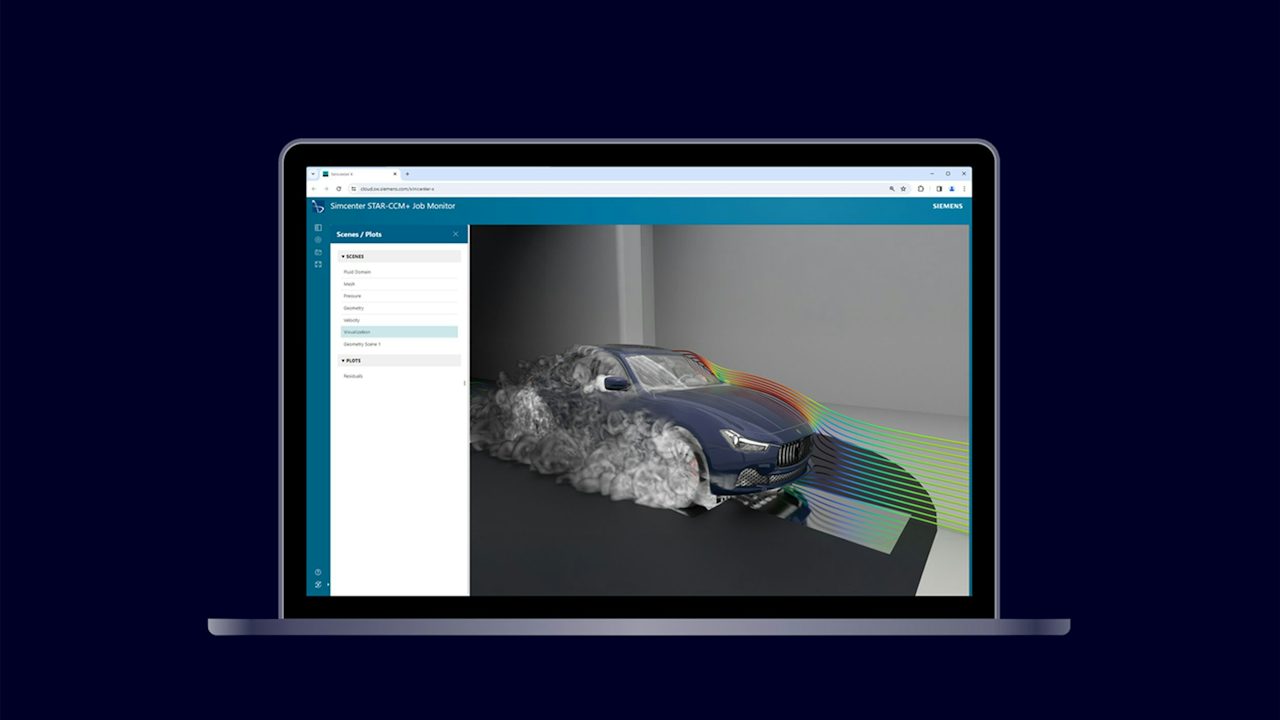
Image: Siemens AG
Siemens plans to make Simcenter X available through Microsoft Azure and Microsoft Marketplace, adding another cloud route to its engineering simulation portfolio. Announced on 18 November, the collaboration is intended to expand deployment options and access to high-performance computing for simulation workloads.
Simcenter X already spans computational fluid dynamics, mechanical and system simulation, together with multidisciplinary design analysis and optimisation. Its supported applications include STAR-CCM+, Simcenter 3D, Femap, Amesim and HEEDS, bringing different modelling and design-exploration tools under a common licensing and data-management framework.
The suite has two delivery models. Simcenter X Advanced runs applications on local hardware while using cloud-managed licensing and data services, whereas the existing HPC and remote desktop offering provides a browser-based CFD workflow on infrastructure configured and managed by Siemens. Its current product page identifies that infrastructure as AWS.
Azure is a planned addition to this arrangement. Siemens has not given a commercial launch date, pricing or an application-by-application availability schedule for the Microsoft offering.
Thermal simulation within the portfolio
STAR-CCM+ connects the suite to electronics and power-system development through fluid flow, heat transfer and multiphysics modelling. The software supports coupled thermal and fluid analysis, including electronics cooling and battery thermal management, with meshing, solver execution and post-processing in the same environment.
For existing electronics cooling workloads, Siemens’ STAR-CCM+ 2502 release added GPU-native material-property methods for orthotropic, anisotropic and transversely isotropic materials. These support cases in which thermal behaviour varies with direction, extending the types of battery and electronics cooling analysis that can use GPU acceleration.
The current Simcenter X licensing framework combines named-user access and floating solver tokens, while the HPC and remote desktop product uses credits for time-based computing access. Siemens has not announced changes to those terms for Azure.
Sam Mahalingam, executive vice president for Simulation, HPC and AI at Siemens Software, said the collaboration is intended to give customers “greater flexibility in how they access and scale simulation”. Siemens presented its plans during Microsoft Ignite in San Francisco, which runs from 17 to 20 November.
Sources: Siemens: Azure announcement, 18 November 2026; Siemens: existing Simcenter X applications, deployment and licensing; Siemens: STAR-CCM+ multiphysics capabilities; Siemens: STAR-CCM+ 2502 GPU capabilities, background.
Simcenter STAR-CCM+ showing airflow around a vehicle. Image: Siemens AG.