MountAIn takes complete vision applications onto small embedded processors
Illustrative image: Mother Flocker on Unsplash
Grenoble-based MountAIn is expanding the commercial rollout of MountainCore, its software platform for running complete computer vision applications on inexpensive embedded processors. A €7.3m seed round will support that work and its growth in Europe and the United States, following an industrial camera demonstration and a wildfire detection pilot in southern France.
MountainCore’s remit extends beyond fitting a neural network into memory. The SDK brings model optimisation together with the processing around it, so sensor input, pre-processing, inference, post-processing and data movement can be prepared for the same target. The model graph is optimised against that hardware’s constraints before being passed to its backend compiler, while the runtime coordinates execution within the device’s existing software stack.
Before a detector’s output can trigger an alert, the camera must prepare its image and interpret the inference results, then decide what to store or transmit. Those stages share the device’s memory and processing resources with the neural network, so optimising the model alone leaves part of the application’s workload outside the calculation.
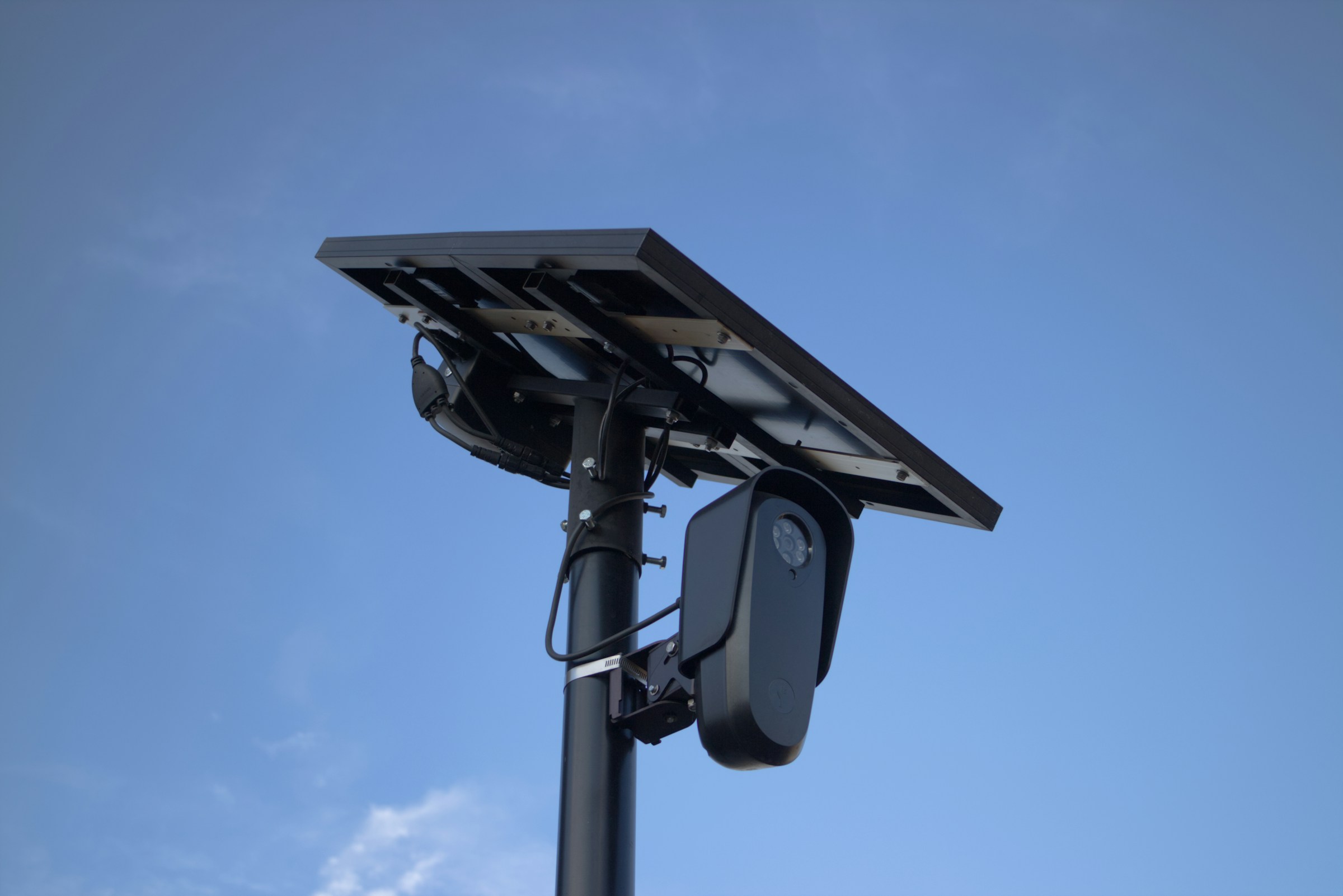
MountAIn offers the foundation through several routes: Ready supports evaluation within hardware ecosystems, while Onboard targets products whose hardware and software have already been selected. The company’s IBEX vision system applies the same approach to remote monitoring, processing images locally and sending compact event information upstream instead of requiring a continuous video stream.
From a trained model to a solar powered camera
An integration announced in October connects Roboflow’s model training platform to the camera. Users train a model on their own images, then pass its weights through Roboflow’s Python package to MountAIn Studio, which compiles it for the camera’s neural processor and deploys it over USB. Roboflow identifies YOLO11n, YOLOv8n and YOLO26n among the supported exports, with RF-DETR Nano support still planned.
IBEX combines a solar panel and small battery with local processing and satellite alerts. Roboflow reports that a pilot in southern France has used the camera to detect wildfire smoke since July 2024, providing an application in which a short event message can replace the need to move video from a remote site. Other proposed tasks include wildlife monitoring and flood detection, with each deployment trained for the conditions and objects it needs to recognise.
MountAIn says MountainCore can reduce a model’s memory requirements by up to threefold while preserving its accuracy without retraining. The optimisation also targets on-chip AI accelerators, bringing the model onto hardware that executes neural networks alongside its general purpose cores.
The current IBEX product route offers RGB, near infrared and long wave infrared sensing options, with the sensor, model, processor and connectivity configuration defined for the particular site. A separate fleet layer provides configuration and status information across installations, extending the system beyond the inference code running on an individual camera.
Industrial imaging provides another application: Teledyne e2v demonstrated MountainCore with its Perciva 5D camera, combining 2D and 3D vision at VISION Stuttgart this year. MountAIn is also working with Alif Semiconductor on its Ensemble and Balletto processor families, with further demonstrations planned for CES in January 2027.
Sources: MountAIn: original commercialisation announcement, 17 November 2026; MountAIn: Core architecture and SDK; MountAIn: IBEX sensing and deployment configurations; Roboflow: original integration and deployment workflow, 21 October 2026.