How to build a BOM that can survive shortages and obsolescence
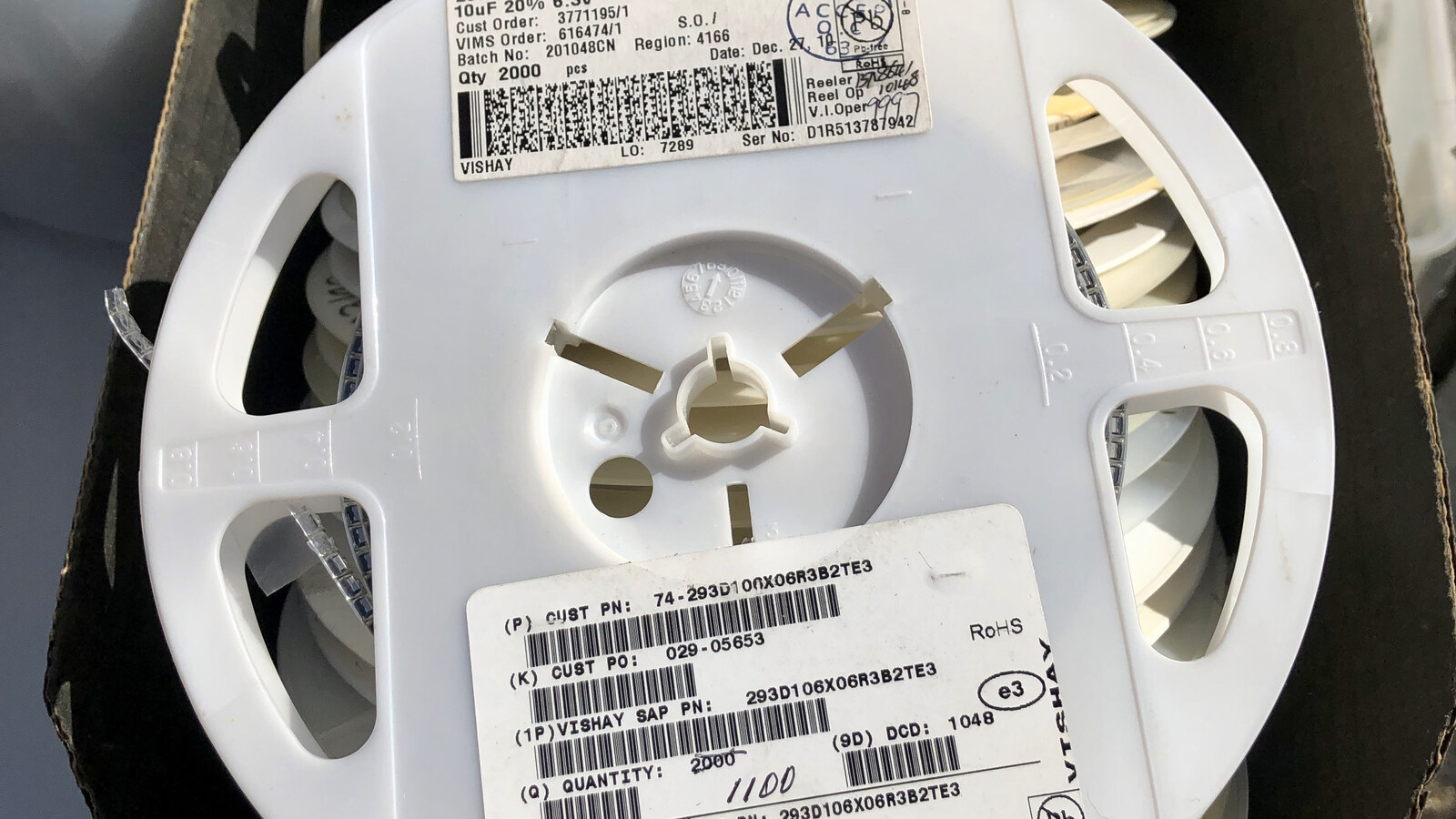
Photo by ArnoldReinhold via Wikimedia Commons, licensed under CC BY-SA 4.0. Cropped from the original.
A bill of materials can be perfectly accurate and still leave a product dangerously exposed.
It may describe every fitted part while concealing that one device is already not recommended for new designs, that another has no approved alternative and that a third was bought through a channel unable to provide traceability.
These weaknesses often remain invisible during prototype builds. The volumes are small, engineers can search for parts manually and shortages can be solved by buying a few devices from wherever stock happens to exist. Production turns those conveniences into dependencies.
A resilient BOM has to serve engineering, purchasing, manufacturing and quality at the same time.
Start with an exact manufacturer part number
Descriptions such as “10 k resistor” or “3.3 V regulator” are not sufficient control data.
The manufacturer part number should identify the exact electrical specification, package, tolerance, temperature grade and packing option where that option affects manufacturing. Internal part numbers can remain useful, but they should resolve to an approved manufacturer part rather than replace it.
Distributor catalogue numbers should normally sit in a separate field. They describe a purchasing route, not the technical identity of the component.
Record lifecycle status as live information
Manufacturers commonly use stages such as active, not recommended for new designs, last time buy and obsolete. The labels vary, so the BOM should retain both the manufacturer’s wording and the date on which it was checked.
An active part is not a promise of indefinite availability. It is a current status that needs monitoring.
Product change and discontinuance notices are equally important. Texas Instruments states that its standard obsolescence schedule normally provides 12 months for final orders and another six months for delivery. Analog Devices publishes a standard 12 month last time buy period and 18 month last time ship period. Those windows can sound generous until a redesign, software change, compliance test and customer approval must all fit inside them.
Identify every single source dependency
Single sourcing is not automatically poor engineering. Some functions have only one credible device and some alternatives would impose greater cost or technical risk than the shortage they are meant to prevent.
The problem is an unrecognised single source.
Flag any line where only one manufacturer, package, fabrication process or authorised supply route can satisfy the design. Then record the consequence of losing it. A unique microcontroller may require a board and firmware redesign. A less obvious connector may affect tooling, the enclosure and regulatory approvals.
The priority should reflect recovery time, not simply component price.
Approve alternatives before they are urgently needed
Adding a second manufacturer part number to a spreadsheet does not make it interchangeable.
The alternative must be checked against the electrical, mechanical, thermal, environmental, software and manufacturing requirements of the application. The necessary evidence might range from a drawing review for a passive component to a complete qualification programme for an analogue device, memory product or microcontroller.
Record whether an alternative is fully approved, approved for defined builds, awaiting testing or included only as a candidate. Purchasing needs to see the difference immediately.
Capture the package details that affect assembly
Nominally equivalent parts can arrive in packages that use different land patterns, heights, materials, moisture sensitivity levels or terminal finishes.
Packing also matters. Reel diameter, tape width, pitch, orientation and minimum order quantity can affect whether a part runs on the existing placement process and whether it can be bought economically at the required volume.
Where storage life matters, keep the manufacturer’s handling information with the approved part record. Texas Instruments notes that semiconductor shelf life depends on packaging materials, moisture sensitivity, moisture barrier bags, desiccant and storage conditions. A quantity in stock is not necessarily a quantity ready for use.
Separate availability from authenticity
Stock displayed online is not proof of authorised or traceable product.
The Electronic Components Industry Association says the strongest protection against counterfeit components is to buy through authorised distributors. That does not remove every supply risk, but it preserves a traceable relationship with the manufacturer and reduces the uncertainty surrounding storage, handling and provenance.
If independent distribution must be used, the BOM and quality plan should identify the additional inspection, testing and documentation required. Emergency buying should not quietly create a new approved route.
Add commercial risk without pretending to predict the market
Lead time, minimum order quantity, price breaks and geographical availability all matter, but they change too quickly to be treated as permanent attributes.
Store the observation date and source. Use ranges or risk bands where false precision would mislead. The purpose is to expose concentration and volatility, not to claim that today’s quotation will remain valid next year.
Country of origin and manufacturing location may also matter for customer rules, trade restrictions and local content requirements. These fields need controlled definitions because wafer fabrication, assembly and final test can occur in different countries.
Give every risky line an owner
A warning without an owner becomes background noise.
For critical components, name the person or function responsible for lifecycle monitoring, alternative qualification and response to a change notice. Define when an issue must be escalated and who can authorise a substitution.
The BOM should also retain the design revision and the evidence behind each approval. Otherwise a useful alternative qualified for one product may be copied into another product where the conditions are different.
Treat the BOM as part of the design
Resilience is strongest when it is considered during architecture and component selection. It becomes more expensive once layout, firmware, compliance work and manufacturing equipment depend on the original choice.
A good BOM therefore answers more than “what do we fit?” It shows what else may be fitted, what evidence supports that decision, where the supply risk sits and who must act when the situation changes.
That turns the BOM from a purchasing output into a controlled engineering asset.
Technical references: Texas Instruments product lifecycle definitions; Texas Instruments change and discontinuance policy; Analog Devices product lifecycle information; ECIA guidance on trusted sources.