Anthropic’s $81.3bn IPO puts the cost of running Claude in the spotlight
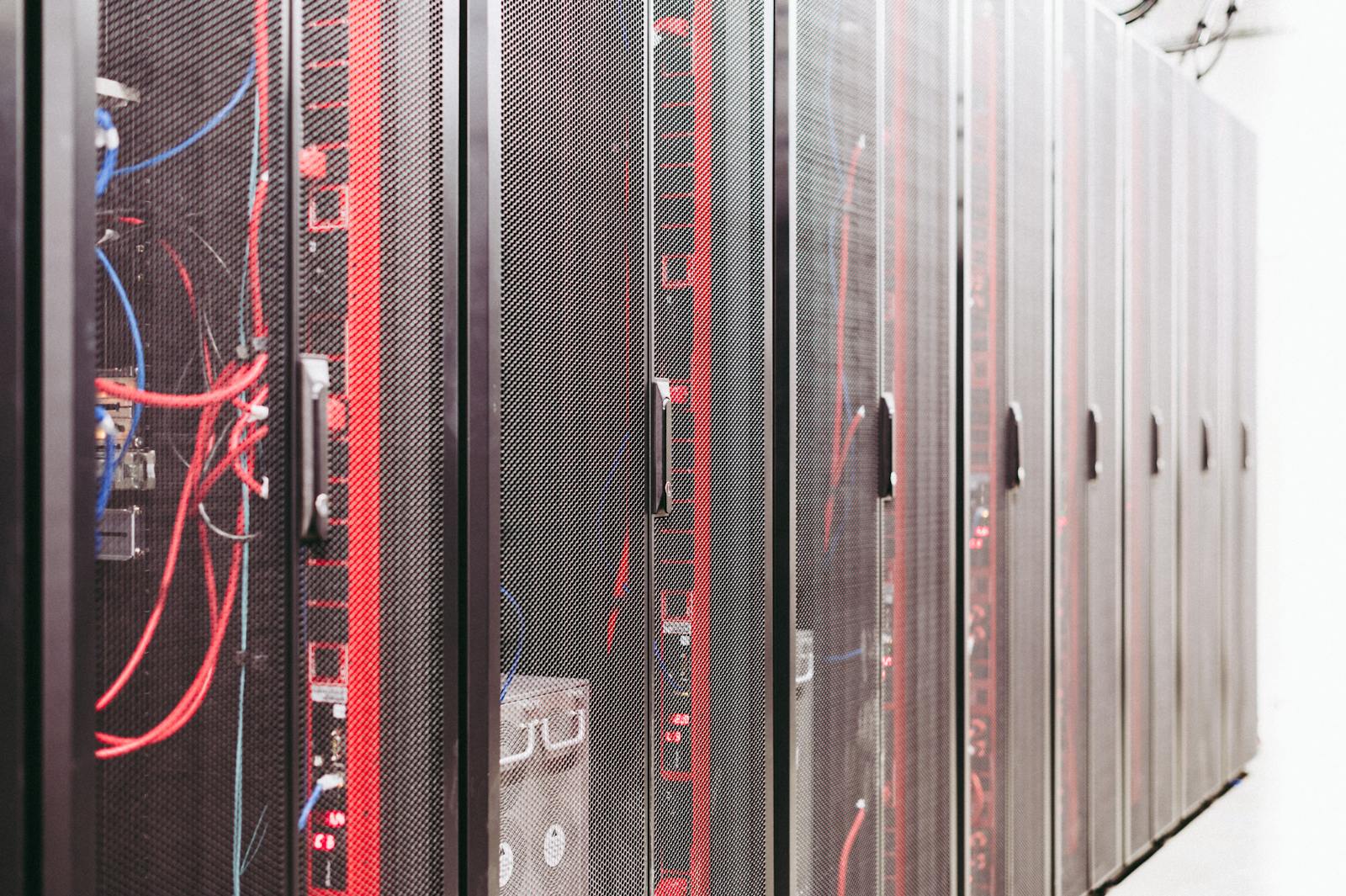
Server racks and network cabling in a data centre. Photo by Brett Sayles via Pexels. Pexels licence.
Anthropic priced its Nasdaq IPO at $83 a share, above its original range of $70 to $78, and increased the offering to 980 million shares. At $81.34bn, it is the largest IPO on record and values the company behind Claude at about $1.5tn on a fully diluted basis. The shares are due to begin trading today under the ticker ANT.
About $79.4bn of the public offering goes to Anthropic before fees and expenses, with the remaining $2bn going to existing shareholders who are selling. A separate $26bn private placement at the same share price brings Anthropic’s own gross proceeds to about $105.4bn. Several of the companies putting up that extra money also supply the computing capacity Claude runs on.
The cost of keeping up with demand
Anthropic reported $17bn in revenue for the three months to September, up from $1.4bn a year earlier as customers made greater use of services including Claude Code. That took revenue for the first nine months of 2026 to $33.2bn, against a reported net loss of $104bn. Around $94.3bn of that loss came from revaluing convertible notes and other financing instruments, largely because Anthropic’s own valuation had risen. Its operating loss over the same period narrowed from $5.2bn to $1.3bn.
The quarterly figures show how quickly the cost of securing more capacity can eat into that growth. Compute and infrastructure expenses reached $9.9bn in the September quarter, or 58% of revenue, up from 48% in June. The bill included $5bn of capacity bought under short-term commitments, which Anthropic says cost significantly more than comparable capacity booked under multiyear deals. That expense, together with a $2bn non-cash charge for its donation matching programme, helped turn June’s $974m operating profit into a $567m loss.
Booking capacity years ahead cuts the need to buy at short notice, but it can leave Anthropic paying for capacity it does not use. Its Google hosting agreement alone carries a minimum spend of about $121.3bn through July 2033, subject to specified adjustments and exceptions. Across its contractual obligations, Anthropic expects to pay about $70.7bn in the 12 months following September 2026, of which $4.2bn is subject to conditions or termination rights before the relevant arrangements begin.
The hardware behind each answer
Anthropic trains and runs Claude on Amazon’s Trainium chips, Google’s tensor processing units and Nvidia GPUs. Its agreement with Google and Broadcom adds several gigawatts of next-generation TPU capacity expected to start coming online in 2027. Using several chip platforms gives Anthropic more places to buy capacity and more scope to match the hardware to the workload.
Take a long Claude Code session. As the model generates an answer, it repeatedly reads cached information about earlier tokens. The longer the context, the more data there is to move, so memory bandwidth can limit response speed even when the accelerator has arithmetic capacity to spare. Amazon’s Trainium3 pairs 144 GB of HBM3e with 4.9 TB/s of memory bandwidth per chip, about 70% more bandwidth than Trainium2. For a service that charges by usage, the practical question is how many tokens the system can deliver at a response time users will accept.
When the chip supplier is also a shareholder
Google and Nvidia are each putting $10bn into the private placement, with AMD contributing $2.5bn and Broadcom, Micron, Microsoft and TSMC also taking part. AMD’s deal shows how closely financing and procurement can be tied together. Its share purchase counts towards a $5bn equity commitment linked to a hardware agreement covering Helios rack systems with Instinct MI450 GPUs. Access to the rest depends on when the hardware is delivered and deployed.
There is a commercial logic to a chipmaker helping a large customer finance a rollout. AMD can benefit from selling the hardware and from a rise in Anthropic’s valuation, but an order for more racks only tells us so much about what Claude’s customers are willing to spend. Anthropic still has to put enough paid work through those racks to cover the cost of running them.
There is a UK link in the prospectus too. Anthropic’s deals with subsidiaries of London-based Nscale are worth up to $44.6bn through 2033 for access to Nvidia GPU capacity, but fees only start accruing as Anthropic takes delivery and accepts it. Nscale must also make best efforts to secure qualifying finance for the chips and data centre infrastructure. For the businesses selling power, cooling and networking equipment into those projects, the dates to watch are when the financing comes together and when the capacity is due to go live.