Why a smart lock needs more than Matter
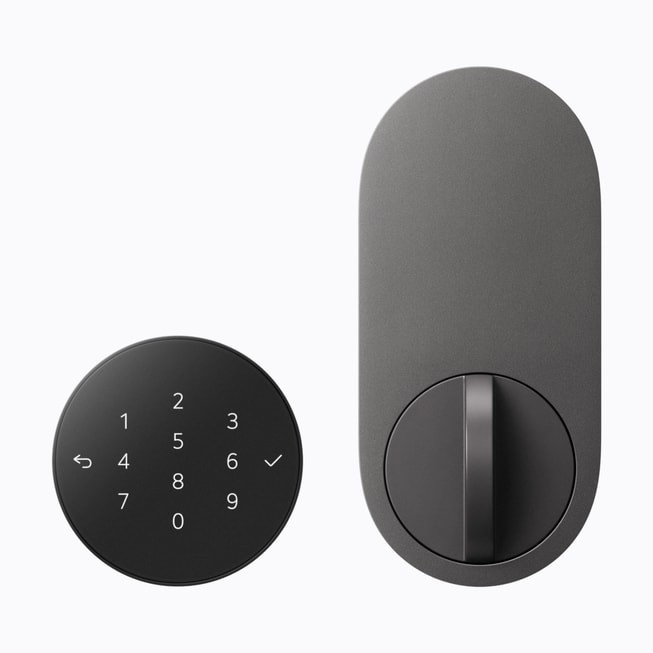
Image: Apple / LG Electronics
LG’s new smart deadbolt for Apple Home Collection combines several forms of connectivity. Apple says it supports Matter and Aliro, uses ultra-wideband to detect an approaching user, and retains core access functions locally without an internet connection.
That combination illustrates the separate jobs involved in a connected lock: integrating it with a building-control system, authenticating a credential and determining whether the authorised device is close enough to open the door.
Matter and Aliro address different parts of that arrangement. Aliro defines communication and credentials between a user device and an access reader. Its 1.0 specification supports NFC for tap-to-access, Bluetooth LE for user-initiated communication, and Bluetooth LE with UWB for hands-free authentication.
The Connectivity Standards Alliance specifies asymmetric cryptography and operates an Aliro certification programme with supporting test suites through authorised laboratories.
The functions can require several devices
NXP’s certified MCX W72 Aliro and Matter development platform shows one implementation.
A wireless MCU runs Aliro middleware and Matter over Thread. A Trimension SR150 UWB radio supplies distance and angle-of-arrival measurements, including support for distinguishing inside from outside. An NFC controller handles the near-field interface, while an EdgeLock SE051 secure element stores keys and executes authentication protocols.
This is an example of the component functions involved, not evidence of the silicon used in LG’s product.
The separation also explains why adding a wireless connection is only part of developing an access-control device. The radio and antenna arrangement must support the chosen interaction, while credential storage and authentication require their own protected implementation.
Local access and connected control
Apple says the LG lock can identify an approaching home-key holder using UWB, accept a tap from a compatible phone or watch, and provide PIN-pad and mechanical-key alternatives. Its local-operation claim concerns core access functions, while wider Home features add remote control and interactions with other devices.
Those are different paths through the product. A lock’s behaviour when the internet is unavailable cannot be inferred solely from its smart-home compatibility label.
Aliro’s transport options give manufacturers several ways to implement the credential interaction. The resulting hardware can combine NFC, Bluetooth LE, UWB, a wireless host and a secure element, with the exact selection determined by the access methods the finished lock supports.