Where should the meter go when testing a neuromorphic chip?
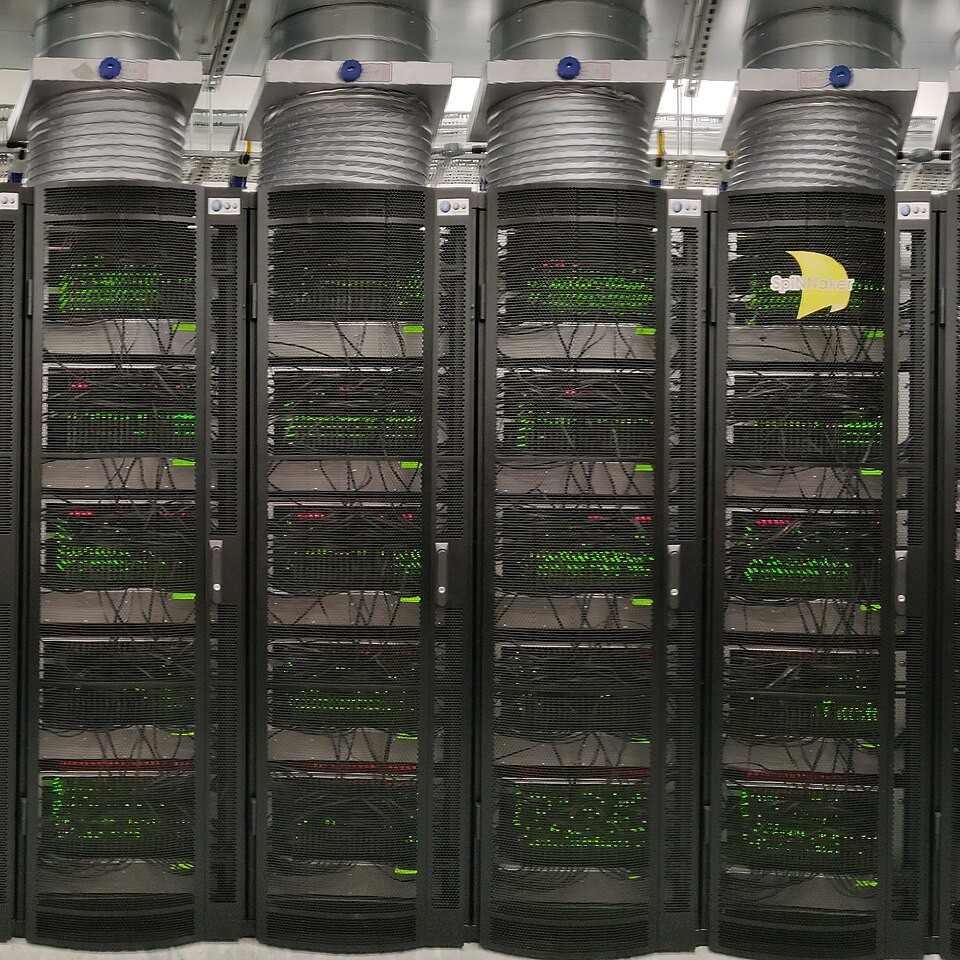
Image: Pabogdan · CC BY-SA 4.0
A comparison of neuromorphic chips can turn on something as prosaic as where the power meter is connected. A spiking processor may be nearly idle between events, while an analogue front end continues listening for them. Measure only the processor rail and the lowest number describes the silicon under test, not necessarily the energy spent on the sensing job.
The Royal Society’s November meeting brings together platforms that put those costs in different places. Its programme describes BrainScaleS at Heidelberg as wafer scale analogue hardware and Manchester’s SpiNNaker as a system that distributes events across many digital cores. Both projects used PyNN to describe networks. A common description helps to carry a workload from one platform to the other, but the platforms still implement and communicate those events differently.
The difference shows up when the input arrives in bursts. Average energy can look favourable across a long quiet interval even if the system is slow to catch up after a burst. Conversely, a fast response under load says little about the current drawn while the input is quiet. In-memory architectures introduce a similar question at a different boundary. Computing where weights are stored reduces some movement inside the processor, but the circuitry that presents the inputs and reads the results still uses energy.
The NeuroBench framework distinguishes between algorithm performance and a system’s execution of a defined task. For a sensor workload that means specifying the event stream and accuracy target before comparing timing or energy. A comparison would report the idle draw separately and state whether the measurement includes sensing, encoding, transfer and readout. That would show which cost has actually changed when the implementation moves from one platform to another. The Royal Society programme describes the candidate architectures; it does not put them through a common test.
Sources: Royal Society programme and platform abstracts; NeuroBench benchmarking methods.