How Kyocera put its print image processing on one core
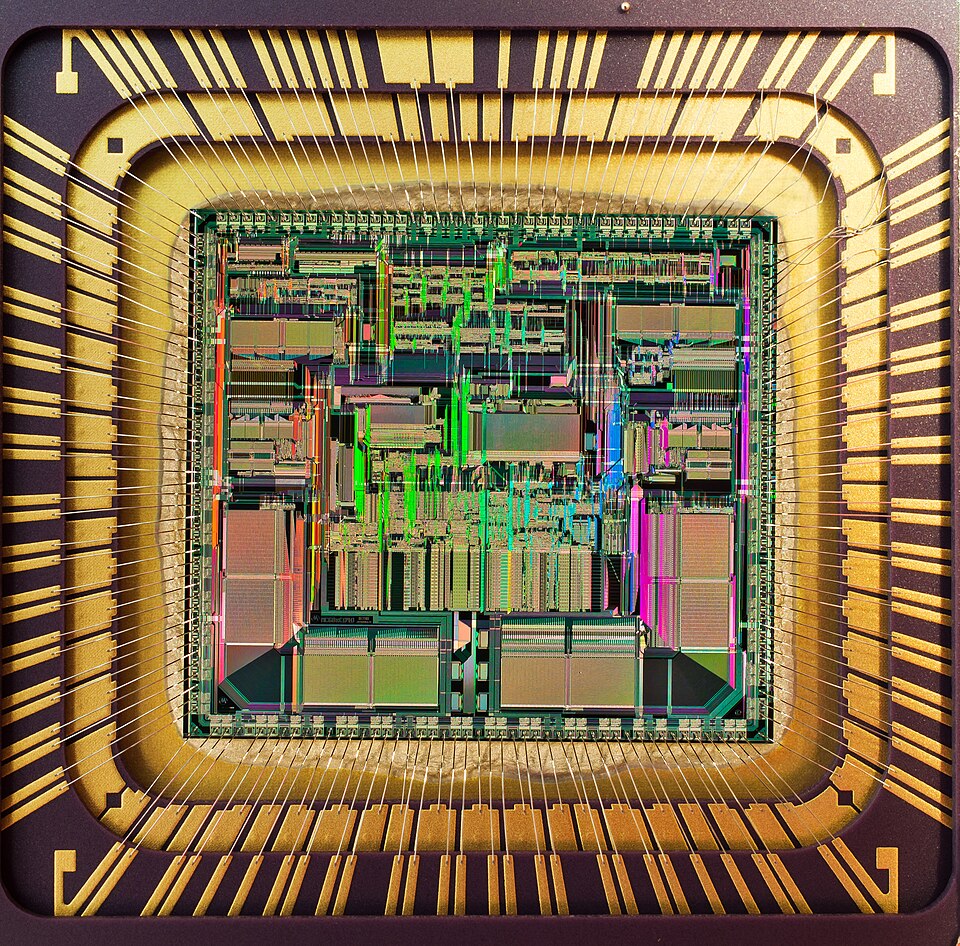
Quadric says it has ported Kyocera’s printer image processing to a single Chimera Nano core with 1 MB of on-chip memory. Colour conversion and white background protection, two routines previously written in OpenCL, share the core with the neural networks Kyocera uses to sharpen images and detect confidential documents.
The software came from workloads Kyocera uses in its existing multifunction printers. In a written interview with The Electronics Brief, Quadric co-founder and CTO Nigel Drego said Kyocera’s new silicon was still at the fab. Quadric used its profiling tools to assess accuracy and performance on individual stages. “That data covers individual portions of the pipeline rather than the full end-to-end flow,” he said.
Keeping the print pipeline on the core
Kyocera Document Solutions licensed Chimera in 2025. Akihiko Takada, a senior general manager at the company, said it expected to gain a neural accelerator and found it could move much of its conventional signal processing onto the same processor. He pointed to a print path that combines operations such as colour conversion with custom activation functions. “On Chimera we run that entire chain in one place,” he said.
In a design split across a neural processing unit (NPU), a digital signal processor (DSP) and a host CPU, the NPU runs inference and the DSP can prepare the input and process the output. The host coordinates transfers between them. “The inherent drawback is that every interaction between these three engines costs memory bandwidth and latency,” Drego said. Each handover also has to be scheduled. With the routines and models running on Chimera, intermediate results can go straight to the next stage on that core.
One of the ported workloads pairs an object detector with a similarity model. The processing around the models includes decoding the boxes that locate candidate objects, filtering out overlapping detections and sorting the remaining candidates to keep the highest-scoring results. The wider port covers document classification, image super-resolution and Kyocera’s own models for image quality analysis and document enhancement. It spans convolutional and transformer-based networks, with applications including handwriting enhancement and scan failure detection.
Fitting the models into 1 MB
“Fitting the neural networks into the memory budget and maintaining accuracy during model quantization both presented minor challenges,” Drego said. Quantisation lets a model represent values with fewer bits and can save memory. That choice can affect the result, so the team tried different combinations before settling on a mix. The interview leaves open how much of the 1 MB went to weights and working buffers and whether the pipeline still relied on external memory.
Some of the code that joined the processing stages also fell away because the Chimera APIs took over those functions. Quadric’s software tools compile both neural-network graphs and data-parallel C++ routines for the core. Drego sees a benefit later in a printer’s life too. When a new model uses an operation that a dedicated accelerator cannot handle, the system can fall back to the host CPU. A programmable core gives the team more scope to keep those operations in the same pipeline on the existing hardware.
What took a day and where engineers stepped in
Drego said the automated conversion of the colour and background routines from OpenCL to C++ took one day. “AI agents automatically converted all of the OpenCL code, with minimal human intervention,” he said. He added that Quadric’s automated field applications engineering tool answered many of the tickets from the conversion, with support staff overseeing it.
Kanako Kibihara, a general manager at Kyocera Document Solutions, described a corner case in an unusual pooling configuration. “The fix came back in a graph compiler update release,” she said. When Kyocera’s own attempt at writing a kernel for processing before and after inference stalled, Quadric’s engineers worked on it with them.
Once silicon is available, a whole-pipeline timing would show how the port behaves when the models, C++ routines and memory traffic are all running together. Comparing that with the same workload on the previous design would put a number on what Kyocera gained by keeping the work on one core.