Vishay puts two analogue position sensors on one wireless node
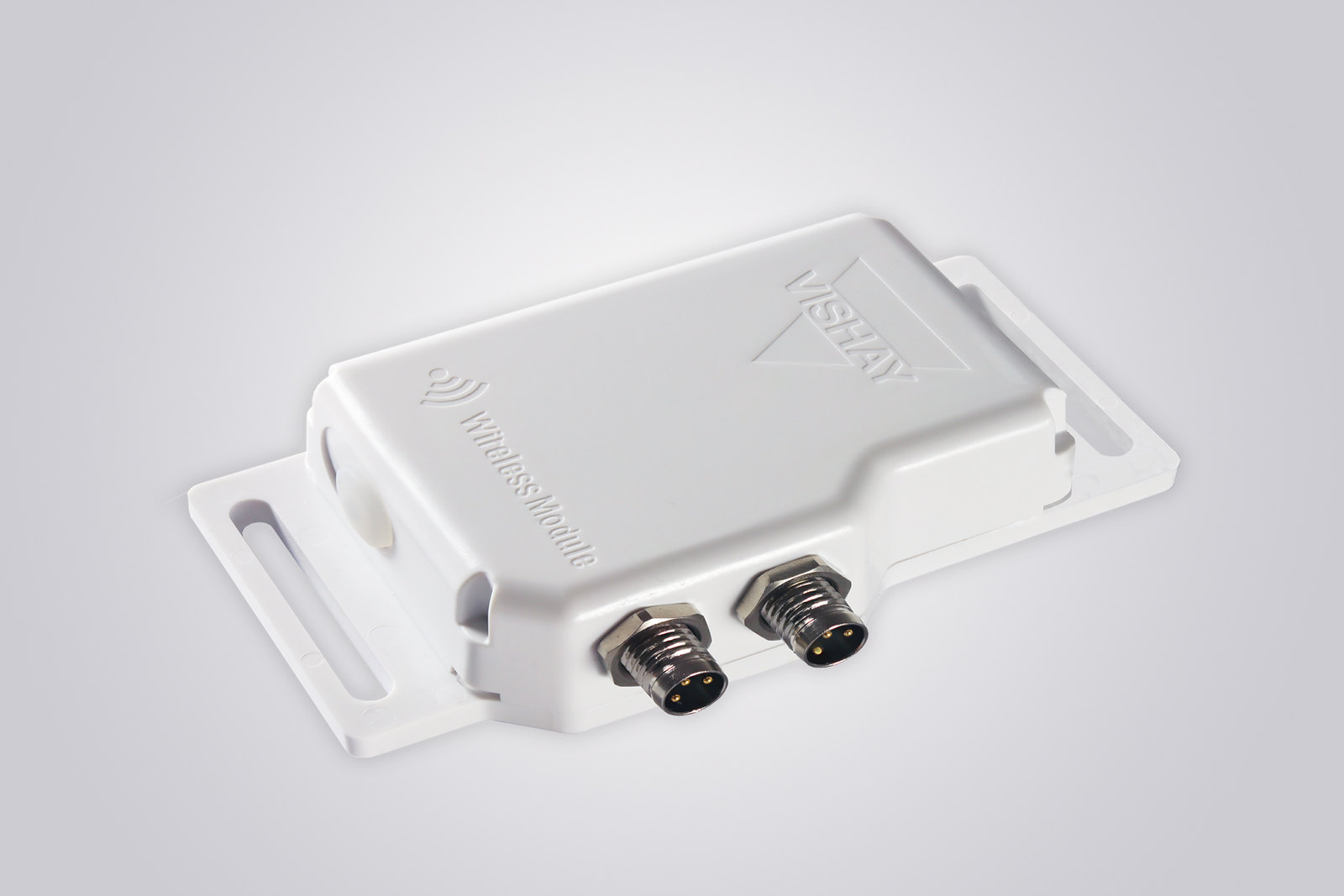
Image: Vishay Intertechnology · CC BY 4.0
Vishay’s WLMO module supplies and reads up to two analogue position sensors, then sends their values to a receiver or gateway. It accepts potentiometric and contactless sensors, so an existing actuator can retain its feedback device while the data path to the host changes. The node is intended for remote monitoring, where the position reading is useful even if there is no convenient cable run back to the control equipment.
Although the module uses LoRa modulation in the 2.4 GHz ISM band, the protocol above it is proprietary and operates as a private network. The host therefore needs a compatible receiver or gateway; a LoRaWAN gateway cannot be assumed to accept the module simply because it uses the same modulation family. Vishay gives a range of up to 2 km in open-field conditions and provides six spreading-factor settings, which let the installer trade data rate and airtime against reception margin. The open-field figure does not establish coverage around steel plant equipment or through a building.
The two sensor inputs are independent and the module reports battery level, giving a remote system separate information about the actuator position and the state of its node. The 89 × 55.5 × 21.6 mm enclosure is rated IP67, with activation and pairing through a sealed switch. The sensors and their connections still have to suit their own installation conditions.
Vishay says samples and production quantities are available, with a stated lead time of 14 weeks. The data sheet lists separate variants for one or two connected sensors.
Sources: Vishay: WLMO launch and supply terms; Vishay: WLMO data sheet.