TinZr puts streaming and local recording on one 25 mm sensor board
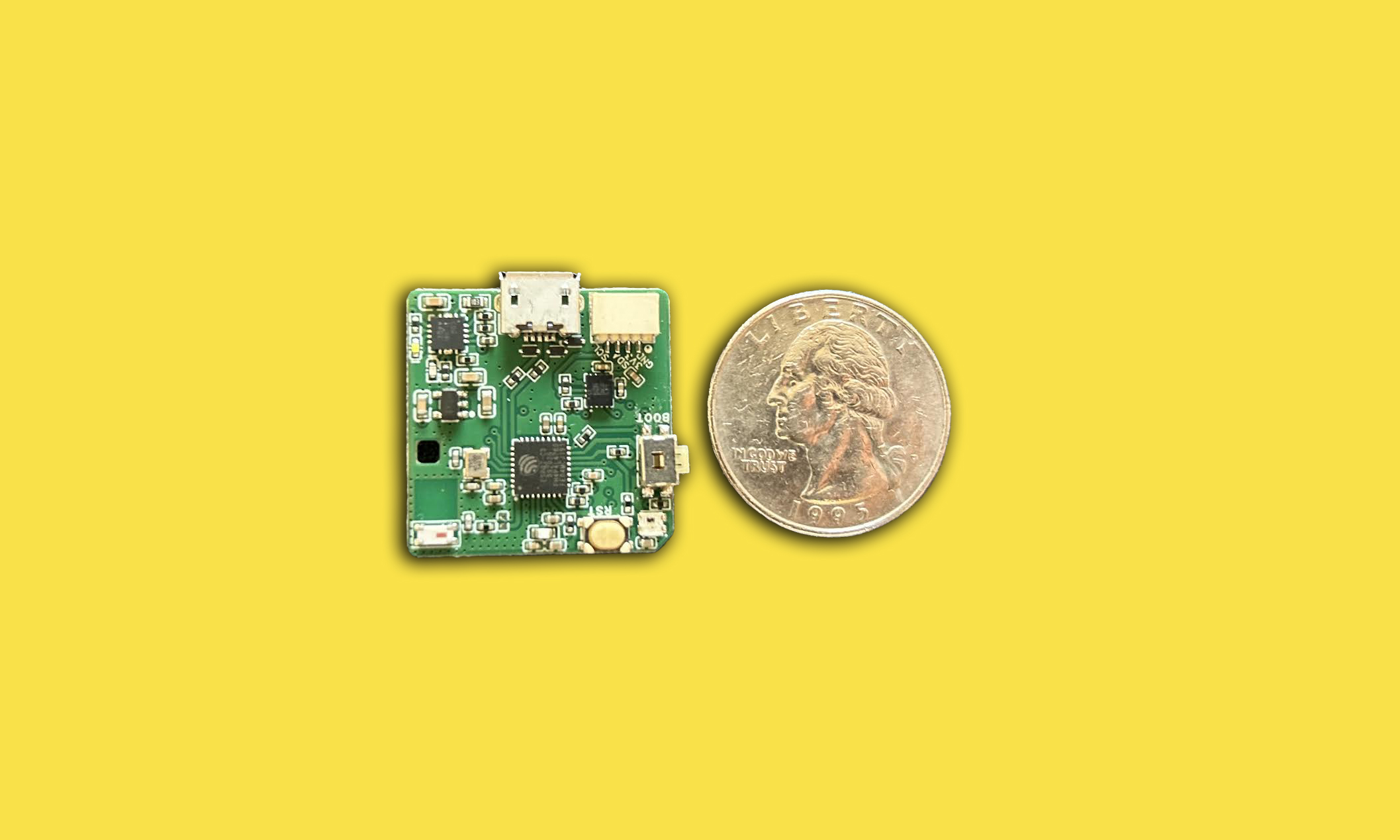
TinZr can send the readings from a wearable to a host or record them to microSD from the same 25 × 25 mm board. The design, described in HardwareX, uses an ESP32-C3 and includes an inertial measurement unit, battery management and a card reader. Wi-Fi and Bluetooth Low Energy provide the wireless paths, while additional sensors can connect through analogue and digital pins or serial interfaces including I²C, SPI and UART.
Keeping local storage on the board makes the radio a separate choice from the experiment itself. A live stream is useful when the person collecting data needs to see how the sensors are behaving as they run. Local logging is useful when connection quality changes as the wearer moves, because acquisition need not depend on keeping a host within range. The authors made both paths available rather than requiring a second logger or a different board for field sessions.
The paper demonstrates communication between multiple TinZr units, wireless inertial capture and simultaneous recording from external electrocardiography and photoplethysmography modules. These experiments show what the acquisition platform can combine, rather than validating a medical device. In the last setup, the external modules perform the two sensing jobs and TinZr brings their data into the same acquisition system.
The published hardware files distinguish the bare board from a complete wearable assembly. The paper shows the Rev 5 PCB and battery in an enclosure measuring 29.5 × 29 × 20 mm, while the design files and the TinZrConnect Arduino library provide starting points for changing either the sensor interface or the packaging.
Sources: Alkhoury et al., HardwareX: design, demonstrations and enclosure dimensions; TinZr project repository: hardware files and software.