Imec extends chemically amplified resists to High NA EUV
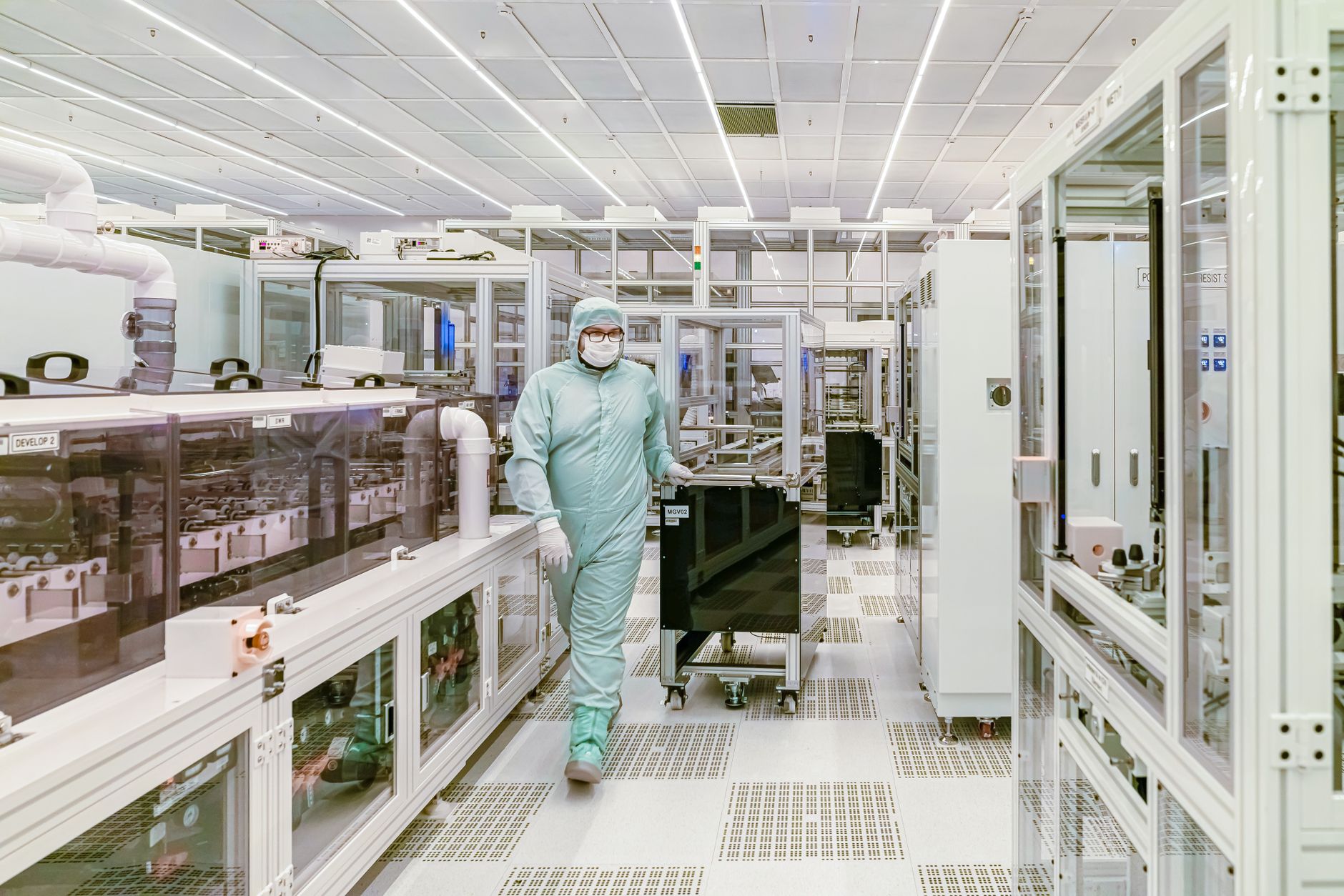
Illustrative image: Российский центр гибкой электроники on Pexels
Imec has demonstrated that chemically amplified resists (CAR), a resist chemistry used in chip manufacturing for decades, can pattern tight-pitch logic structures in a single exposure step using High NA EUV lithography. The work was presented this week at the 2026 SPIE Photomask Technology + EUV Lithography Conference.
High NA EUV lithography uses extreme ultraviolet light with a higher numerical aperture optical system to print finer features than earlier EUV tools. Imec's logic technology roadmap anticipates its insertion at the A14/A10 nodes, where achieving reliable patterning at aggressive pitches is described as critical, and the technology is also relevant to the imec-hosted European NanoIC pilot line targeting beyond-2nm systems-on-chip.
Imec reports that its latest results extend CAR-based single patterning to lines and spaces at 22nm pitch, with good pattern fidelity shown on meander and forked test structures. It also demonstrated 24nm SRAM layouts at 26nm tip-to-tip spacing, 24nm place-and-route structures at 28nm tip-to-tip, and random logic via features at 28nm centre-to-centre distance.
These figures build on earlier results shown at the 2026 IEEE International Interconnect Technology Conference, where imec and its material suppliers validated CAR-based single patterning at 28nm pitch, with what imec describes as promising combined yields on 1.8m-long metallised electrical test structures.
Imec says the new results indicate CAR could be used for single patterning of specific critical layers at the A14/A10 nodes, including the metal-2 layer, the via layer and the metal-to-diffusion layer. Geert Vandenberghe, imec's VP R&D for Patterning Technology Programs, is quoted by imec as saying the work extends CAR-based technology to pitches not accessible with single-print 0.33NA EUV, and that the established stability and manufacturability of CAR remain valuable in the High NA EUV era; this is imec's own characterisation and has not been independently verified.
The work was carried out with ASML and imec's material suppliers as part of its broader patterning ecosystem collaboration. Imec describes the results as a demonstration and groundwork for further optimisation of resist and etch chemistries; no production timeline or commercial resist product was announced.