FlexiQuad falls back on motion sensors when impact blurs its camera
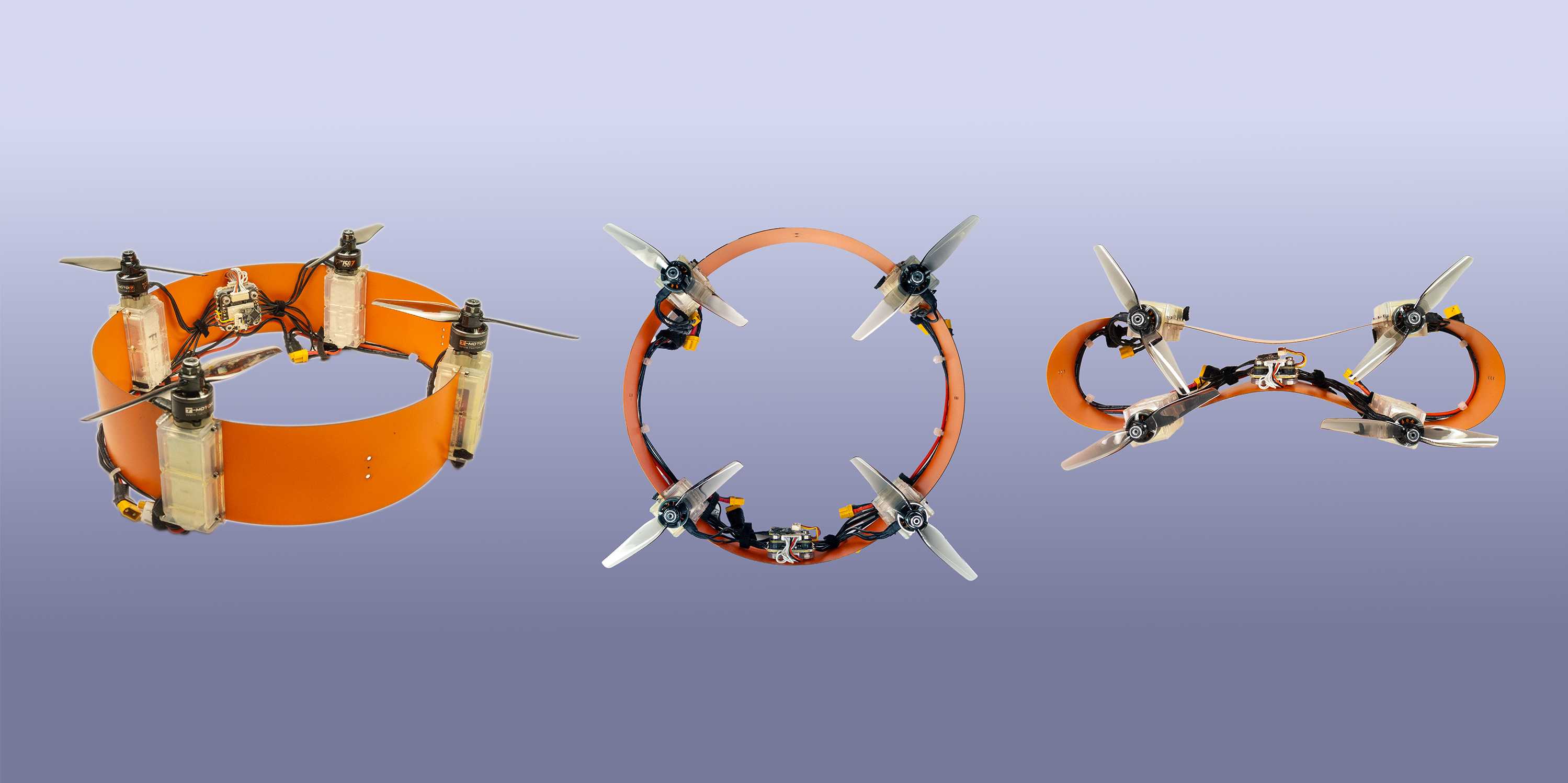
Image: Luca Girardi / © ETH Zurich
A soft frame can spare a drone from damage on impact and still leave its navigation system briefly unable to see. That is the control problem behind FlexiQuad, a lab prototype developed by Luca Girardi and Stefano Mintchev. The frame bends sideways to absorb a collision but is stiffer in the vertical direction so it can transmit the thrust needed for flight. When the frame springs back, the oscillation can blur the camera image that the aircraft would otherwise use to navigate.
The team separated that transient from ordinary navigation by using the onboard motion sensors to stabilise the vehicle after a collision before it returns to autonomous flight. ETH Zurich says the researchers used reinforcement learning to develop this recovery behaviour. The useful architectural choice is the temporary change in the feedback the controller relies on: the image can become unreliable at exactly the point when attitude and motion still need to be controlled.
The university reports collisions with obstacles at speeds of up to about 25 km/h. That figure describes the frame tests, and should not be read as a guarantee that the controller can recover from any impact at that speed. Camera recovery also depends on the camera and its mounting, since those determine how airframe vibration turns into image motion. The group is investigating whether measurements of frame deformation could themselves become a source of information when the aircraft encounters an obstacle; that is a separate line of work from the motion-sensor recovery already described.
Sources: ETH Zurich: airframe tests and motion-sensor recovery.