Diraq secures US funding to develop CMOS spin-qubit manufacturing and test
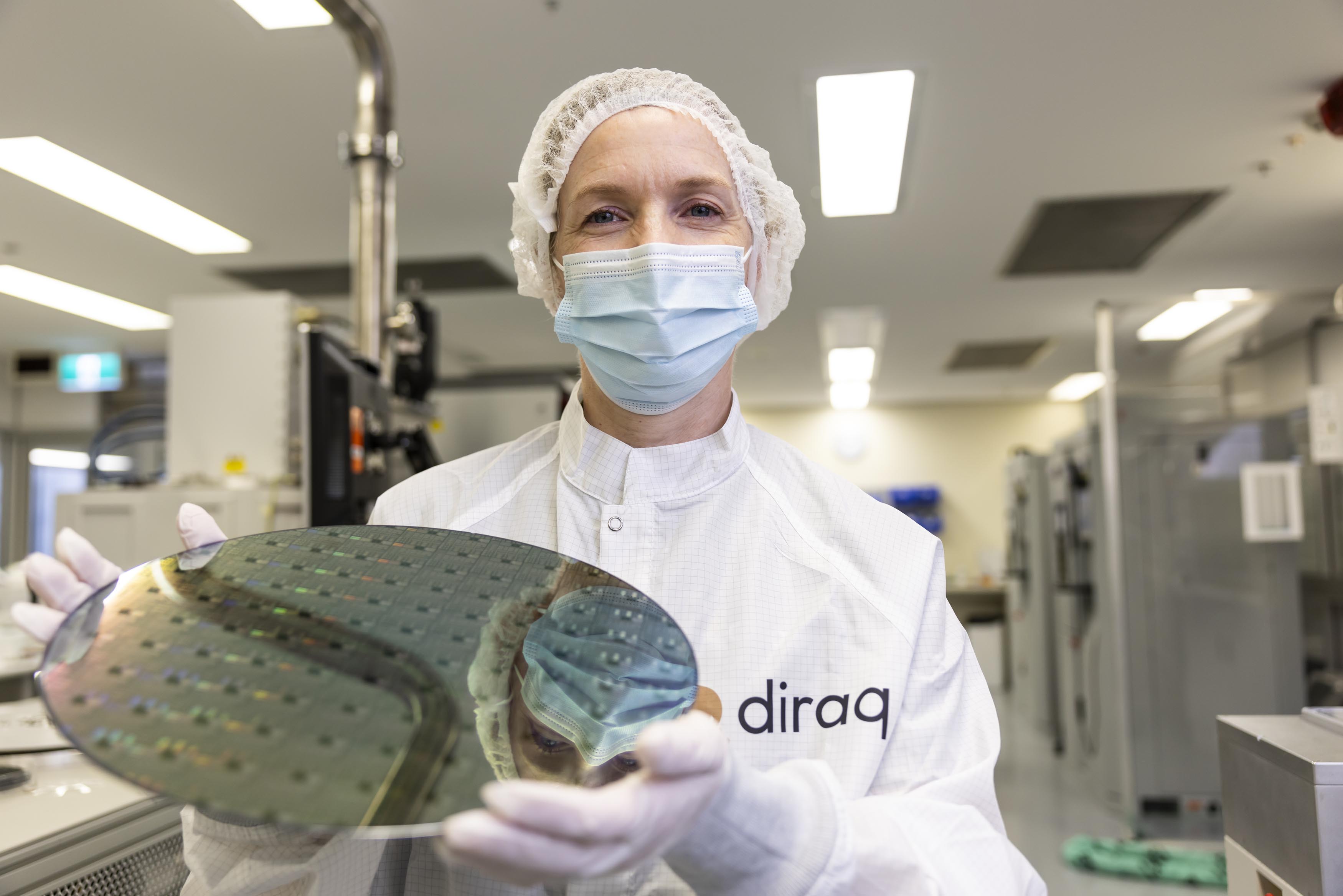
Image: Diraq
The US Department of Commerce has finalised an award of up to $38 million to Diraq for research into manufacturing and testing silicon spin-qubit processors. The award names three linked areas of work: making its Quantum Logic Units scalable, developing new qubit arrays and controlling those arrays as they grow. The money is tied to semiconductor R&D; it is distinct from DARPA’s assessment of whether Diraq can reach utility-scale operation.
Diraq encodes information in electron spin using structures that can be fabricated with techniques drawn from silicon CMOS. That gives it an industrial fabrication route to investigate, but the manufacturing test is more demanding than showing that the process can produce a single working device. An array has to contain usable qubits with sufficiently consistent properties, and the system still has to initialise, address and read them without the control architecture becoming impractical as the count grows.
The logic unit is Diraq’s way of talking about a repeatable piece of that larger processor design. The Department of Commerce lists logic units, physical arrays and global control as separate areas of work, leaving both the manufacturing process and the system that drives the array to be demonstrated. The scope also separates this work from the familiar milestone of putting a small number of qubits on a wafer: the question here is how fabrication, measurement and control can support an architecture that can grow.
Diraq says the funding will build on its US production and test capabilities, drawing on technology it developed in Australia. The signed award confirms the programme and its ceiling; it does not report a production yield or delivery of a fault-tolerant processor.
Sources: NIST: final CHIPS R&D award and funded work; Diraq: company announcement and manufacturing scope.