Counterfeit electronic components: warning signs and incoming inspection checks
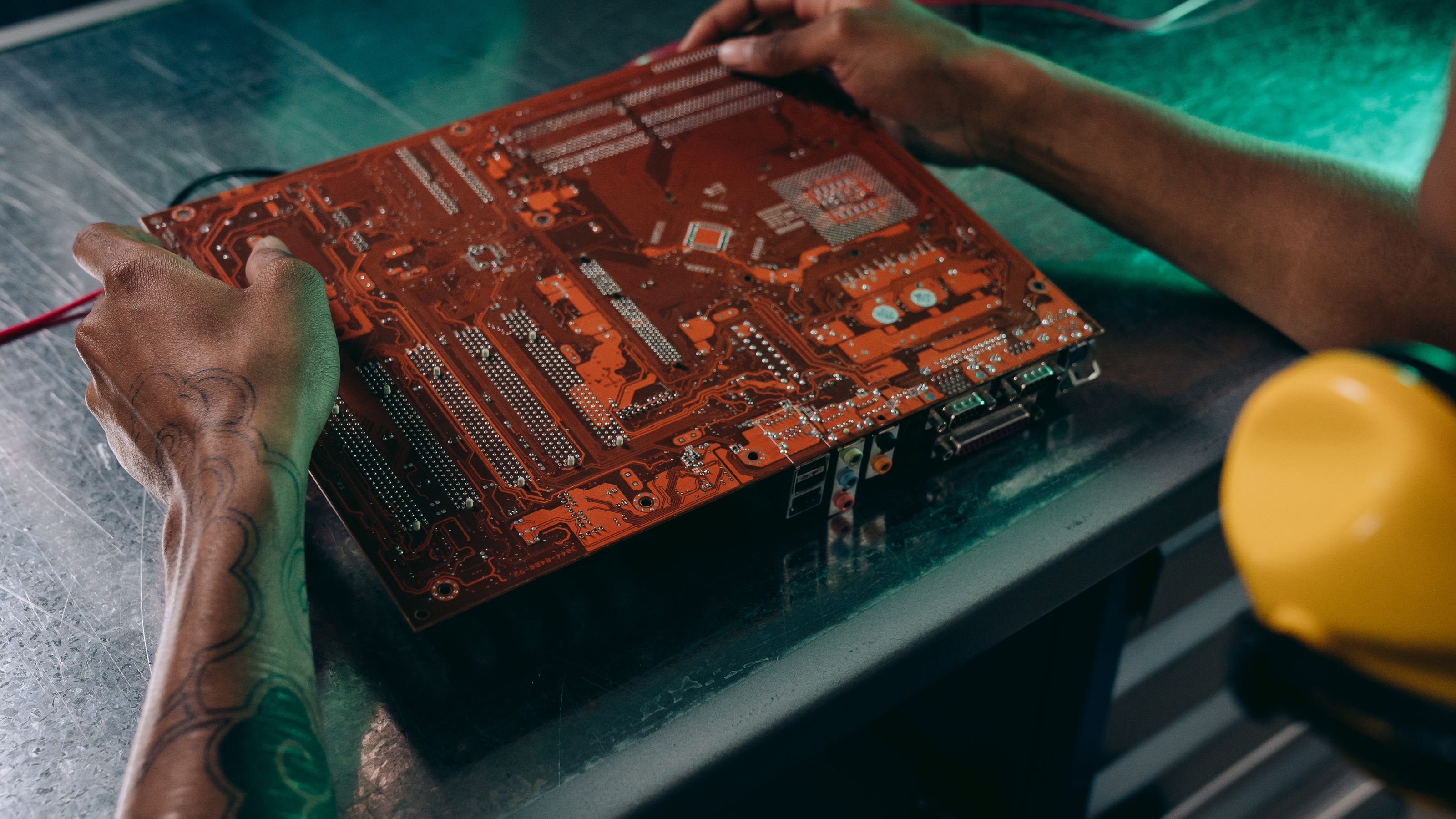
Illustrative image: Unsplash contributor on Pexels
Counterfeit electronic components are not limited to crude copies carrying an invented logo.
Risk can include used parts presented as new, remarked devices sold as a higher grade, empty or incorrect packages, altered date codes, unauthorised substitutions and genuine parts whose storage or traceability has been lost.
Some will fail an incoming check. Others may operate initially and fail later because their true specification, handling history or remaining life is unknown.
The receiving inspection is therefore one layer in a wider avoidance process. Procurement route, documentation, part authentication, testing and disposition must work together.
Start with the source
The Electronic Components Industry Association states that buying through authorised distributors is the strongest guard against counterfeit components. An authorised channel provides a defined commercial and traceability relationship with the manufacturer.
That does not remove the need to confirm that the delivery matches the order, but it changes the risk substantially.
Purchasing controls should distinguish between:
- the component manufacturer;
- an authorised or franchised distributor for that manufacturer;
- an independent distributor or broker;
- a marketplace seller;
- an unknown source introduced through an emergency purchase.
A supplier's general membership, certification or reputation does not prove that a particular line was obtained through an authorised relationship. Verify the status for the manufacturer and product involved.
When the authorised channel cannot supply
Shortages, obsolescence and last-time buys can force a business to examine independent stock. The decision should be explicit and risk based.
Define why the purchase is necessary, the product consequence of failure, the evidence required and who can approve the exception. Safety-critical, regulated or high-value assemblies normally justify much stronger controls than a low-risk prototype.
SAE AS5553 establishes counterfeit-parts avoidance requirements for organisations using electrical, electronic and electromechanical parts. Related guidance such as ARP6328 addresses risk identification, mitigation, detection, disposition and reporting. Sector and customer requirements may mandate a particular process.
Check the offer before placing the order
A suspiciously attractive offer is not proof of counterfeiting, but commercial inconsistencies should trigger questions.
Ask for:
- exact manufacturer part number and suffix;
- quantity and packing format;
- date-code and lot-code information;
- photographs of labels and packaging where appropriate;
- original source and traceability documents;
- storage and handling history;
- return and non-conformance terms;
- proposed inspection and test evidence.
Check whether the quantity, date codes and packaging story are plausible. A seller claiming factory-new material long after the part became obsolete should be able to explain its provenance and storage.
Do not let urgency reduce the documentation requirement. Urgency is itself a risk multiplier.
Quarantine the delivery
Material from a non-routine source should not move directly into unrestricted production stock.
Create a quarantined status linked to the purchase order, supplier, received quantity and inspection plan. Preserve original packaging, labels and documents. Record who opened or sampled the lot.
If testing is destructive, define the sample plan and retain evidence. Mixing the lot with approved stock can destroy traceability and make later containment far more difficult.
Inspect packaging and labels
Compare manufacturer labels with known genuine examples and current manufacturer guidance. Look for inconsistent fonts, alignment, barcodes, logos, part descriptions and country information.
Check whether moisture-sensitive packaging includes the expected barrier bag, desiccant, humidity indicator and seal. Inspect reels, trays and tubes for damage, relabelling or incompatible dimensions.
Warning signs include:
- labels placed over earlier labels;
- mismatched quantities or date codes;
- broken seals without explanation;
- mixed devices or inconsistent orientation;
- packaging inappropriate for the stated part;
- missing electrostatic or moisture controls;
- documents that cannot be linked to the delivered lot.
None of these alone proves the devices are counterfeit. They justify deeper investigation.
Carry out a documented external visual inspection
Use magnification and an approved reference where possible. Compare marking content, location, font, surface texture, package dimensions, lead finish and mould features.
Look for:
- sanding or resurfacing marks;
- inconsistent or easily removed markings;
- evidence of blacktopping;
- scratches, bent leads or solder suggesting prior use;
- corrosion or contamination;
- mixed package construction within one lot;
- dimensions outside the manufacturer's drawing;
- damaged or replated terminations.
Inspect enough devices to detect variation across the lot. A perfect sample does not validate every unit.
Use marking verification carefully
Manufacturer websites and authorised distributors may help confirm valid part-number structures and package markings. Some manufacturers provide code-verification services.
Remember that a correct marking can be copied onto an incorrect device. Marking validation should support, not replace, provenance and testing.
Date and lot codes should be checked for consistency with the product's lifecycle and the manufacturer's known format. A code that looks unusual may still be genuine because marking practices change between factories and periods.
Choose tests from the risk
No single test authenticates every component type.
Depending on the device and consequence of failure, a qualified laboratory may use:
- detailed visual and dimensional inspection;
- marking-permanency or surface tests;
- X-ray imaging;
- X-ray fluorescence for material analysis;
- electrical parameter testing;
- decapsulation and die inspection;
- solderability testing;
- acoustic microscopy;
- burn-in or environmental screening.
Testing should follow an appropriate standard, customer requirement or documented plan. A generic continuity or functional test may confirm that a device does something without confirming that it is the ordered grade or manufacturer.
Laboratory competence matters. Aggressive or poorly selected tests can damage genuine parts or produce misleading conclusions.
Treat traceability as evidence, not paperwork volume
A long chain of invoices is only useful if each document identifies the material and connects credibly to the previous source.
Review company names, quantities, dates, part numbers, lot information and transfer points. Gaps, altered documents and unverifiable entities should be recorded as risks.
Traceability can also expose handling issues. Even genuine parts may be unacceptable if moisture, electrostatic, temperature or shelf-life controls cannot be demonstrated.
Decide the disposition before a problem appears
The organisation needs a procedure for suspected or confirmed counterfeit material.
It should cover containment, escalation, supplier contact, customer or regulatory notification where required, reporting, legal review and preservation of evidence. Do not simply return suspect material to an uncontrolled supply chain if doing so could allow it to be resold.
Search production and service records for any related lot already used. The response may extend beyond the remaining stock.
Build prevention into the BOM and purchasing system
Counterfeit avoidance is easier when engineering and procurement act before a shortage.
Maintain approved manufacturer parts, authorised sources, lifecycle monitoring and qualified alternatives. Give high-risk single-source components an owner. Review obsolescence notices early enough to redesign or make a controlled last-time buy.
The strongest incoming inspection is the one that rarely needs to authenticate emergency broker material because the product's sourcing risks were managed earlier.
Incoming inspection checklist
- Purchase source and authorisation verified.
- Exact part, grade, package and quantity matched to the order.
- Original packaging and labels retained.
- Traceability documents linked to the lot.
- Storage, moisture and ESD condition checked.
- External visual and dimensional inspection completed.
- Marking and date-code plausibility reviewed.
- Risk-based laboratory tests completed where required.
- Lot held in quarantine until approval.
- Results and disposition recorded against the received material.
Visual anomalies are warning signs. A controlled supply route and a documented evidence chain are the foundation of the decision.
Technical sources
- ECIA, quality and counterfeit-mitigation resources.
- ECIA, guidance promoting purchase through authorised distribution.
- SAE International, AS5553E and ARP6328A counterfeit-parts avoidance frameworks.