How chemical-signature sensing turns complex mixtures into an AI classification problem
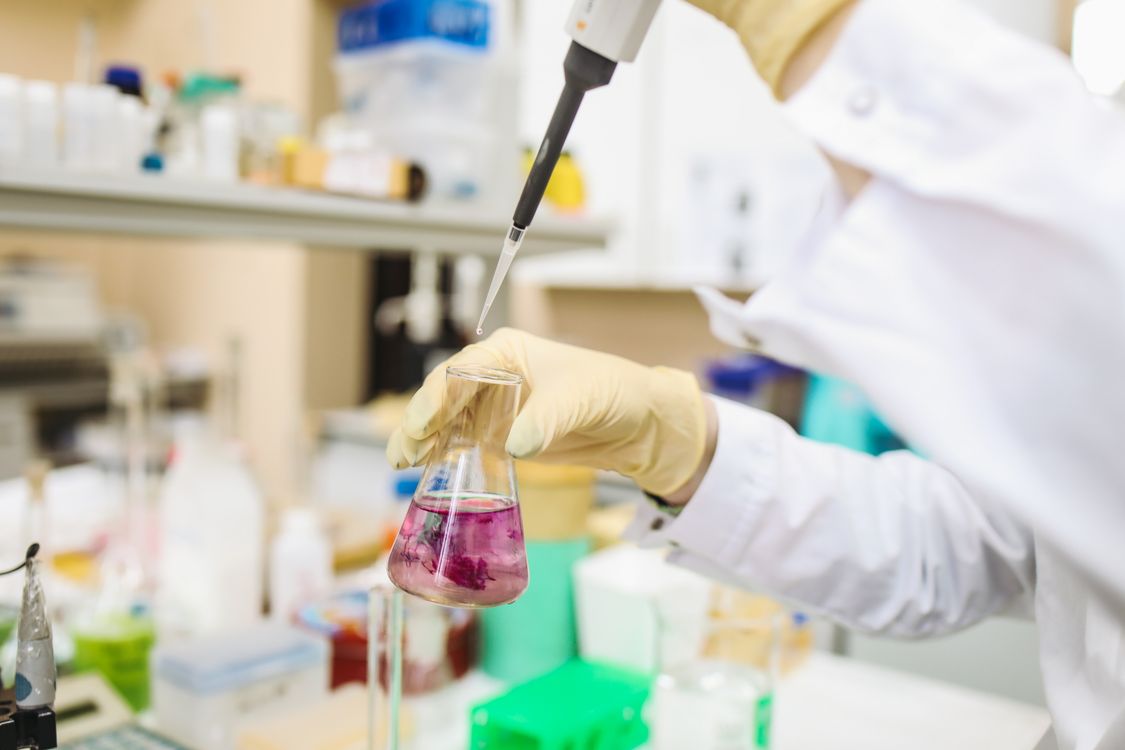
Illustrative image: Unsplash contributor on Pexels
Analog Devices has announced a research collaboration with the University of California, Davis and Moët Hennessy to analyse chemical signatures emitted by grapes and wine.
The first reported application concerns Fresh Mushroom Aroma, a wine fault associated with unwanted mushroom-like sensory characteristics. The project used samples supplied by Moët Hennessy and machine-learning analysis to predict the condition before it developed into an obvious defect.
ADI describes the work as an extension of earlier research originating at the Massachusetts Institute of Technology. The company is developing the sensing platform, while UC Davis and Moët Hennessy are exploring its application to viticulture and winemaking.
Recognising a pattern rather than one compound
A chemical signature is not necessarily a direct measurement of a single target molecule. A sensing system can instead respond to several compounds at once, producing a multidimensional pattern.
That changes the electronics problem. The front end must capture small and potentially overlapping sensor responses while limiting drift, noise and interference from temperature, humidity and the sampling environment. Signal conditioning and analogue-to-digital conversion determine how much of the underlying response reaches the classification model.
Machine learning can then be trained to associate combinations of responses with reference samples. In this case, the relevant output is not simply the concentration of one chemical. It is a prediction that the overall signature resembles samples associated with a particular quality fault.
The model is part of the measuring instrument
The classification model does not sit outside the measurement chain. Its training samples, reference labels and decision threshold all affect the result.
A model trained on one grape variety, growing region or production process may not retain the same performance when those conditions change. Sensor ageing and contamination can also alter the input distribution. Calibration and representative reference samples therefore remain central to the system's performance.
The initial announcement does not provide an independently verified sensitivity, specificity or false-alarm rate for the Fresh Mushroom Aroma prediction.
The wider engineering interest lies in the combination of sensing, analogue acquisition and classification. Similar architectures could be applied to fermentation monitoring, food processing and environmental sensing.