A better view of a solder joint, without moving the board
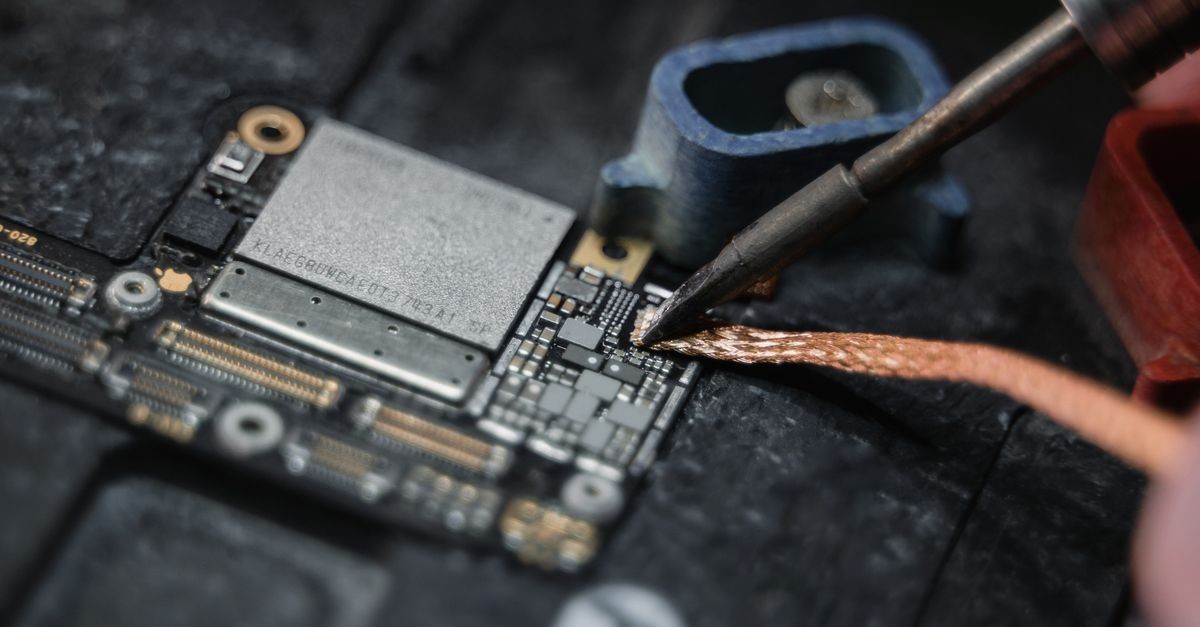
Illustrative image: Unsplash contributor on Pexels
The view straight down a microscope is excellent until the feature you need to inspect is facing sideways. A solder fillet, a lifted lead or the edge of a package can disappear behind the very component the camera is meant to examine.
RealCorebb’s bbScope tackles that obstruction with an optical attachment that rotates around the target. The board stays on the bench. A mirror and prism carry an oblique view into a conventional digital microscope lens, allowing the operator to look around the same feature rather than repeatedly repositioning the assembly.
The documented module fits a lens with a 100 mm working distance. Its optical path uses a 37 × 37 mm mirror, a 25 mm reflection prism and a 22 mm diameter concave lens. That last element compensates for the altered optical path; the attachment is more than a mirror held beneath a camera.
Keeping the view steady is a mechanical problem. CNC-machined aluminium parts support the rotating assembly, while printed adapters connect the module to the lens and carry the mirror adjustment. A bearing guides rotation. Magnets provide a detachable coupling, and four M2 calibration screws allow adjustment of alignment.
Glare is a separate problem from access. Reflective solder can obscure detail even when the viewing angle is useful. The project incorporates a polarising sheet, while the accompanying build coverage describes polarised illumination to suppress reflections. Changing the optical path and controlling the light address different reasons for a joint being difficult to see.
Despite the project’s ‘3D’ description, this is an orbiting optical view, not a published system for calibrated three-dimensional measurement. Nor can a side view reveal solder hidden beneath an opaque BGA package. Its practical territory is visible joint geometry and the surfaces that become accessible when the line of sight changes.
The released files include mechanical models and a materials list. The project is licensed CC BY-NC 4.0, so its open documentation comes with a non-commercial restriction rather than an unrestricted right to manufacture and sell copies.
Sources: Original bbScope project and optical design; Mechanical files, assembly and licence; Build coverage.