TSMC considers factory motors without rare earths
TSMC has asked suppliers about motors without rare earths for factory automation equipment, according to Reuters’ 22 October report. The discussions remain at an early stage, with no broad rollout reported, and TSMC declined to comment.
Changing the motor can also change how the machine moves. Its magnetic design influences the force available, the drive required to control it and the heat generated during operation, so removing a material dependency still leaves the equipment supplier with a motion system to validate.
Aerotech’s linear-motor application guide shows why the motor cannot be considered in isolation. In the designs it describes, a coil assembly moves relative to a magnet track and applies force directly along the axis, supported by bearings, position feedback and a servo amplifier. Cable management and protective devices have to accommodate the same movement.
That direct connection avoids the backlash and compliance associated with a screw or belt transmission. It also ties changes in motor behaviour to the control of the load, which means matching the mounting dimensions and force rating alone would leave part of a replacement assessment unfinished.
Ironless motors still use magnets
The terminology needs care here. An ironless linear motor still uses magnets: Aerotech describes a forcer without iron operating between magnet tracks, avoiding the cogging and attraction associated with iron in the coil assembly. An ironless specification consequently does not establish that the design is free of rare-earth material.
The company’s ABL1500WB-B stage combines dual ironless linear motors with air bearings, encoder feedback and a bellows cover, with semiconductor manufacturing, inspection and lithography among its listed applications. The bearings support the load and constrain unwanted movement, while the bellows protect the drive and bearing system against contamination.
Those features make the stage an integrated assembly whose performance would need to be reassessed around a different motor. Two drives capable of moving the same mass need not produce the same settling behaviour or work with the existing controller in the same way. This product illustrates the technical relationships; it is not identified as equipment used by TSMC or included in its reported review.
Synchronous reluctance changes the drive requirements
ABB’s synchronous reluctance motors demonstrate an established way to produce rotation without permanent magnets. Their shaped steel laminations and flux barriers give the rotor different magnetic reluctance along different axes, allowing it to follow the rotating field generated by the stator.
The construction brings its own control requirements. ABB’s technical catalogue specifies operation through a frequency converter rather than direct starting from the mains and notes that the motor’s power factor can require a converter with a higher current rating. Choosing the motor therefore includes checking the drive that will operate it, even when the mechanical installation appears suitable.
A synchronous reluctance motor provides a route to magnet-free industrial rotation, but that does not establish compatibility with a precision linear stage. The required movement, mechanical arrangement and feedback differ, and the duty matters: continuous rotation of an auxiliary load presents a different assessment from repeatedly positioning an axis.
A credible equipment comparison would connect those requirements to measurements of the complete machine, including motion under load, settling after a move and temperature through the duty cycle. The existing controller’s behaviour would belong in that assessment too. These are the engineering questions raised by a possible substitution, rather than results from TSMC’s programme.
Reuters identifies no affected equipment models, conversion schedule or revised chip delivery dates. The reported enquiry therefore provides no basis for assigning a general semiconductor lead time or price effect.
Sources
- Reuters: TSMC equipment sourcing report, 22 October 2026
- Aerotech: linear motors application guide
- Aerotech: ABL1500WB-B stage and applications
- ABB: synchronous reluctance motor technology, page 10
- ABB: synchronous reluctance rotor construction
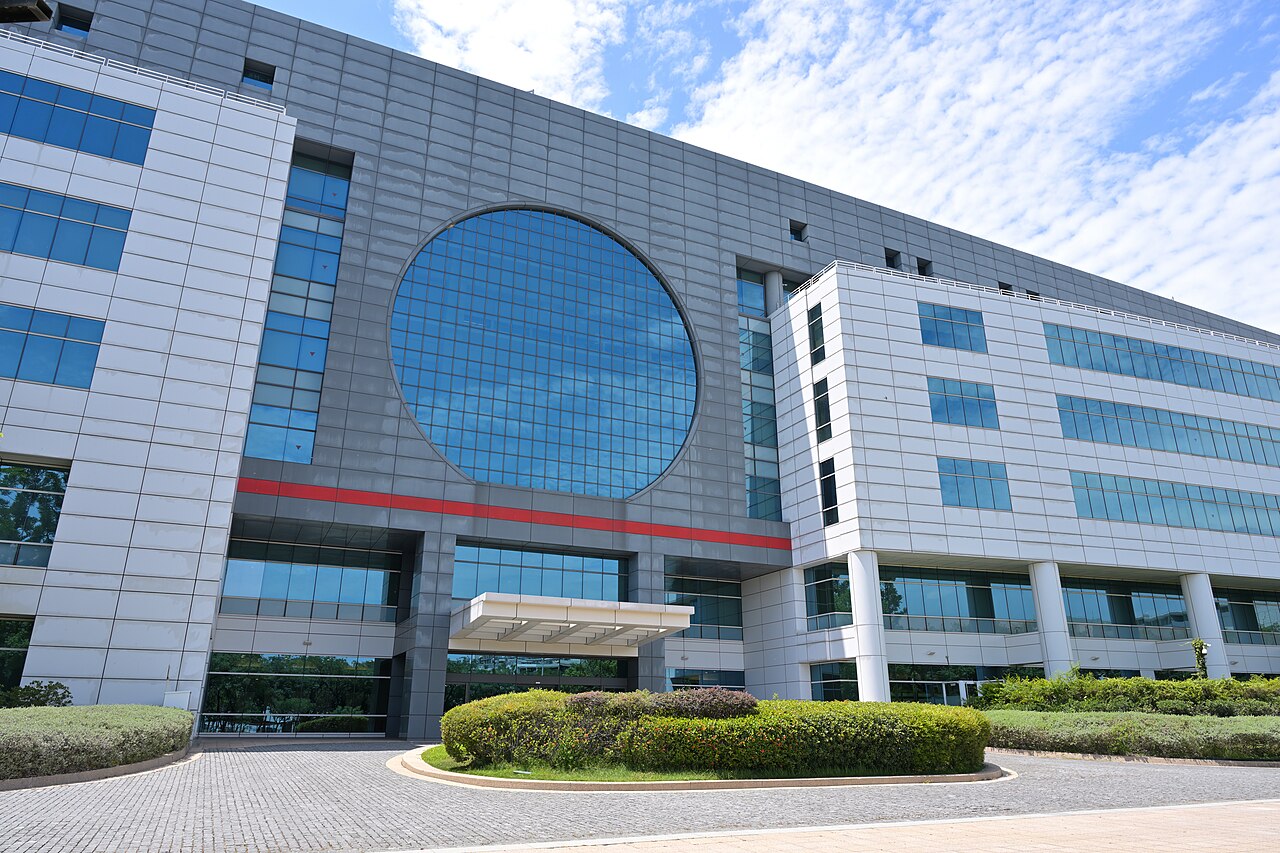
Image: TSMC Fab 6, photographed in May 2025. Archive exterior photograph; it does not identify equipment involved in the reported review. Photograph: 4300streetcar / Wikimedia Commons, CC BY 4.0. Display copy resized; no crop. Image source. Licence.