Can writing the optical connection ease photonic-chip assembly?
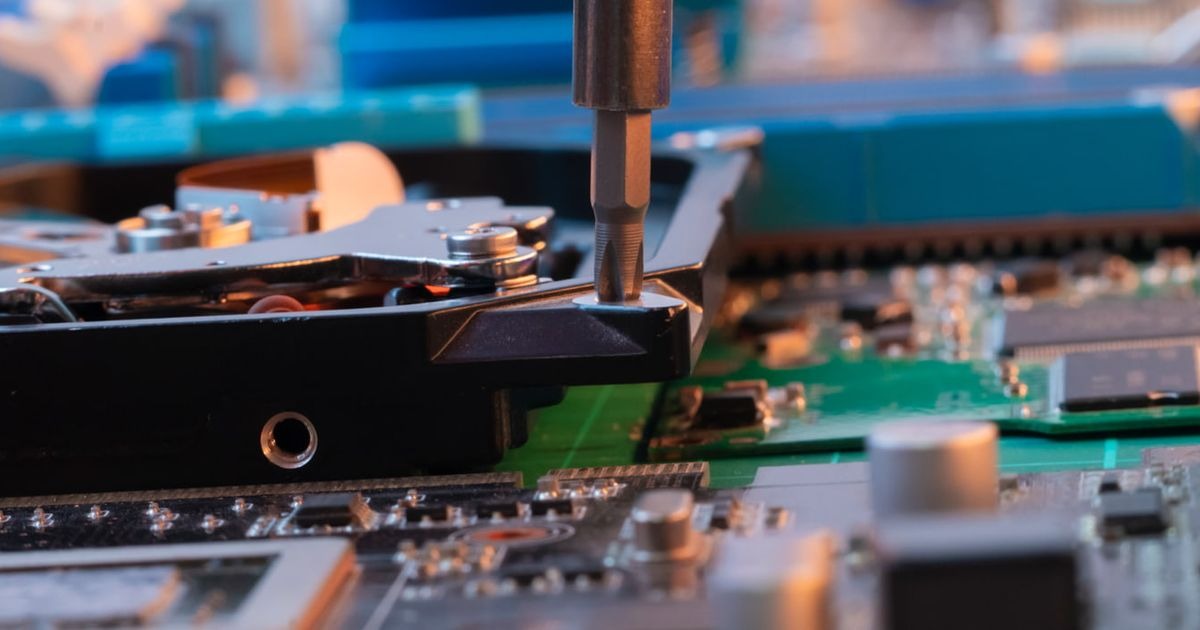
Image: Image: Demcon Photonics
Demcon Photonics is developing equipment that would connect fibre arrays with photonic chips by measuring their optical interfaces and writing matching waveguides into glass. Its proposal combines computer vision with femtosecond laser writing, allowing the connection to follow the measured positions of the parts in each assembly. [1]
That flexibility could help with a difficult part of multi-channel optical assembly. A mechanical position that couples one channel well may leave another poorly aligned, particularly when the parts are not perfectly flat. Measuring one or two interfaces cannot establish the positions of all the others, so an array can need more adjustment than a single rigid movement will provide.
Writing a path around the measured geometry
Demcon proposes acting as a system integrator for the metrology and production equipment. The parts would still need to be held and measured accurately, but the connecting route could be designed around their actual positions rather than requiring an identical optical path in every assembly. [1]
Femtosecond laser inscription creates that path by focusing a beam within the glass and changing the material locally so that it can guide light. Moving the focus through the substrate allows three-dimensional routing within the limits of the material and process. CNR and Politecnico di Milano researchers have described this maskless approach and demonstrated how guides can be placed at different depths. [2]
Adapting the route could therefore accommodate some positional variation between the fibre array and chip, although Demcon has yet to publish production data showing the range of errors its proposed equipment can handle.
Coupling loss still has to be measured
Earlier research on written-glass interposers shows how several losses contribute to a connection. In a 2021 paper, Ghent University researchers reported waveguide propagation loss of 0.88 dB/cm at 1550 nm and fibre-coupling loss of 1.24 ± 0.32 dB in a particular written-glass and alignment structure that also included a coupling mirror. Those measurements belong to that research assembly and cannot be used as performance figures for Demcon’s equipment. [3]
At the reported propagation loss, a straight 1 mm guide would contribute 0.088 dB, calculated as 0.88 dB/cm multiplied by 0.1 cm. That small figure excludes coupling, bends and other structures, which is why a short guide alone says little about the loss of a complete interconnect. Light also has to enter the guide and couple into the chip, with suitable mode profiles at the interfaces.
The surfaces and alignment features around the guides matter too. A 2023 study examined laser-produced optical-quality facets and positioning features for multi-fibre connectivity in glass substrates. Its waveguides were formed by ion exchange, making it related packaging research rather than the same guide-writing process proposed by Demcon. [4]
The complete assembly cycle
Replacing repeated mechanical adjustment with measurement and writing could make alignment less dependent on finding one position that suits every channel. The production benefit would depend on how long it takes to locate the interfaces, calculate and write the route, then inspect the finished connection.
Faster writing would be of limited use if image acquisition or optical inspection held up the next assembly. The process would also need to produce acceptable optical connections consistently, since a short cycle time could be outweighed by failed assemblies and rework. Throughput and yield are therefore as much a part of the proposed manufacturing method as the loss of the written guide.
Demcon plans to show a demonstrator in early 2027. Measured cycle time, channel-count limits and a loss distribution for its proposed equipment have not yet been published. [1]
Sources
- Demcon Photonics, process proposal, prototype status and demonstrator plan, 2 November 2026
- CNR and Politecnico di Milano researchers, femtosecond laser writing mechanism and three-dimensional waveguides, background research
- Ghent University, Laser written glass interposer for fiber coupling to silicon photonic integrated circuits, 2021 research
- Ultrafast laser processing of glass waveguide substrates for multi-fiber connectivity in co-packaged optics, 2023 research
Assembly image supplied with Demcon’s photonics announcement. It does not show a completed production system for the proposed laser-writing process. Image: Demcon Photonics. Image source.