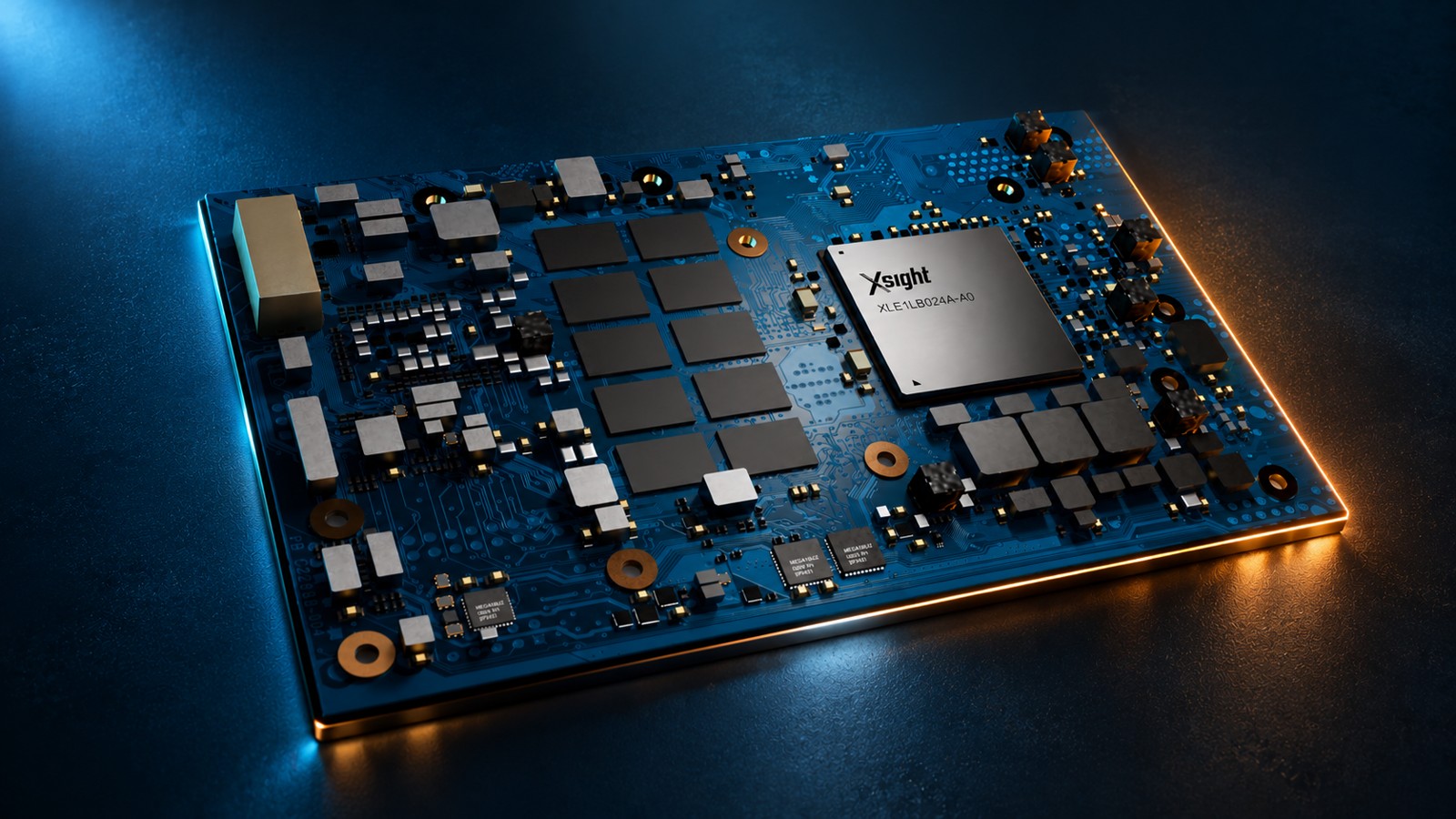
The hardware questions behind Google’s orbital AI experiment
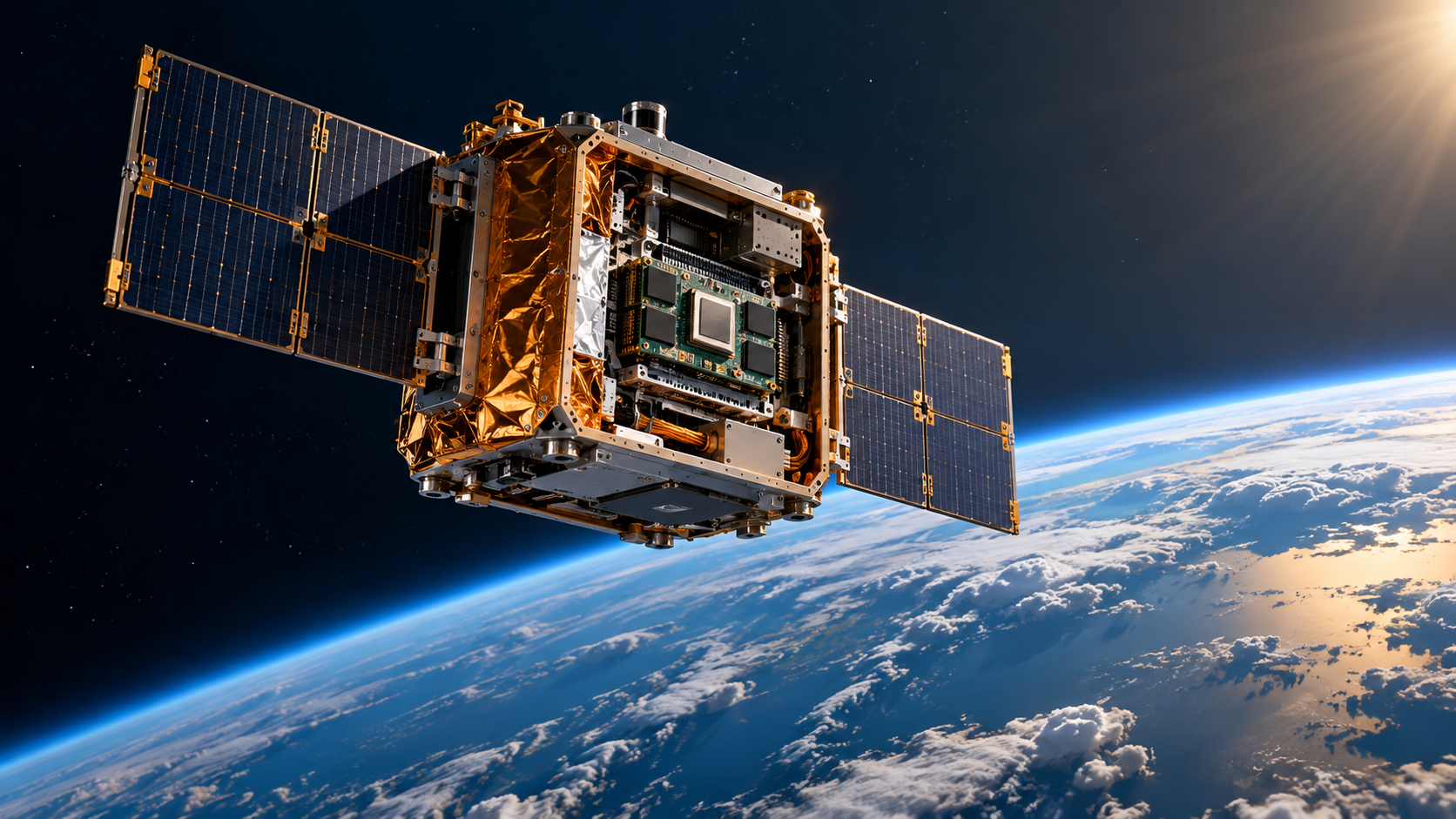
AI-generated illustration: The Electronics Brief
Google’s Project Suncatcher prototype launched into orbit on 1 October aboard SpaceX’s Transporter-18 mission. Google says it has established contact with the Planet-built satellite and that it is operating as expected. The next stage is to collect evidence about how its tensor processing units handle spaceflight, radiation and thermal conditions.
The launch update describes experiments over the coming weeks. It does not yet report sustained computing performance or a completed reliability programme. Contact with a functioning spacecraft establishes a different milestone from successful operation of every planned AI workload.
Google says it has already subjected the hardware to vibration testing and operated TPUs in a proton beam at the University of California, Davis. The latter tests examined how radiation-induced errors affected running workloads.
Heat still has to leave the spacecraft
Orbit removes the possibility of blowing ambient air over a heatsink. NASA’s small-spacecraft guidance explains that heat moves through a spacecraft by conduction, while exchange with the surrounding vacuum depends on radiation.
The thermal path therefore extends beyond the processor package. Heat must travel through interfaces and structures to surfaces capable of radiating it away. A cold view of space does not, by itself, keep an active chip cool.
Radiator area, surface properties and orientation affect this balance. So do sunlight and radiation from Earth. NASA distinguishes between a surface’s absorption of solar energy and its ability to emit infrared energy: a material that performs well in one respect does not automatically perform well in the other.
These constraints make operating duration as relevant as a successful start-up. A brief workload can demonstrate functionality while leaving open the question of how much computation the spacecraft can sustain.
Ground tests and orbital exposure
Google’s pre-launch radiation work tested running workloads, rather than simply checking whether a chip survived exposure. That distinction separates an operational error from permanent hardware failure. The orbital mission adds a further question: how the processor, memory, power system and spacecraft behave together over time.
A prototype is one step towards a larger system
Google’s longer-term concept involves connecting satellites through high-bandwidth optical links. That would introduce another set of requirements beyond keeping an individual processor operational: moving data between nodes, coordinating work and maintaining the links.
The initial experiment can establish useful hardware evidence without settling the commercial case. Launch cost, useful operating life, communications capacity and the amount of sustained computation would all affect that case. None follows automatically from a successful processor test.
The distinction matters when interpreting early results. Demonstrating that a TPU can run in orbit and demonstrating an economical orbital computing service are different milestones.