How to qualify an alternative electronic component without creating a new problem

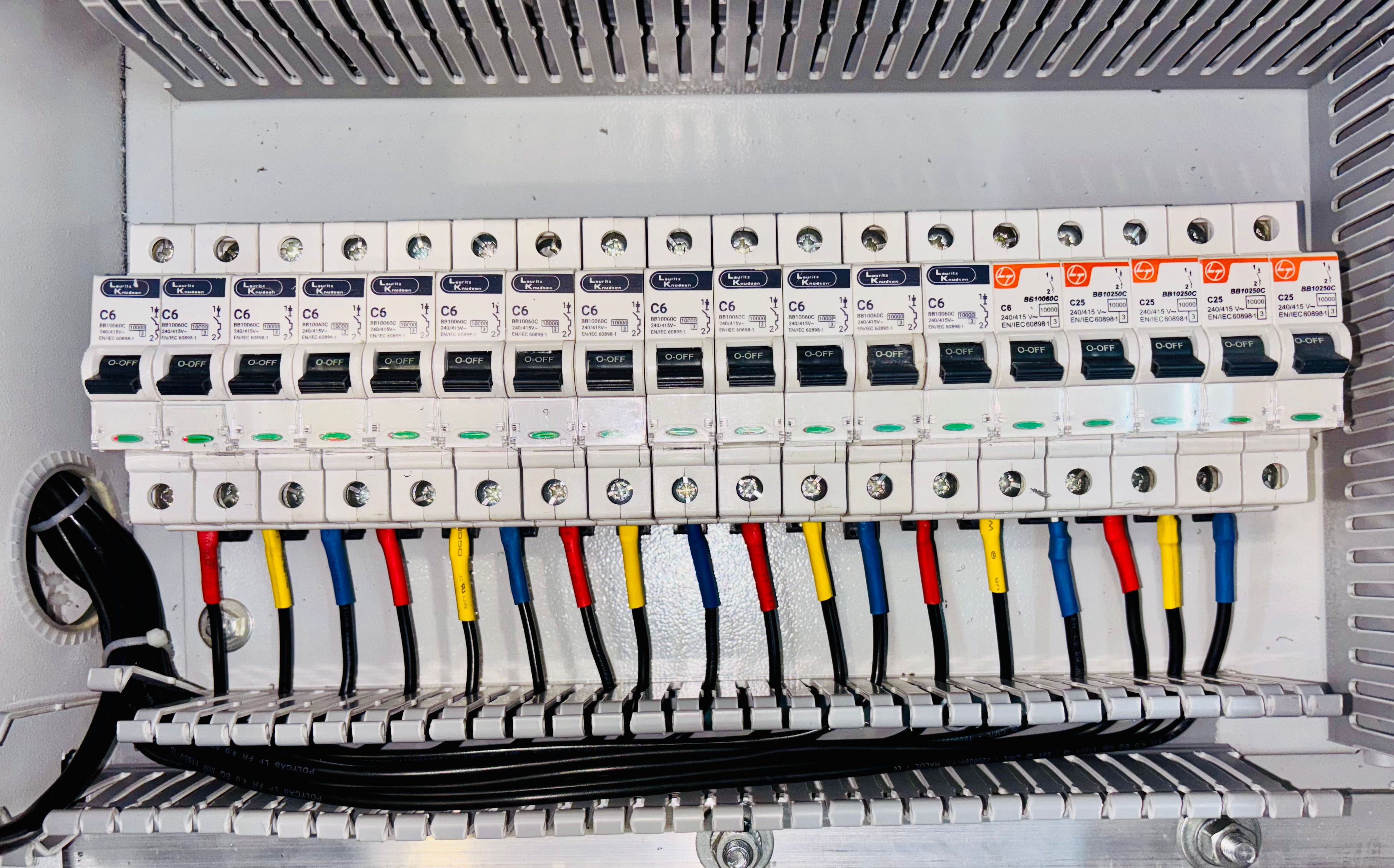
Photo by Mikhail Nilov on Pexels. Cropped from the original.
The request often sounds simple: the specified component is unavailable, so find another one that does the same job.
Sometimes the replacement really is straightforward. At other times, two parts that look interchangeable in a distributor search behave differently when they meet the actual circuit, board and production process.
The qualification effort should match the risk of the function and the differences between the devices. The following process provides a consistent way to decide what evidence is required.
Define why the alternative is needed
Start with the trigger.
Is the original part obsolete, temporarily unavailable, too expensive, restricted to one geography or creating a manufacturing problem? Is the proposed alternative intended for one batch, all future production or only use during a documented shortage?
The answer changes the decision. A short term concession may justify controlled stock and additional inspection. A permanent second source needs a maintainable engineering solution.
Freeze the original requirement
Do not compare the alternative only with the original part number. Compare both parts with the product requirement.
The original device may itself be operating with little margin or relying on behaviour that was never documented. Capture the required voltages, currents, timing, accuracy, bandwidth, temperature, lifetime, environment, compliance and safety role before examining candidates.
This prevents an accidental assumption that every characteristic of the original part is either essential or acceptable.
Check form, fit and pin behaviour
Begin with the physical facts: package outline, dimensions, height, pin count, pitch, terminal finish, thermal pad and land pattern.
Then compare the pinout in detail. A matching pin number does not prove matching behaviour. Check unused pins, internal pull resistors, exposed pads, enable states, open drain outputs and pins that must not float.
Consider orientation and marking as well. A part that fits electrically but is easily loaded incorrectly creates a manufacturing risk.
Compare operating limits, not just headline ratings
Work through recommended operating conditions and guaranteed electrical characteristics at the application’s real supply, load and temperature.
Check quiescent current, leakage, thresholds, drive strength, accuracy, noise, offset, bandwidth and any parameter central to the function. For power devices, examine switching behaviour, losses, safe operating area and thermal performance rather than comparing current and voltage ratings alone.
Absolute maximum ratings should be checked for fault survival, but they do not establish functional equivalence.
Examine dynamic and start-up behaviour
Many substitutions fail during transitions rather than steady operation.
Compare power sequencing, start-up time, reset thresholds, default states, timing, propagation delay, soft start and behaviour when supplies rise slowly or collapse. Check whether the alternative can be back powered through an input or whether it reacts differently to an unpowered peripheral.
If the circuit depends on undocumented timing or a typical value, the substitution may expose a weakness that already existed.
Recalculate thermal margin
A package that looks identical can have different thermal resistance, exposed pad requirements or permitted junction temperature.
Use the expected power dissipation and actual board construction to estimate junction temperature. Review hot start, overload and abnormal states. Where the margin is narrow, measure the alternative in the finished enclosure rather than relying only on a calculation.
Thermal equivalence also affects nearby components, cooling and long term reliability.
Check firmware and configuration dependencies
Digital devices may share a broad function while differing in device identifiers, memory maps, default registers, timing, boot behaviour or programming tools.
Confirm whether firmware can recognise both parts and whether one binary supports them without manual intervention. Treat configuration files, drivers, calibration data and security provisioning as part of the qualification.
A hardware drop-in that requires an uncontrolled firmware fork is not a transparent second source.
Review manufacturing consequences
Compare moisture sensitivity, storage, bake requirements, reflow limits, paste aperture needs, component orientation and packing format.
Confirm that the part can be placed, soldered and inspected with the existing process. If the alternative changes the joint geometry or hides more of the connection, inspection and test coverage may need to change.
Update the placement library, drawings and work instructions before the part reaches the line.
Verify quality, compliance and provenance
The alternative may need the same automotive, aerospace, medical, safety or environmental qualifications as the original. Do not infer qualification from the manufacturer’s reputation or a related family.
Check the exact orderable part and retain the supporting declaration or certificate. Review product change notification arrangements and lifecycle status.
Source matters too. ECIA advises buyers to use authorised distributors as the strongest protection against counterfeit components. SAE’s AS5553 framework similarly emphasises authentic parts, reliable sources and evidence of conformance. A technically correct part of unknown provenance is not an acceptable equivalent without a defined risk and test process.
Test the differences deliberately
Testing should be derived from the comparison, not limited to repeating a familiar functional check.
If the devices differ in start-up, test power cycling and brownouts. If leakage is higher, test the affected low power state and temperature. If timing is closer to a limit, measure the distribution across multiple samples.
Use samples from the intended supply route and production package. Then run a pilot build using the real assembly, programming and test process.
Approve the part with conditions
Document the comparison, evidence, results and remaining limitations. State whether the alternative is approved permanently, for particular revisions, for a defined customer or only for a limited quantity.
Update the BOM, approved manufacturer list, CAD library and purchasing controls together. Give the approval an owner and revision so it can be reviewed when the manufacturer changes the part or process.
A distributor cross reference can produce candidates. It cannot approve them.
The purpose of qualification is not to prove that two datasheets look similar. It is to establish that the finished product remains compliant, manufacturable and reliable when the proposed component is used.
Technical references: ECIA guidance on authorised sources; ECIA overview of the AS6496 authorised distributor standard; SAE AS5553 scope; Texas Instruments product change notification guidance.