Garmin’s voice-controlled bike computer has to hear through the wind
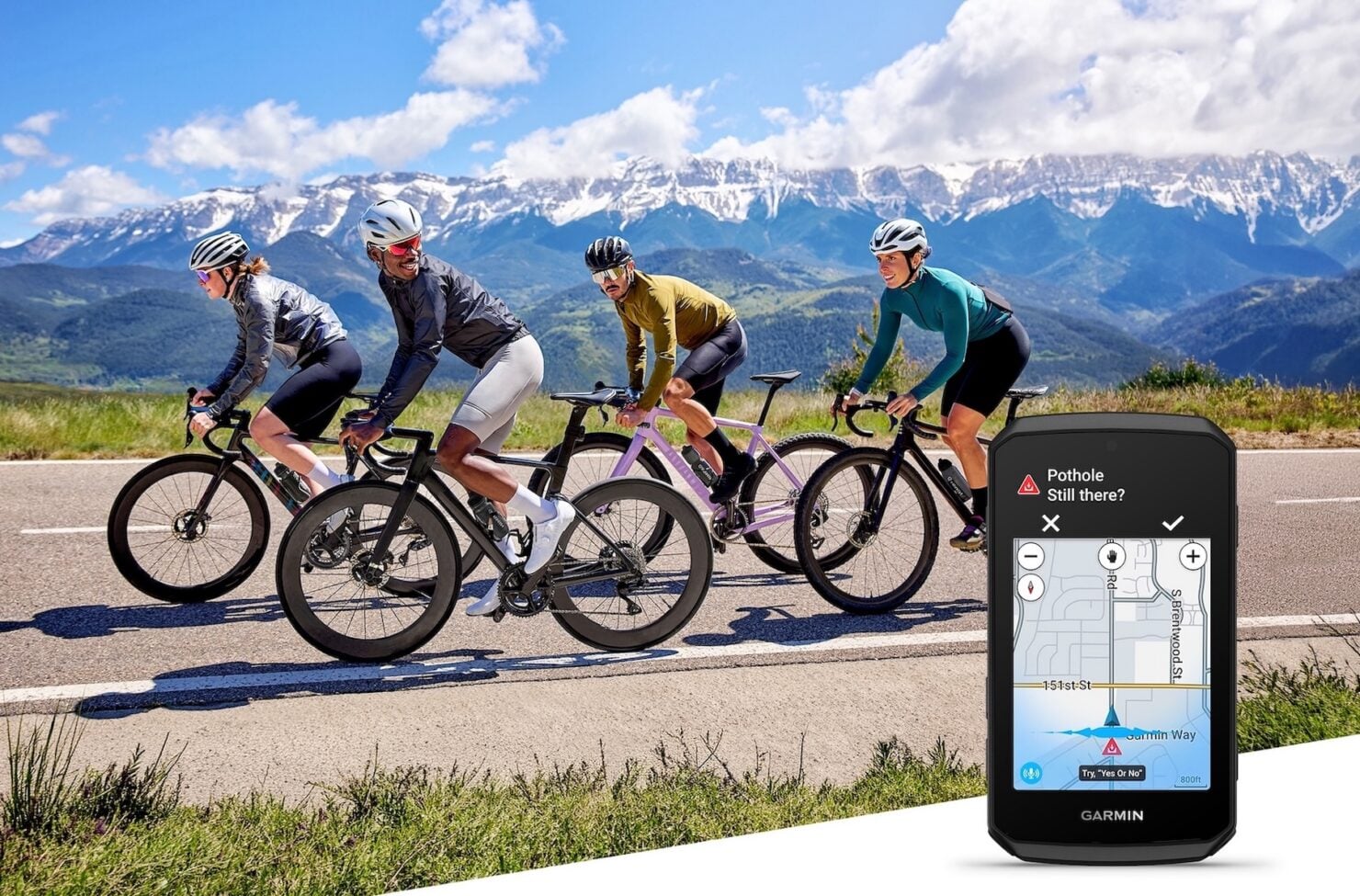
A microphone on a desk has a relatively comfortable life. Put one on a bicycle handlebar and the recording environment moves with it: airflow, road vibration, passing traffic and a speaker trying to be heard over all three.
Garmin’s Edge 1060 brings voice commands to that environment. Its built-in microphone and speaker allow spoken access to navigation and ride information, while voice messaging links through a connected smartphone. The same speaker also produces prompts and a digital bicycle bell.
The interesting addition is therefore an audio signal path with several jobs. It must acquire speech, decide when a command is intended and return a response that can be understood while the device continues handling navigation, wireless links and its display.
Garmin does not identify the microphone array, audio processor or where individual commands are recognised in the release. Messaging explicitly requires a connected smartphone.
The noise starts at the microphone
Wind noise is more than an unwanted sound somewhere in the distance. Air moving around the microphone opening creates pressure fluctuations at the input itself. The mechanical arrangement and the electronics have to work with the signal that reaches that opening.
Analog Devices’ wind-noise documentation illustrates one software response. Its example uses a pair of microphones and separates detection from reduction: a detected wind signal activates filtering, with attack and release controls managing the transition into and out of that state. That is an example of audio-system behaviour, not evidence that Garmin uses Analog Devices hardware or that particular algorithm.
Once speech and noise have been combined at the input, processing has a limited signal from which to recover the intended command. Filtering can remove useful speech content as well as unwanted energy, and the balance can change with wind direction, speed and the position of the rider’s head. Garmin itself qualifies command performance by riding conditions and supported languages.
The touchscreen is accompanied by buttons for use in difficult weather or with gloves. Voice provides another route into the functions while the physical controls remain available.
Quoted battery life ranges from 20 hours in demanding use to 60 in battery-saver mode. These are whole-device figures covering more than the audio system.
USB-C reverse charging is supported, although Garmin says it is not intended for use while riding.