Equipmake and Perkins begin machine testing of SiC hybrid power unit
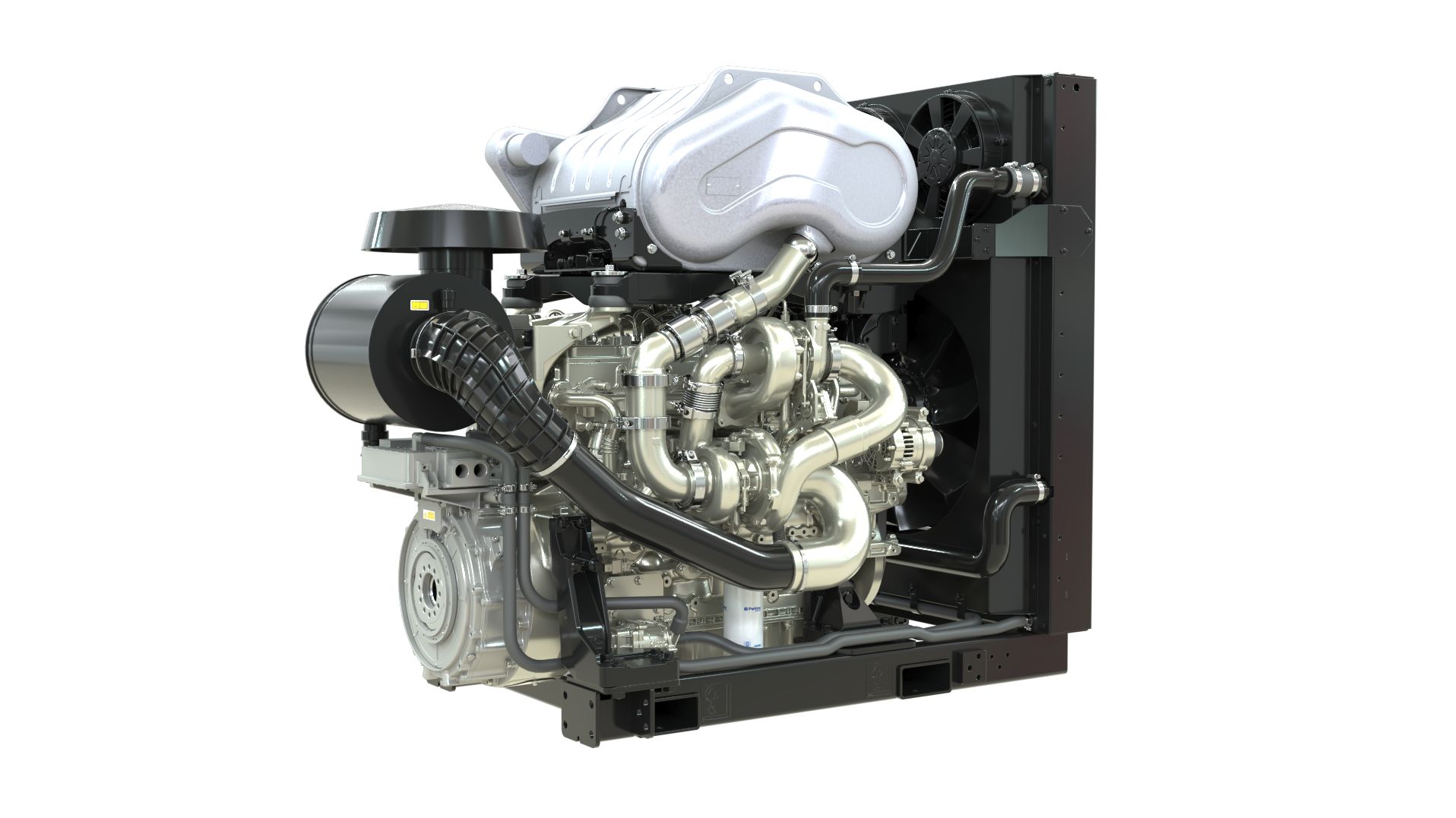
Image: Image: Perkins and Equipmake
Equipmake and Perkins have begun machine testing of the Project Coeus hybrid industrial open power unit in a Terex Ecotec TDS 820 shredder.
The prototype combines a Perkins 1206 spark-ignition engine with a custom Equipmake electric motor-generator, silicon-carbide inverter and associated power electronics. The partners quote combined output of 379kW and peak torque of 1,938Nm between 1,200rpm and 1,500rpm.
Project Coeus is developing a fuel-configurable replacement for conventional diesel industrial open power units. Perkins has based the system on its 1200 Series platform and designed the combustion element around spark-ignited fuels including hydrogen, ethanol, methanol and biomethane.
Electric system supplies boost and regeneration
Equipmake's motor-generator unit can add torque when the machine load rises and recover energy when operating conditions allow. Its silicon-carbide inverter controls bidirectional power flow between the electrical machine and battery.
Using SiC switches allows the inverter to operate at higher switching frequencies and temperatures than a comparable silicon design, although efficiency and size depend on the complete electrical and cooling system rather than the semiconductor alone.
The integrated cooling system is operated on demand instead of continuously. Perkins says this reduces parasitic power consumption and noise while allowing the cooling circuit to respond to engine, inverter, motor and battery temperatures.
Testing moves into a complete machine
The TDS 820 is a high-torque industrial shredder, giving the development team a variable and demanding load profile. Testing at Perkins' Peterborough facility will examine transient response, energy recovery, thermal behaviour, controls and the mechanical integration of the drop-in power unit.
The three-year programme also involves Loughborough University's Wolfson School of Mechanical, Electrical and Manufacturing Engineering. It is supported by £11.14 million of UK government funding through the Advanced Propulsion Centre, with Equipmake receiving £3.24 million for its part of the project.