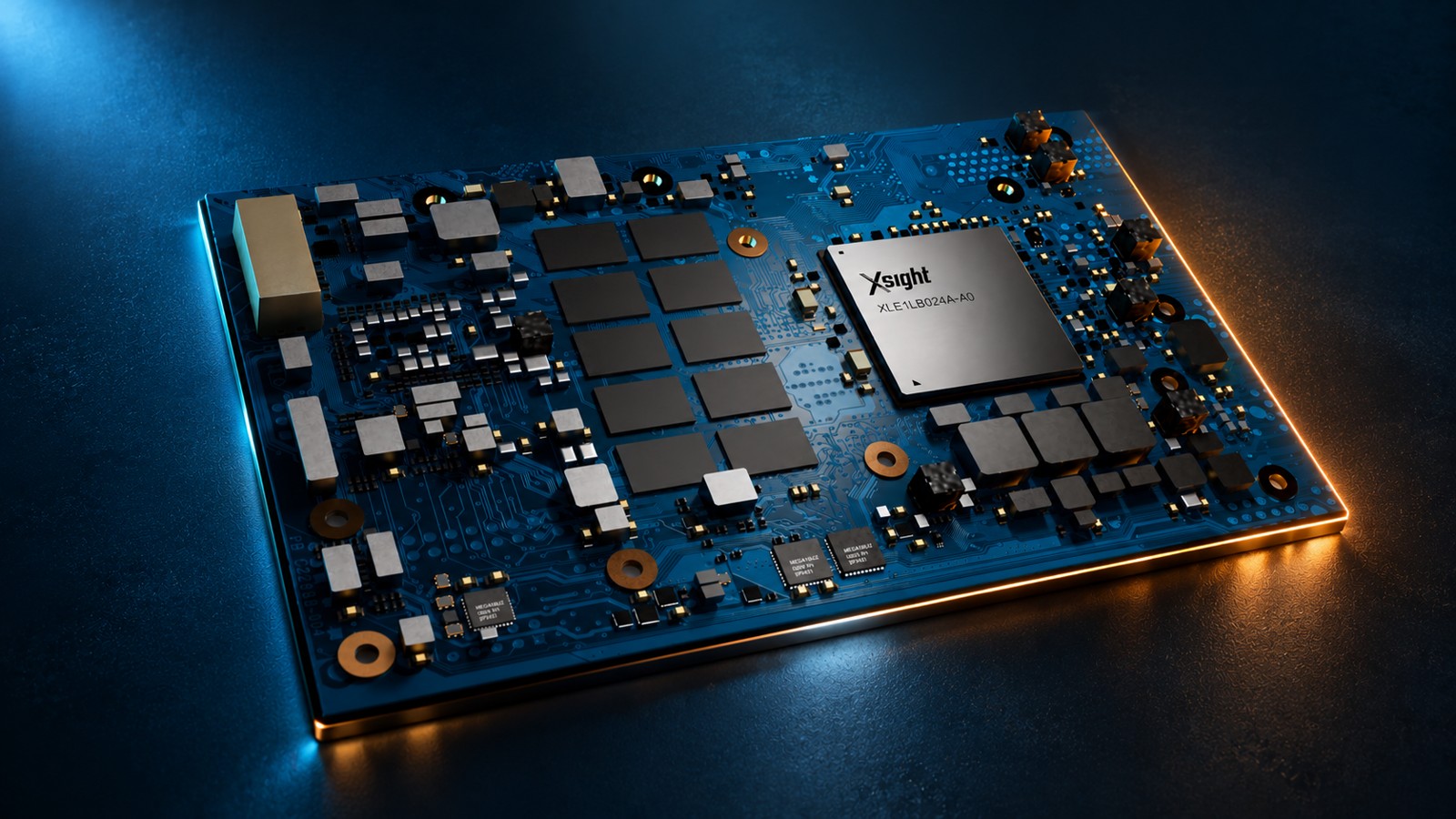
EPC sets out GaN power path from 800V distribution to processor rails
Illustrative image: Unsplash contributor on Pexels
EPC will use electronica 2026 to demonstrate a chain of gallium-nitride power stages extending from 800V DC distribution to the sub-1V rails used by AI processors.
The exhibits bring together several developments that are often discussed separately. One concerns the voltage used to distribute power through a data-centre rack. Another concerns the intermediate bus feeding an accelerator board. The final problem is delivering very high current into the processor package with tolerable loss and transient response.
Why rack distribution is moving upwards
Power loss in a conductor is proportional to the square of current. Raising the distribution voltage allows the same power to be moved with less current, reducing cable and busbar losses and the amount of copper required.
That becomes significant as proposed AI racks move towards power levels measured in hundreds of kilowatts and, in some plans, beyond one megawatt. A conventional 48V bus would require extremely high current before power reaches the individual computing boards.
An 800V DC bus shifts the problem. Distribution current falls, but isolation, clearance, creepage, protection and stored fault energy become more demanding. The higher voltage must still be converted efficiently into the low voltages used inside a server.
An 800V-to-12.5V converter
EPC's EPC91123 demonstration converts an 800V input to 12.5V at up to 6kW. It uses an input-series, output-parallel arrangement made from eight interleaved converter modules.
Connecting the module inputs in series divides the high input voltage between them. Paralleling the outputs shares the load current. EPC combines a half-bridge primary stage with push-pull secondary stages and says the interleaving reduces ripple, distributes heat and lowers the required capacitance.
The company reports measured efficiency above 98% for the architecture. That figure comes from EPC's own development work and will vary with input voltage, load, cooling and the design of the complete power shelf.
The design relies on lower-voltage enhancement-mode GaN devices within each module rather than asking a single transistor to switch the complete 800V bus. This permits devices with lower resistance and charge to be used, at the cost of more complex module balancing and control.
Bringing conversion closer to the processor
EPC is also presenting a 6kW converter that moves directly from 800V to approximately 6V. That intermediate voltage is intended to bring high-voltage distribution closer to the accelerator before the final point-of-load stage.
The last conversion is difficult because a processor operating below 1V can require currents measured in thousands of amperes. Even a small resistance in the motherboard, connector or package produces voltage drop and heat. Fast load changes also require the regulator and local decoupling network to respond before the processor voltage moves outside its allowed range.
EPC's Gen8 power-stage work targets direct conversion from about 6.25V to a sub-1V rail at multi-megahertz switching frequencies. Higher frequency can reduce the size of inductors and capacitors and place conversion closer to the load. It also increases the importance of switching loss, gate-drive timing, layout inductance and thermal extraction.
The architecture is more than a device substitution
GaN's low charge and absence of conventional reverse-recovery loss can support higher-frequency operation than many silicon MOSFET designs. Those characteristics do not remove the surrounding engineering constraints.
An 800V rack requires coordinated protection and isolation. Intermediate-bus choices determine where current becomes difficult to route. Vertical power delivery and voltage-regulator placement affect the package and motherboard. Cooling must remove losses from converters positioned close to already hot processors.
EPC's electronica display therefore describes a proposed hierarchy rather than one drop-in product: 800V distribution, isolated conversion to 12.5V or 6V and high-frequency regulation at the processor. The company will show the systems in Hall C6, booth 221, at electronica 2026.