DARPA moves quantum computing from hardware roadmaps to system validation
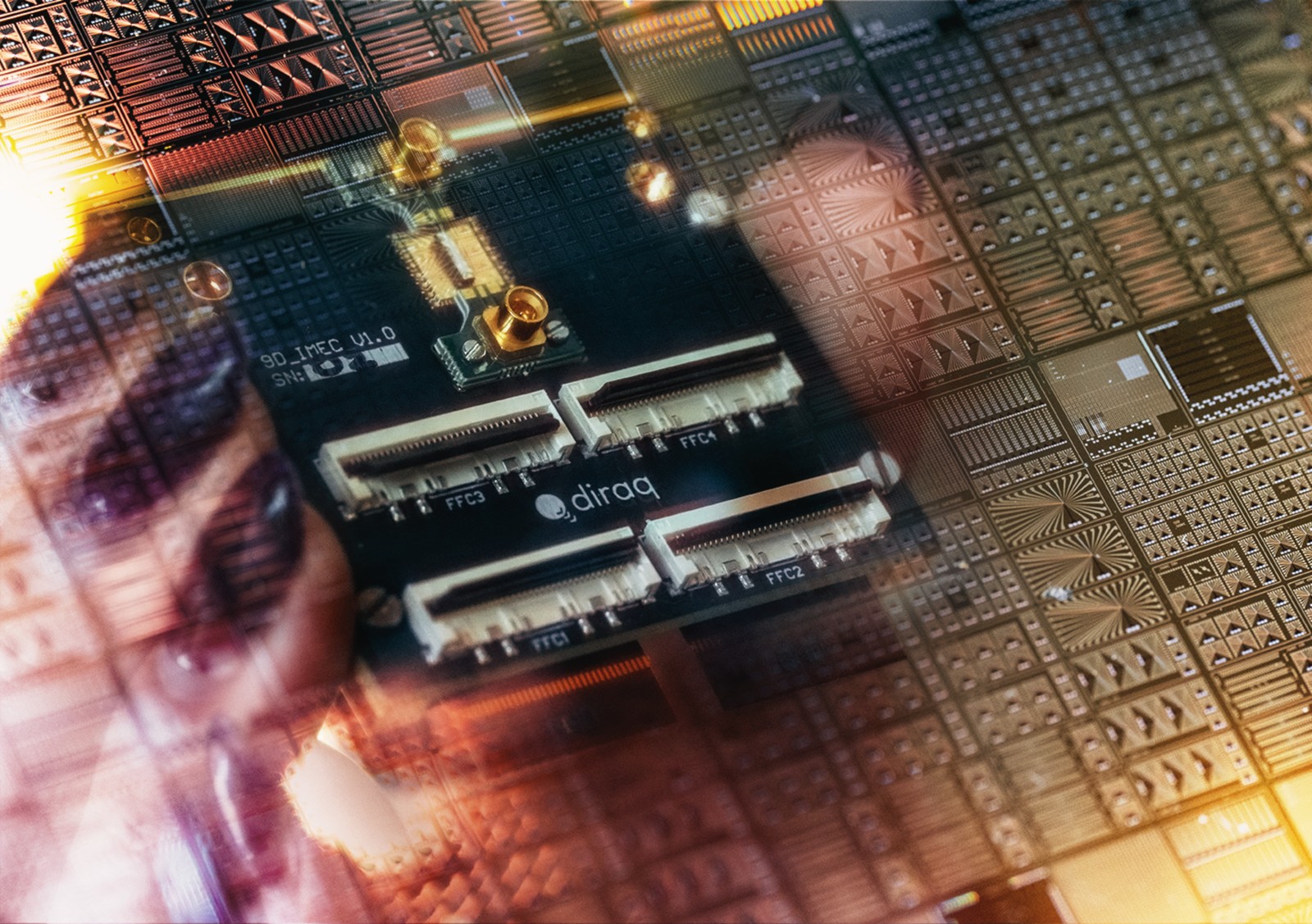
Image: Image: Diraq
DARPA has advanced Atom Computing, Diraq, IBM and IonQ to Stage C of its Quantum Benchmarking Initiative. The 7 October announcement moves four different hardware approaches into work with a government verification and validation team.
Atom Computing uses neutral atoms, Diraq silicon CMOS spin qubits, IBM modular superconducting processors and IonQ trapped ions. They join Microsoft and PsiQuantum, which entered Stage C through the programme's earlier US2QC work.
QBI's target is utility-scale operation by 2033. DARPA defines that in economic terms: the computational value must exceed the machine's cost. Reaching Stage C means the proposed route is being examined in greater depth; it does not mean that a utility-scale machine has already been demonstrated.
What changes in Stage C?
During Stage B, DARPA examined development plans, technical risks, mitigation strategies and the prototypes needed to resolve those risks. Stage C tests whether the proposed system can be constructed as designed and operated as intended.
That brings the engineering dependencies together. A qubit device has to operate within a machine that also provides control, readout, calibration, interconnection and error management. A useful processor result cannot simply be multiplied by an intended qubit count to establish the cost or behaviour of the finished installation.
DARPA's programme allows Stage C awards of up to $300m. The figure is a programme ceiling, not an identical confirmed payment to each selected company. The agency also states that QBI is not intended to select a single winning approach.
A foundry process is one part of a system
Diraq's account provides a concrete example. It reports high-fidelity silicon spin qubits and coherent operation of an eight-qubit array fabricated through an industrial 300mm CMOS-compatible process. The company says an initial $51m tranche will support the next year of its Stage C work.
Diraq argues that using existing semiconductor manufacturing infrastructure gives its architecture a route to scale. That is a credible manufacturing proposition to test, but wafer compatibility does not by itself demonstrate a complete fault-tolerant machine.
The next evidence must connect fabrication to control and operation at larger scale. Repeatedly making devices, connecting them to the required electronics and maintaining their behaviour are different tasks from producing a successful small array. This is the system-level question identified by DARPA's validation objective.
Why the assessment is broader than qubit count
A comparison based only on physical qubits can conceal major differences between architectures. The required control channels, packaging, operating environment and correction overhead contribute to the resources needed for useful computation.
The QBI framework makes the proposed machine the object of evaluation. Its cost definition also means that operating resources matter alongside fabrication. A technically functional system can still miss utility scale if the value it creates does not cover what it costs to build and run.
The selected companies now have different paths to substantiate against that common objective. DARPA's published programme list is current to 8 October and retains other approaches in earlier stages, with further promotions expected as their work progresses.
Sources
DARPA Stage C announcement; QBI structure and current participants; Diraq's Stage C announcement.