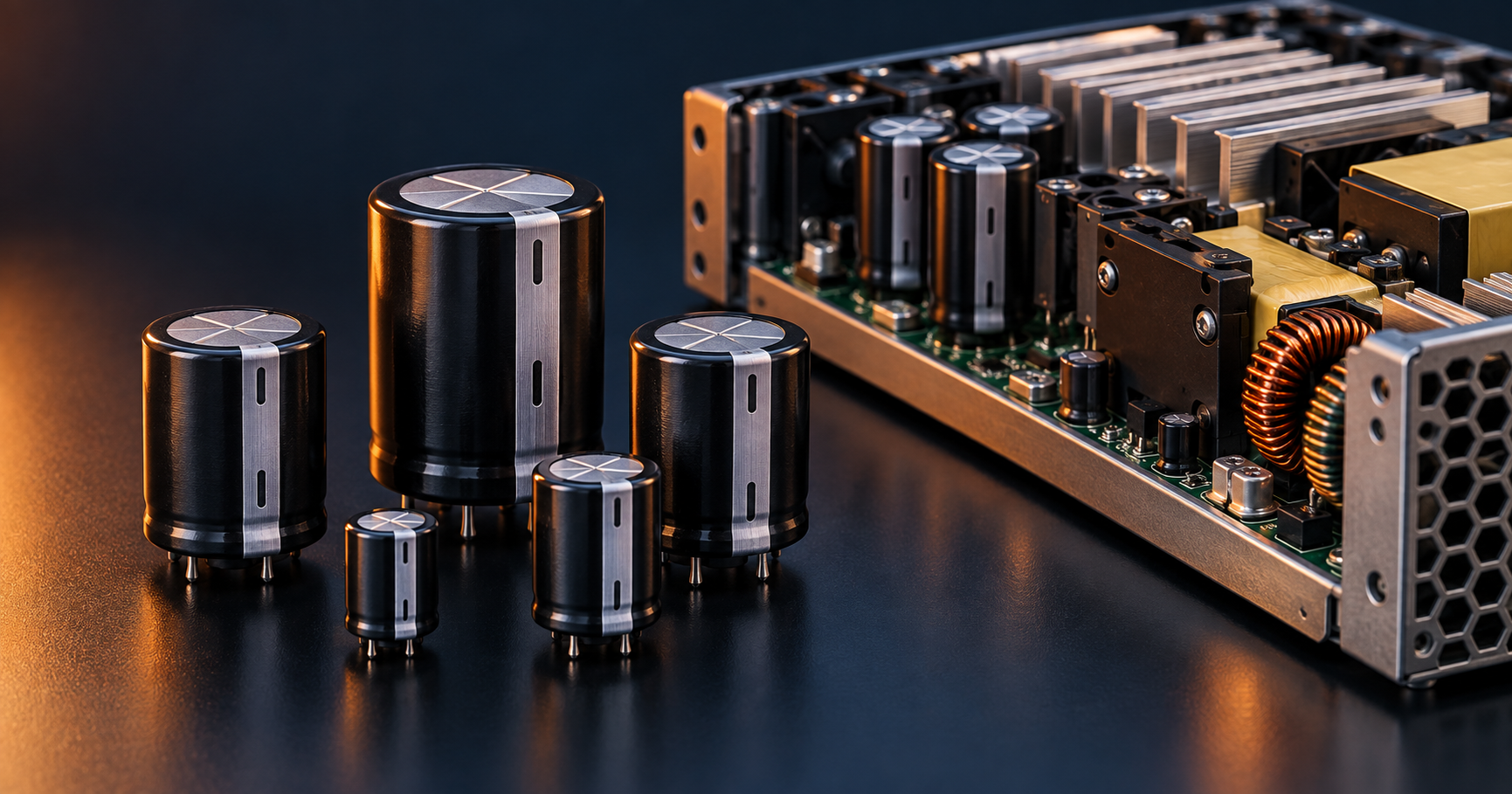
TDK has extended six series of snap-in aluminium electrolytic capacitors, covering parts in the B43645, B43657, B43658, B43659, B43660 and B43661 families. Selected series now reach 500V DC, with case diameters from 22mm to 35mm and lengths from 25mm to 100mm.
The range is positioned for high-density switch-mode power supplies, including AI-server PSUs, UPS equipment and solar inverters. Across the listed families, capacitance spans 80µF to 2060µF and quoted ripple-current capability reaches 5.39A at 120Hz and 105°C. Useful-life figures vary by series and condition, ranging from more than 2,000 hours to more than 5,000 hours at 105°C, rated voltage and the specified ripple current.
A higher voltage rating can create margin in a high-voltage DC link or allow a designer to meet a bus requirement in a smaller case. It does not make every part interchangeable. The six families cover different voltage, capacitance, lifetime and ripple-current combinations. Selection should begin with the exact operating voltage and transient profile, then apply the manufacturer's ripple-current, frequency, temperature and lifetime calculations.
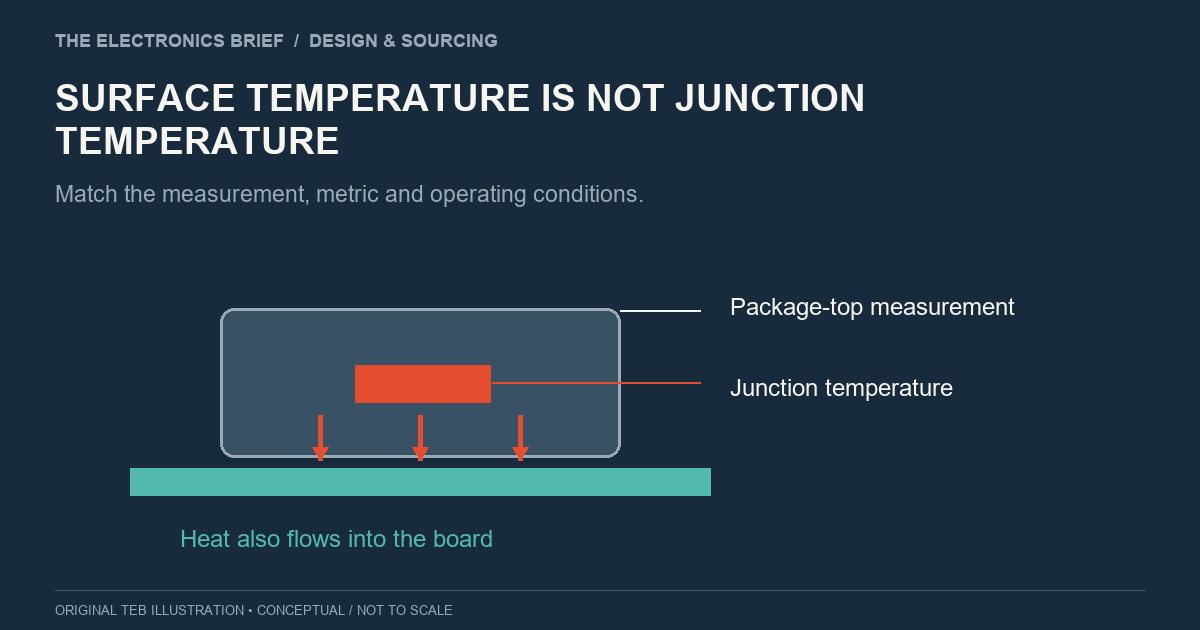
The surrounding thermal environment matters particularly in dense server supplies. A capacitor's internal heating combines ripple current with ESR, while nearby semiconductors and restricted airflow raise ambient temperature. The catalogue life figure is therefore a reference condition rather than the expected service life of a finished PSU.
Design teams should check case size, terminal configuration, pressure-relief clearance, permitted ripple current at the actual frequency mix, ESR, temperature rise and the required hold-up energy. Purchasing should use the complete order code rather than the family prefix and verify production status, lead time and approved manufacturing source.
TDK states that the parts are RoHS compliant and vibration-tested to IEC 60068-2-6, with two-terminal versions standard and three-terminal versions available to support correct insertion. Its AlCap calculation tool can estimate application-specific life. That calculation is useful only when the applied voltage, ripple spectrum, temperature and cooling assumptions reflect the intended design.
Source: TDK Electronics, 15 September 2026.