Synopsys adds design tools to Europe’s chip development platform
Synopsys has agreed to make its electronic design automation software available through the European Chips Design Platform, giving semiconductor startups and smaller companies another route into commercial chip design tools. The agreement with the Chips Joint Undertaking was announced in Brussels on 4 November and covers both Level 1 and Level 2 of the EuroCDP programme.[1]
The software spans digital design from the initial circuit description through implementation, verification and sign-off, together with analogue, mixed-signal and photonic design flows. Synopsys says the coverage extends from early ventures through pre-production, including advanced system-on-chip development for AI and high performance computing.[1]
These tools support different stages of turning a circuit idea into something a foundry can manufacture. A digital design has to be checked for intended behaviour, mapped into available circuit elements and physically implemented, with timing and other constraints verified before manufacture. Analogue and photonic designs add different modelling requirements, so access to one part of the toolchain alone does not cover every design task.[1][2]
EuroCDP is intended to bring those resources together with intellectual property, training and prototyping support. The Swedish Chips Competence Centre describes services covering process design kits, links to pilot lines and foundries and guidance on legal compliance and IP protection. Process design kits carry the models and rules that connect a design tool to a particular manufacturing technology.[2]
Under the wider Chips for Europe Initiative, the design platform sits alongside pilot lines that produce, test and validate emerging technologies. Chips JU identifies advanced logic, heterogeneous integration, packaging and integrated photonics among their focus areas. Early process design kits are intended to let new circuit concepts be tested against those technologies, with the results feeding back into model development before manufacturing transfer.[3]
That arrangement links software access to the infrastructure needed to evaluate a design physically, while national competence centres provide expertise and help smaller organisations reach the platform and pilot lines. It addresses several stages of development that otherwise require separate relationships, from access to design resources to experimentation and validation.[2][3]
Synopsys says participants will use production-proven design, verification and sign-off tools of the kind already deployed by established semiconductor companies. The announcement does not publish a price list or applicant-specific access terms; the new agreement expands the platform’s software offering within the programme rather than announcing unrestricted free licences.[1]
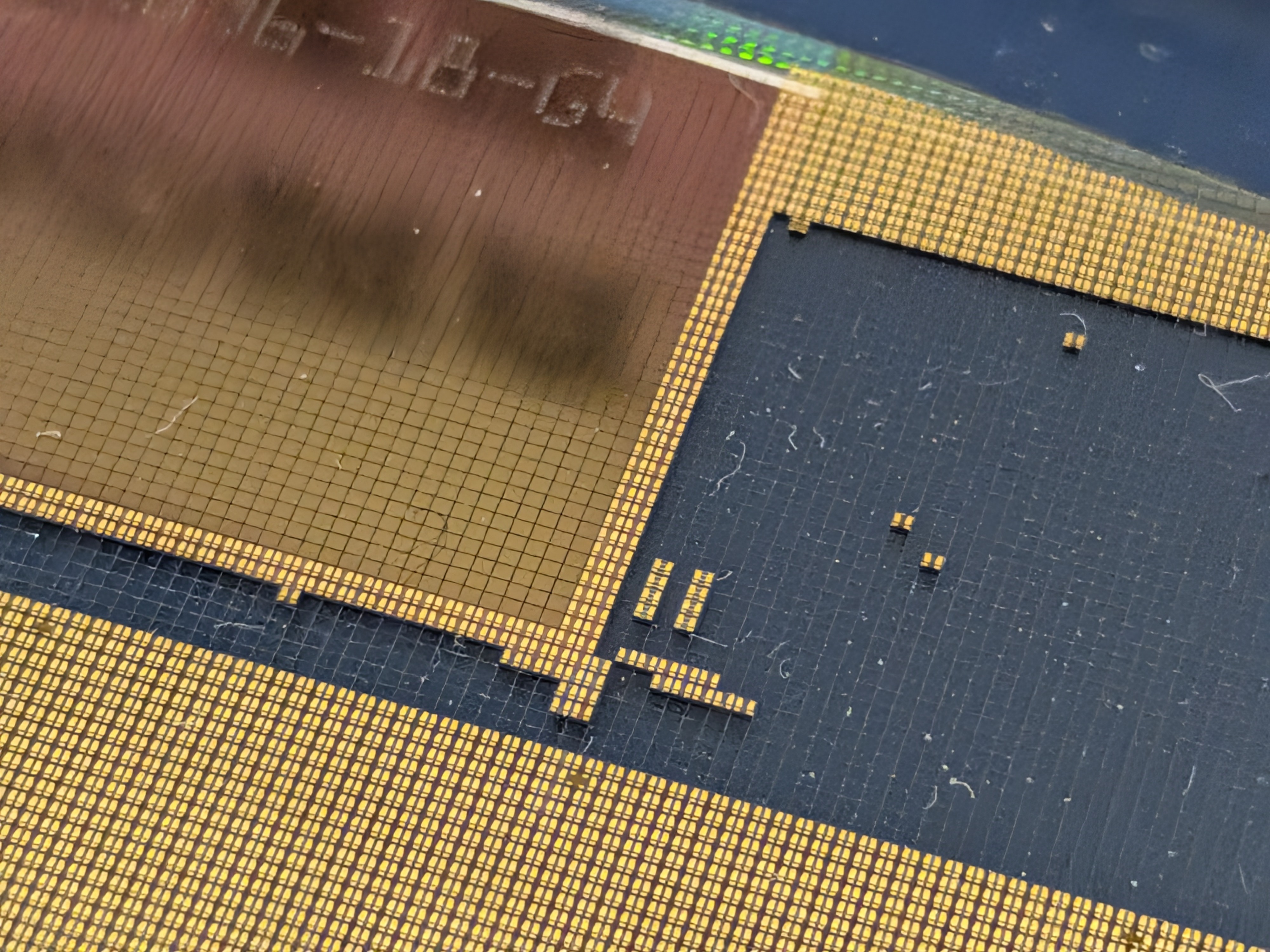
Silicon wafer under magnification. Illustrative photograph. Photo: Syced / Wikimedia Commons, CC0. Image source. CC0.