Siemens agrees to buy Breker for system-on-chip verification
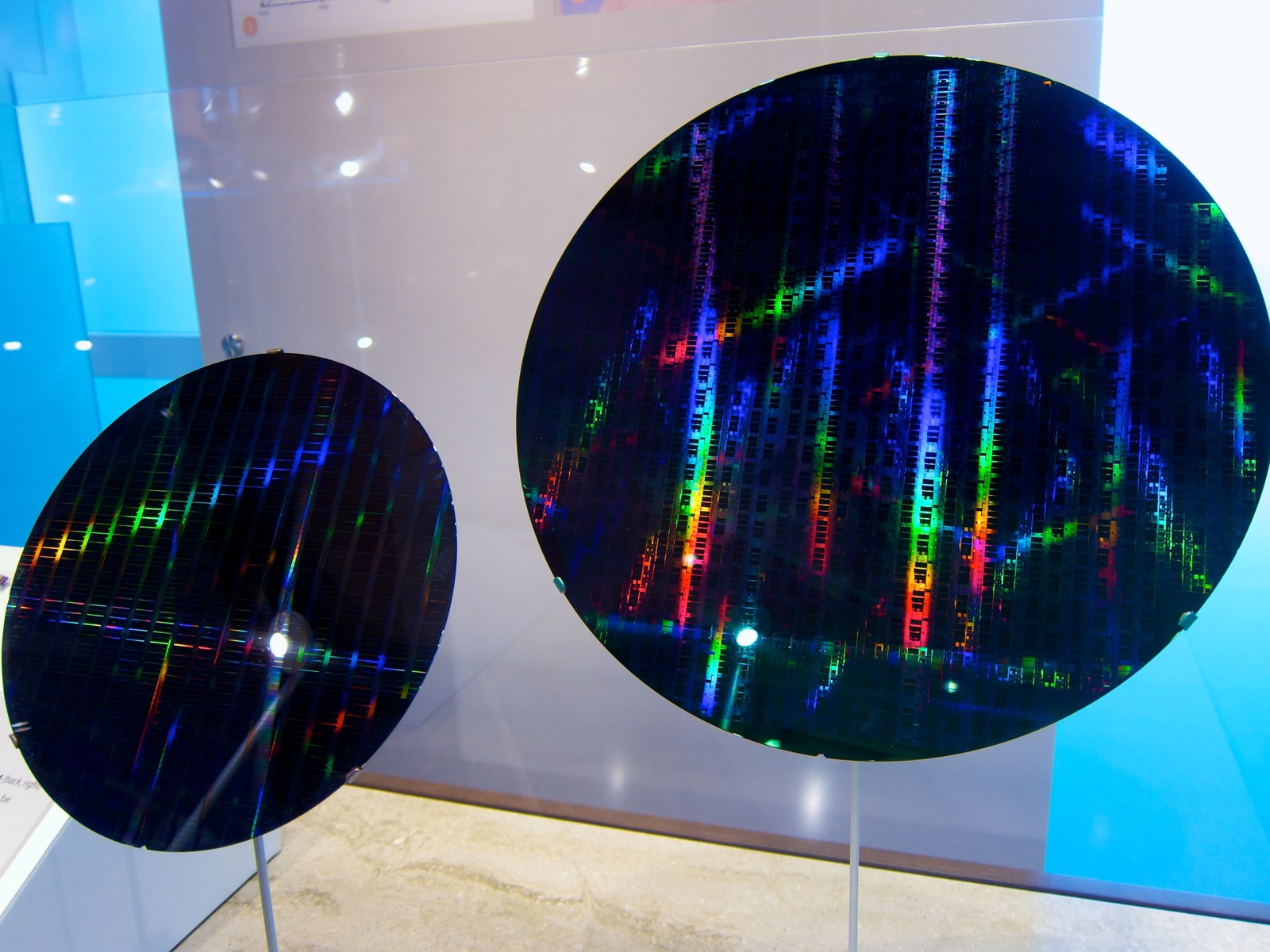
Light diffracts across silicon wafers at the Computer History Museum in California. Photo by Don DeBold · CC BY 2.0 · Resized.
Siemens has agreed to acquire Breker Verification Systems, whose tools generate tests for behaviour that emerges when several parts of a chip are active at once. The planned acquisition would bring Breker’s test synthesis software into Siemens’ Questa One portfolio alongside Avery, its existing verification IP business. Siemens expects the deal to close in December, subject to the customary conditions. It has not disclosed a price.
Cache coherency is one example of what Breker adds. Two processor cores may each execute their instructions correctly, and the interface between a core and memory may pass its protocol tests, yet one core can still see an old value after the other has written a new one. A test has to arrange for the two cores to use the same cache line at the right time and then check what each actually read. A succession of independent reads and writes to unrelated addresses is unlikely to exercise the same fault.
Breker’s TrekSoC starts with a model of the scenario. A verification engineer can describe the activities and their dependencies using C++ or the Accellera Portable Stimulus Standard. From that description the tool generates multithreaded C tests for the processors and synchronises them with transactions elsewhere in the hardware. It can bias address selection towards cache-line collisions, making the interaction deliberate without requiring someone to write out every combination of instructions by hand.
The model also describes what should happen, so the resulting tests can check their own results. A team investigating the cache example can vary the ordering or addresses while retaining the underlying scenario and its expected behaviour. The same basis for a test can carry over from simulation to hardware verification platforms, where a longer workload is practical. A failure that appears late in a hardware run can then be brought back to simulation, where the engineer can follow the internal signals that led one core to read stale data.
Breker was founded in San Jose in 2003 by Adnan and Maheen Hamid. Its software supports Arm and RISC-V designs. Within Siemens, its scenario generation would complement Avery’s checks on individual protocols: the same test could exercise firmware against a register transfer level model while there is still time to change either side of the interface.
Sources: Siemens: acquisition agreement; Siemens: verification engineering; Breker: TrekSoC.