QuantumScape brings solid-state cells into the AI rack's power problem
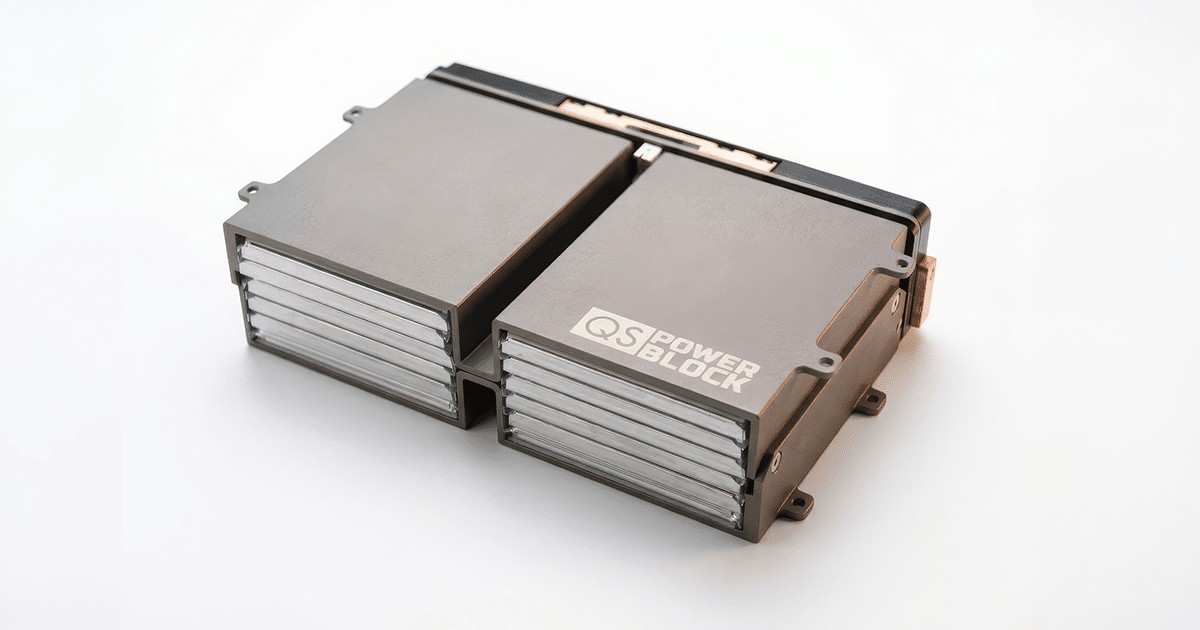
Image: Image: QuantumScape
QuantumScape has introduced QS PowerBlock, an adaptable reference design that brings its solid-state lithium-metal cells into data-centre power racks. Announced on 8 October, the system is intended for different module, shelf and rack formats, including architectures supporting 800VDC distribution.
The company reports four times the power density and five times the runtime against an Open Rack V3 comparison. It states that these results combine prototype testing and modelled system configurations under controlled conditions. Final performance will depend on the implemented design and operating conditions.
The announcement concerns an in-rack energy-storage concept, not a fully specified replacement for every data-centre UPS. Its engineering interest is the location of the stored energy and how quickly that energy can support the equipment beside it.
Power and energy answer different questions
An energy store needs enough output power to meet the load and enough usable energy to support that load for the required time. A high power-density cell can deliver substantial current from a small volume; longer runtime also requires energy capacity and a defined discharge profile.
For scale, a hypothetical constant 1MW load consumes approximately 2.8kWh in ten seconds or 16.7kWh in one minute. These are calculated examples before conversion losses and reserve margins. They show why a runtime claim needs a stated load and system boundary to be meaningful.
QuantumScape positions PowerBlock for the power requirements of future 1MW racks. The move from a cell to such a rack also introduces conversion hardware, conductors, protection, cooling and control. Those elements determine how much of the cell's capability is available at the load.
The established rack architecture is more than a battery
OCP's Open Rack V3 battery-backup module specification describes a narrow-range 48V system containing a battery pack, battery-management system and charger/discharger. It includes standby, discharge, charging, fault and state-of-health modes.
The document specifies a pack able to support 3kW for at least four minutes under its stated capacity, temperature and lifetime conditions. It also describes upstream monitoring and periodic capacity checks. That is a defined module requirement, not a universal specification for all data-centre batteries.
These details explain why integrating a different cell chemistry is a system task. The rack needs to know whether its backup is charged, healthy and ready. Discharge response and fault behaviour have to coordinate with the power bus and other supplies.
Safety claims need their test conditions
QuantumScape's technology replaces the conventional organic separator with a solid-state separator and forms a lithium-metal anode during charging. The company reports cell thermal stability above 300°C in third-party and customer tests.
A cell-level thermal result does not establish the permitted ambient temperature or safety qualification of a complete rack. Pack interconnections, protection and power-conversion components remain part of that assessment. The source announcement does not provide a complete production-system rating or certification package.
PowerBlock will be displayed at the OCP Global Summit from 12 to 15 October at Megmeet's booth. That gives the industry a reference design around which the cell, power electronics and rack architecture can be evaluated together.
Sources
QuantumScape announcement; QuantumScape technology description; OCP ORV3 battery-backup module specification.