LG joins direct V2X and network links in cooperative road safety trials
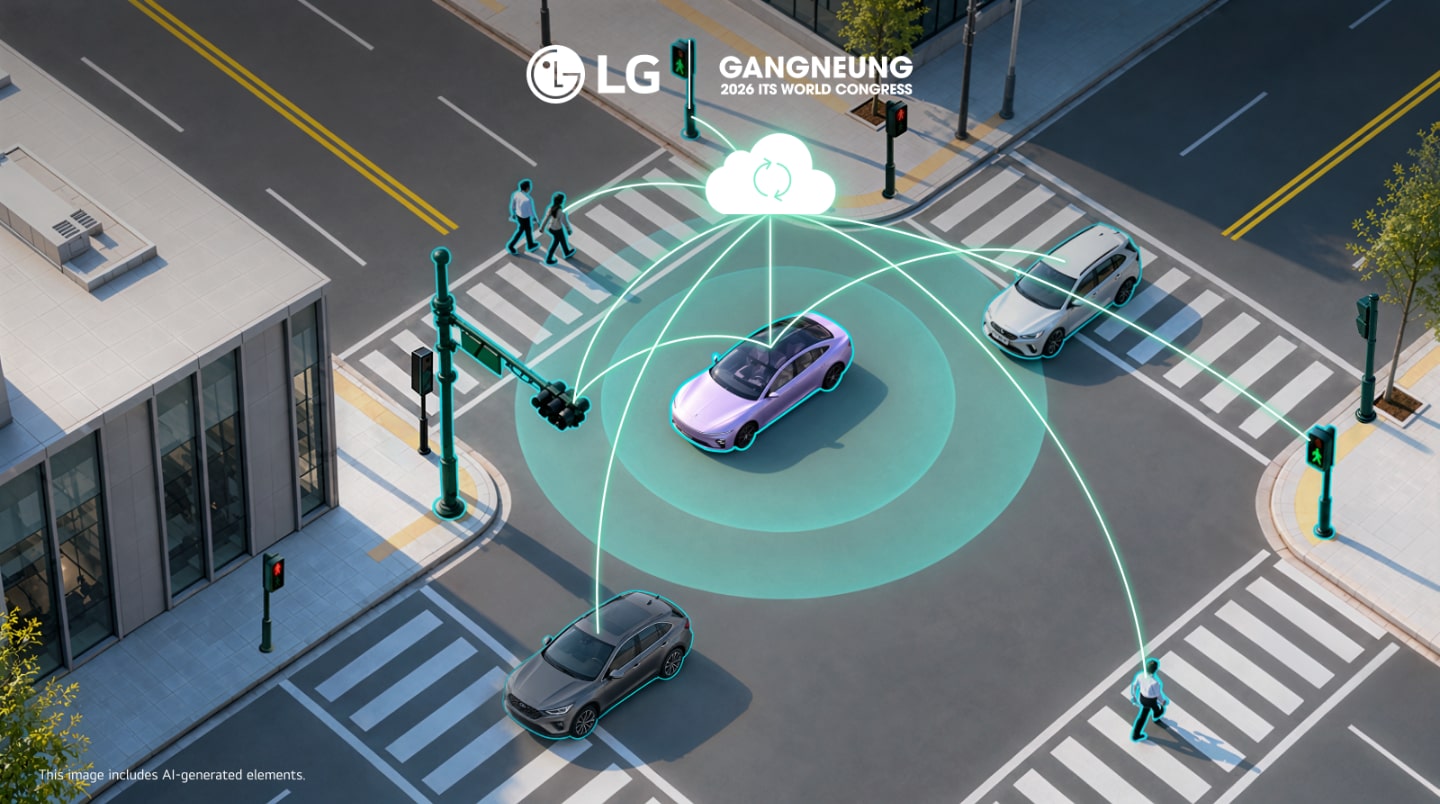
LG is combining direct V2X radio messages with communications between vehicles and the network through the cloud in road demonstrations at the ITS World Congress in Gangneung. The setup includes vehicle telematics hardware, V2X devices and a pedestrian mobile application. Its server architecture draws on 5GAA and ITS Korea standards.
The demonstrations use Euro NCAP cooperative safety scenarios, including obstructed intersections and approaching pedestrians or cyclists. The vehicle can receive information about a road user before its own cameras have a clear view. LG’s Soft V2X platform coordinates the direct and network paths, using message security and predictive functions for quality of service to manage the communications.
The road user’s position was measured before the packet was sent. Both the measurement interval and the communication delay affect how far that position may have changed by the time a warning is generated. The GNSS error adds a further uncertainty when projecting where two road users might meet.
What the road measurements show
In separate work, the 5G Automotive Association examined direct and network communications through laboratory measurements and road trials. One Berlin network trial recorded the following downlink and uplink behaviour:
5GAA Berlin road trial data, separate from LG’s demonstration
- Average downlink latency: 6.2 ms
- Downlink latency at the 99.9th percentile: 14.0 ms
- Average uplink latency: 36.2 ms
The averages are only part of that record. The report describes larger latency spikes around some handovers between 5G and 4G, associated with changing radio conditions. Those late packets extend the age of the information available to the application, even when the typical transfer time looks comfortable. The report also expresses latency alongside a delivery probability. A figure such as 99.9% of measurements within 14 ms describes a different property from a 6.2 ms average.
Position estimates add their own variation. The 5GAA work found limited GNSS availability in some urban conditions and degraded reported accuracy when a phone was carried in a pocket, even under clear skies. For a pedestrian application, the device’s position on the person can therefore change the location information sent to the vehicle.