Lead-free multilayer capacitor returns 21.5 J/cm³ in laboratory test
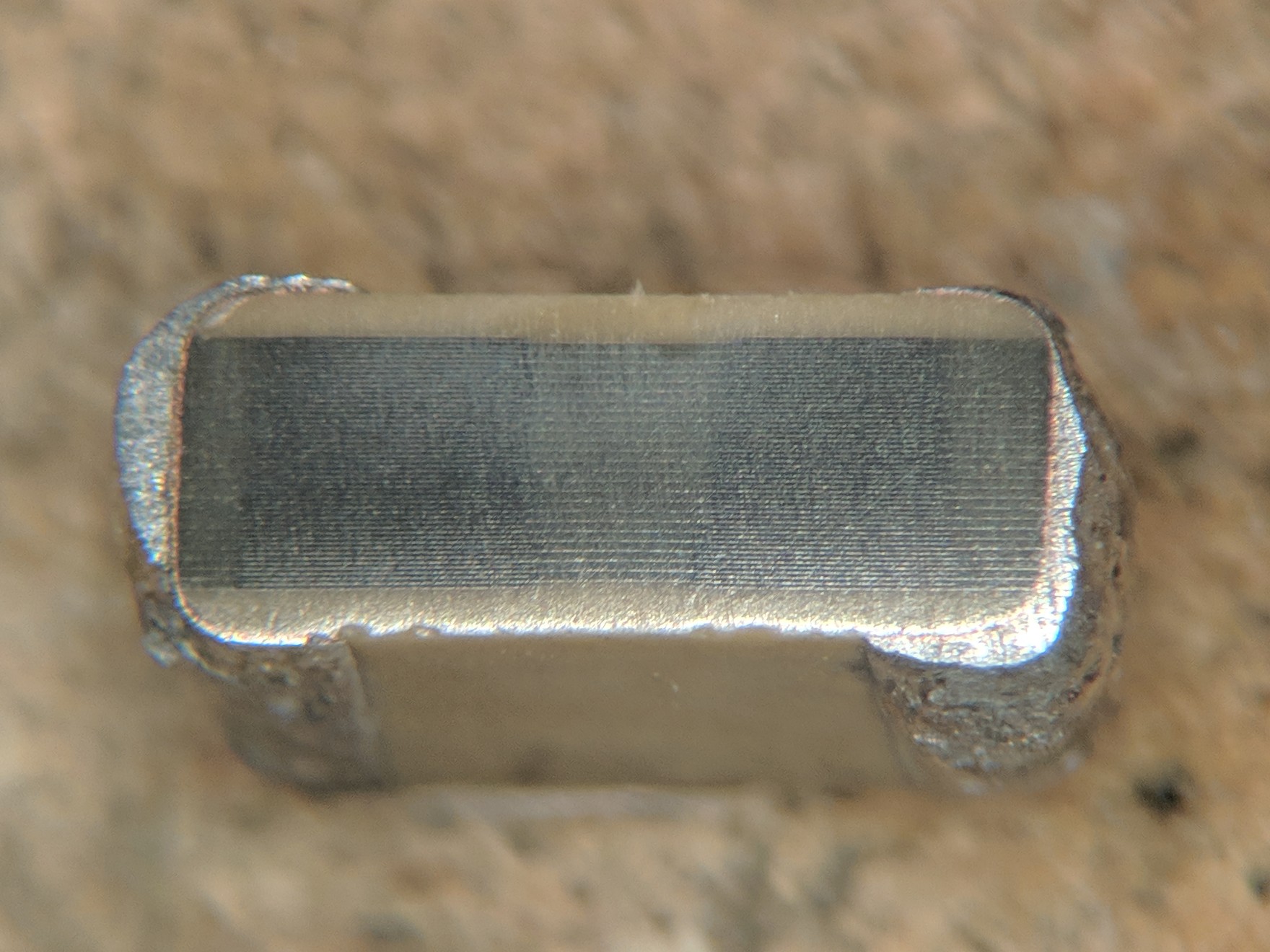
Image: TubeTimeUS · CC BY-SA 4.0
A lead-free multilayer capacitor returned 21.5 J/cm³ of recoverable energy at 1,200 kV/cm after researchers changed the composition of its ceramic dielectric. Their aim was to preserve the strong polarisation that allows the device to store energy while reducing the deformation that can put its layers under stress during repeated pulses.
The new dielectric is a relaxor ceramic based on bismuth sodium titanate. Its composition introduces local disorder, allowing regions of the material to polarise without deforming together as strongly. Atomic-scale imaging revealed patterns in which the polarisation rotated around local regions and simulations suggested those patterns redistribute elastic energy. The team measured an electrostriction coefficient of about 0.010 m⁴/C² and reported 0.073% strain at 300 kV/cm, against about 0.33% for one comparison composition at the same field.
For pulsed power, the rate at which the capacitor can return energy is a separate measurement. At 1,000 kV/cm, the researchers recorded about 12.9 J/cm³ in a discharge test, with a characteristic discharge time of about 14.8 ns. The higher energy density reported at 1,200 kV/cm came from the polarisation measurement. The team’s Weibull fit put the characteristic breakdown field at 1,133 kV/cm, so the peak test does not establish a continuous working rating.
The endurance and temperature tests used lower fields too. After one million cycles at 650 kV/cm, peak polarisation had fallen by less than 5.2%. In a separate test at 700 kV/cm and 10 Hz, energy efficiency stayed above 85% from −30 to 100 °C.
Sources: Nature Communications: capacitor study and test data.