Gallium oxide UV detector reaches a 42 ns response
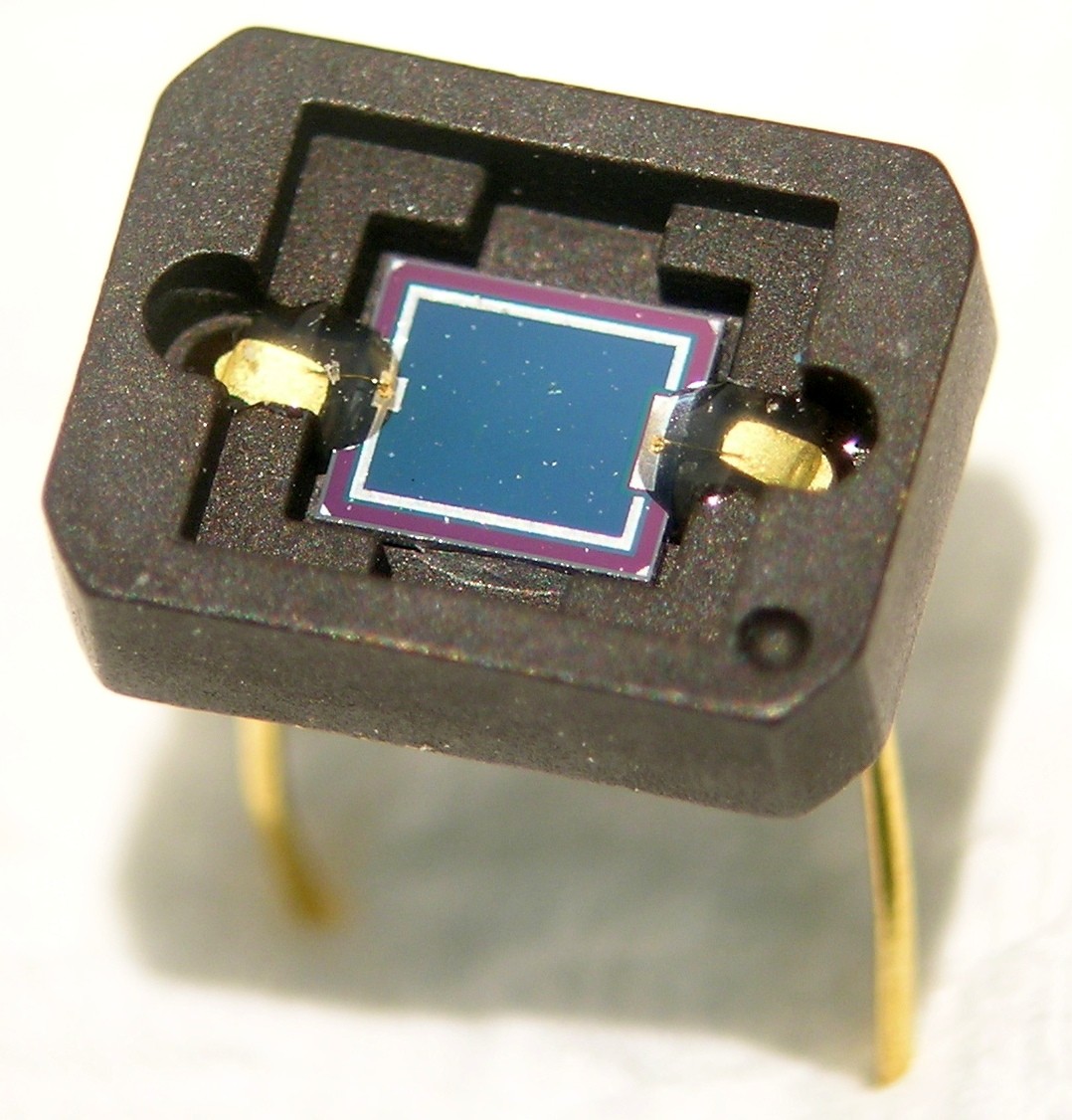
Image: John Maushammer · CC BY-SA 2.5
A gallium oxide avalanche photodiode produced a 42 ns pulse response at −50 V in a deep ultraviolet study, but the team found that driving it harder made it slower. The effect showed up when they compared the detector’s bandwidth with its gain as the reverse bias rose: gain kept increasing after the bandwidth had peaked.
The gallium oxide device targets the solar-blind ultraviolet band, where there is little solar background at ground level. Within the detector, a magnesium oxide barrier impedes unwanted electron injection into the multiplication region. On the other side of the barrier, a p-type manganite layer helps extract holes. That arrangement lets the reverse field accelerate charge carriers for avalanche multiplication while limiting one source of dark current, which can otherwise be amplified along with the light signal.
The 42 ns figure is the full width at half maximum of the fitted pulse response. The researchers converted that response into the frequency domain to estimate a 3 dB bandwidth of 8.3 MHz at −50 V. A direct test with a modulated 255 nm LED confirmed a repeatable response up to 1 MHz, where the light source limited how far the team could extend the measurement.
Near −70 V, the estimated bandwidth fell to 4.4 MHz. At an illumination of 200 µW/cm², the apparent gain was about 34,600, putting the gain-bandwidth product at 152 GHz. The team measured greater apparent gain under weaker light, but the resulting transient was too small to extract a reliable bandwidth and was left out of the calculation.
Noise also changed with bias. Near −70 V the authors estimated a noise-equivalent power of about 0.1 fW/√Hz under 255 nm illumination, using the noise spectrum at 1 kHz. Because the device exhibited low-frequency 1/f noise, that sensitivity figure is tied to the frequency at which it was extracted.
Sources: Nature Communications: avalanche photodiode architecture, bias and response data.