A 2,000V battery connector is one part of a much larger circuit
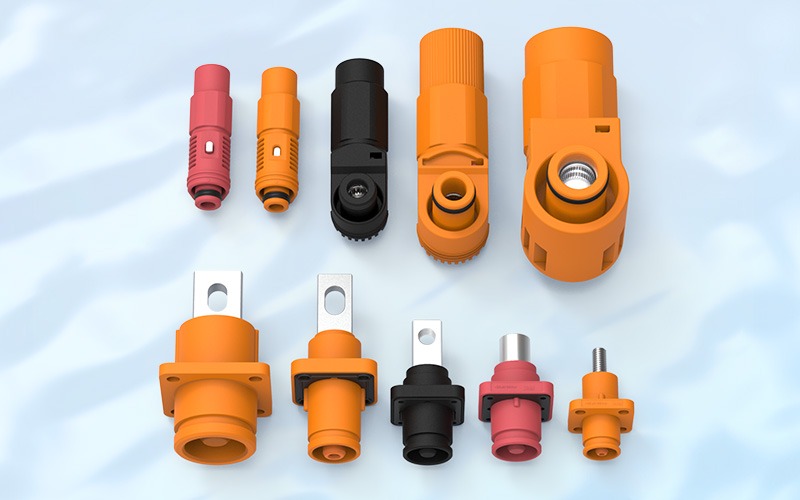
Image: FPIC
Raising a battery system’s voltage changes the current its connections must carry. That is the useful starting point for FPIC’s 2,000V DC, 450A connector, which the company is bringing to electronica, rather than treating either number as a description of an entire storage system.
Consider an idealised 600kW DC power transfer. At 1,500V it requires 400A; at 2,000V, 300A. With the same path resistance, resistive loss falls to 56.25% of the original value because heating follows current squared. That is a calculated comparison, excluding converter losses, not a measurement of FPIC’s product or a qualification of a particular installation.
The calculation explains the attraction of higher voltage. It does not establish cable size, permissible temperature rise or the rating of a complete assembly. A terminal, crimp, conductor and mating contact form one thermal path, while the surrounding equipment determines how readily heat escapes.
What the recognition covers
FPIC’s published certification account describes recognition under UL 4128 for an intercell/intertier connector used with electrochemical batteries. The specified arrangement includes a single-pole cable connector and panel inlet; the evaluated cable version uses 300 kcmil conductors.
The conditions are quite specific. The connector is for use inside equipment, is not intended to be disconnected under load, and has no investigated environmental rating in the recognition described. Its acceptability must be assessed in the complete equipment. For factory assembly, the panel inlet uses copper conductors rated at least 90°C, or copper or copper-alloy busbars.
Those are component-recognition conditions. They do not amount to certification of a finished battery storage system, nor do they establish an outdoor ingress-protection rating.
FPIC gives the certificate reference as UL-US-26118764-0 and the report reference as E533832-20260524. These details come from the manufacturer’s published account; they have not been independently checked against the UL database. The company is exhibiting at stand B2.580 in Munich on 10–13 November.
Sources: Electronica exhibitor information; Manufacturer’s UL recognition account; Manufacturer’s system-voltage discussion and photograph.