The electronics that turn an Orionid into useful data
The Orionids peak on the night of 21–22 October, sending fragments of Halley’s Comet through the atmosphere. Watching one takes a clear patch of sky. Measuring it asks rather more of the camera.
A useful meteor record needs a position and a time, not simply an attractive streak. The Global Meteor Network’s stations put low-light camera modules, Raspberry Pi computers and automated processing to work on that problem. With observations from more than one location, software can reconstruct the path of an object that has already vanished.
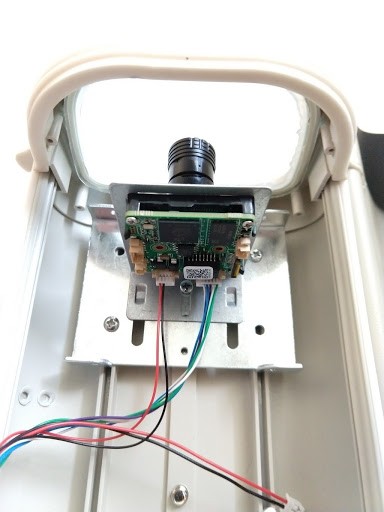
The network’s build guide specifies a Sony IMX291-based IP camera as one established option. A recommended 4 mm f/0.95 lens gives a field of view of roughly 88° × 45°. A fast lens collects light during the brief event; the field of view determines how much sky the station can observe at once.
Image processing inside the camera matters too. The guide records inconsistent results from some alternative modules, including processing that makes the output unsuitable for measurement. A video stream that looks pleasantly smooth to a person is not necessarily preserving the information the detection software needs.
Then there is the direction in which the sensor reads its rows. With a rolling shutter, different parts of the image correspond to slightly different times. The network’s software compensates for that behaviour. Its instructions specifically warn against correcting an upside-down camera by flipping the picture in firmware: the resulting row direction would no longer match the timing correction. The camera has to be physically oriented correctly.
A small real-time clock has a less glamorous job. It helps the Raspberry Pi retain the correct time when power or internet access is unreliable. A carefully measured trail with an unreliable timestamp loses value when it is compared with observations from another station.
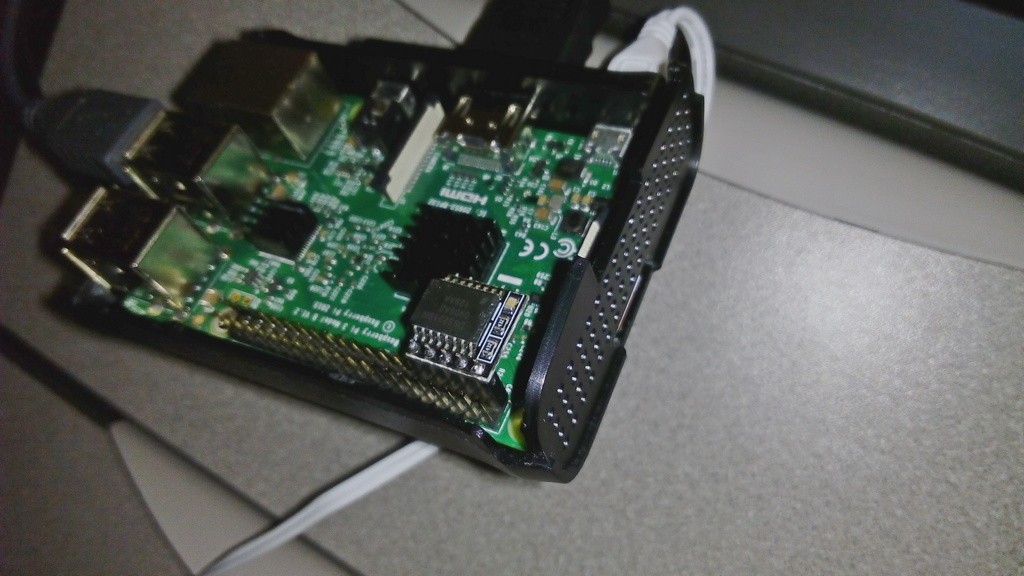
The installation also has to keep acquiring data all night. The build guide recommends at least a Raspberry Pi 4B with 2 GB of RAM and adequate storage, noting that busy showers can overwhelm older hardware. Its preferred camera arrangement uses Power over Ethernet, separating the outdoor camera from the computer while carrying power and data along the same cable.
RMS, the network’s processing software, searches the recorded frames for possible meteors and refines the astrometric and photometric calibration of positive detections. Its outputs include tracks, brightness information, detection plots and summaries of the recording hardware’s behaviour. Data from multiple stations can then be combined to calculate trajectories.
The housing, mount and calibration are part of the instrument as much as the sensor. A changing camera angle or an obstruction in the field of view affects what the software can infer. The network’s output plots include camera-pointing drift, allowing movement of the mount or building during the night to be examined alongside the detections.
Sources: NASA: October skywatching and Orionid peak; Global Meteor Network camera build and timing; RMS recording, processing and results; Peer-reviewed network methodology, CMOS acquisition and calibration.