Qualcomm won $2 from Arm. The expensive part is still to come.
Qualcomm probably won’t spend much time deciding what to do with its damages. A Delaware jury awarded it two dollars in its latest dispute with Arm, one for a breach of its architecture licence and another for interference with its business relationship with Meta.
The more valuable outcome for Qualcomm may be the findings themselves. The court has recorded that Arm failed to meet a contractual obligation and interfered with a customer relationship. Whether that gives Qualcomm grounds to suspend royalty payments is a separate question, with considerably more money attached.
Arm, meanwhile, has reasons to be pleased with parts of the result. It defeated other claims and can point to a damages award that barely covers a cup of coffee. Both companies have claimed success. The judgment gives each of them something to work with. [Source 1] [Source 2] [Source 3]
What was actually decided?
The judgment entered on 13 October says Arm breached Section 5 of Qualcomm’s Architecture License Agreement by withholding technical materials identified as ACKs and OOBs. The finding covers periods both before and after 8 January 2023.
Qualcomm did not win across the board. Arm prevailed on separate Technology License Agreement claims concerning three processor cores, as well as a claim involving reasonable offers for other IP.
The court also recorded intentional and negligent interference with Qualcomm Technologies’ economic relationship with Meta. Those findings resulted in a single $1 award, alongside the $1 for the licence breach. [Source 1]
Qualcomm’s statement emphasised Arm’s conduct, describing the result as “a victory for innovation and competition”. Arm highlighted the claims it had won and said the outcome confirmed that it had “operated in good faith under its technology license agreement”. [Source 2] [Source 3]
There is quite a lot behind the word “licence”
For anyone buying a processor or a module containing one, the licensing arrangements behind its CPU can seem fairly remote. The device arrives with a datasheet, a software development kit and a price. The negotiations that made it possible usually stay somewhere upstream.
For a company developing its own CPU, those arrangements reach directly into the engineering programme.
Arm offers more than one route. A chip designer can license an Arm-developed processor core and incorporate it into a system-on-chip. An architecture licensee can instead develop its own CPU implementation that conforms to the relevant Arm architecture.
That second route gives the designer substantial freedom. The architecture sets out the behaviour software expects, including the instruction set and memory model. The implementation determines how the processor delivers it, with choices about pipelines, caches and execution resources affecting performance, power consumption and silicon area. Sharing an architecture does not make two processors identical. [Source 4]
But the designer also has to establish that its implementation behaves correctly. Arm’s own explanation says independently developed CPUs must pass its mandated compliance suite. [Source 5]
That makes access to verification materials part of the practical relationship between the companies. Permission to build a processor is valuable, but so is the ability to complete the work needed to demonstrate that it conforms.
The latest judgment establishes a failure to supply particular materials. It does not tell us that a shipping Qualcomm processor is defective, or put a figure on any engineering delay caused by that failure.
This is not simply another verdict on Nuvia
There have been enough proceedings between these companies for the individual cases to blur together.
Arm’s original 2022 action challenged the use of technology following Qualcomm’s acquisition of Nuvia. In December 2024, a jury found that Qualcomm had not breached Nuvia’s architecture licence and that CPUs incorporating the acquired designs were licensed under Qualcomm’s own agreement.
A September 2025 judgment upheld those findings and ruled for Nuvia on the unresolved claim. Arm appealed.
The action behind this month’s verdict began separately, in April 2024. Qualcomm initially alleged that Arm had failed to provide deliverables required by its architecture licence. The case subsequently expanded to include licence-termination communications and disputes over offers under its Technology License Agreement. [Source 6]
One set of proceedings concerned Qualcomm’s rights to use the acquired technology. The other examined obligations and conduct within its relationship with Arm. They are connected, but winning one does not automatically settle the other.
A supplier relationship with more competition in it
While the lawyers have been working through those questions, Arm’s business has been changing.
In March, it announced its first production silicon product, the Arm AGI CPU for AI data centres, with Meta as lead partner and co-developer. Arm presented the move as another option for customers alongside licensing IP or adopting compute subsystems. [Source 7]
For a customer that wants to deploy computing hardware without developing a CPU, that broader offering may be attractive. For a company investing heavily in its own processor implementation, the relationship becomes more complicated: its architecture supplier is also moving further into the market for finished silicon.
That development does not establish anything about the conduct considered in this trial. It does explain why the commercial boundaries deserve attention. Technical access, support commitments and licensing terms become particularly sensitive when partners have overlapping ambitions.
Where the larger bill could appear
Qualcomm is seeking a five-year suspension of royalty payments under a contractual provision, according to Reuters. Arm disputes whether that provision is enforceable. Judge Maryellen Noreika must decide the issue separately; the jury’s award does not give Qualcomm an automatic royalty holiday. [Source 8]
Royalties remain central to Arm’s business. For the quarter ended June 2026, it reported $715 million in royalty revenue and $574 million in licence and other revenue. Those company-wide figures do not reveal Qualcomm’s contribution or quantify the disputed payments. They do show why a prolonged suspension would be a much more serious matter than the damages awarded so far. [Source 9]
For engineering teams and component buyers, the immediate judgment contains no instruction to stop shipments or redesign products. [Source 1]
The next decision to watch concerns the commercial terms behind future development. A custom CPU programme depends on years of investment and a continuing relationship with the architecture supplier. Qualcomm has obtained findings it wanted and Arm has defeated claims it rejected. The price of continuing to do business together is still being argued over.
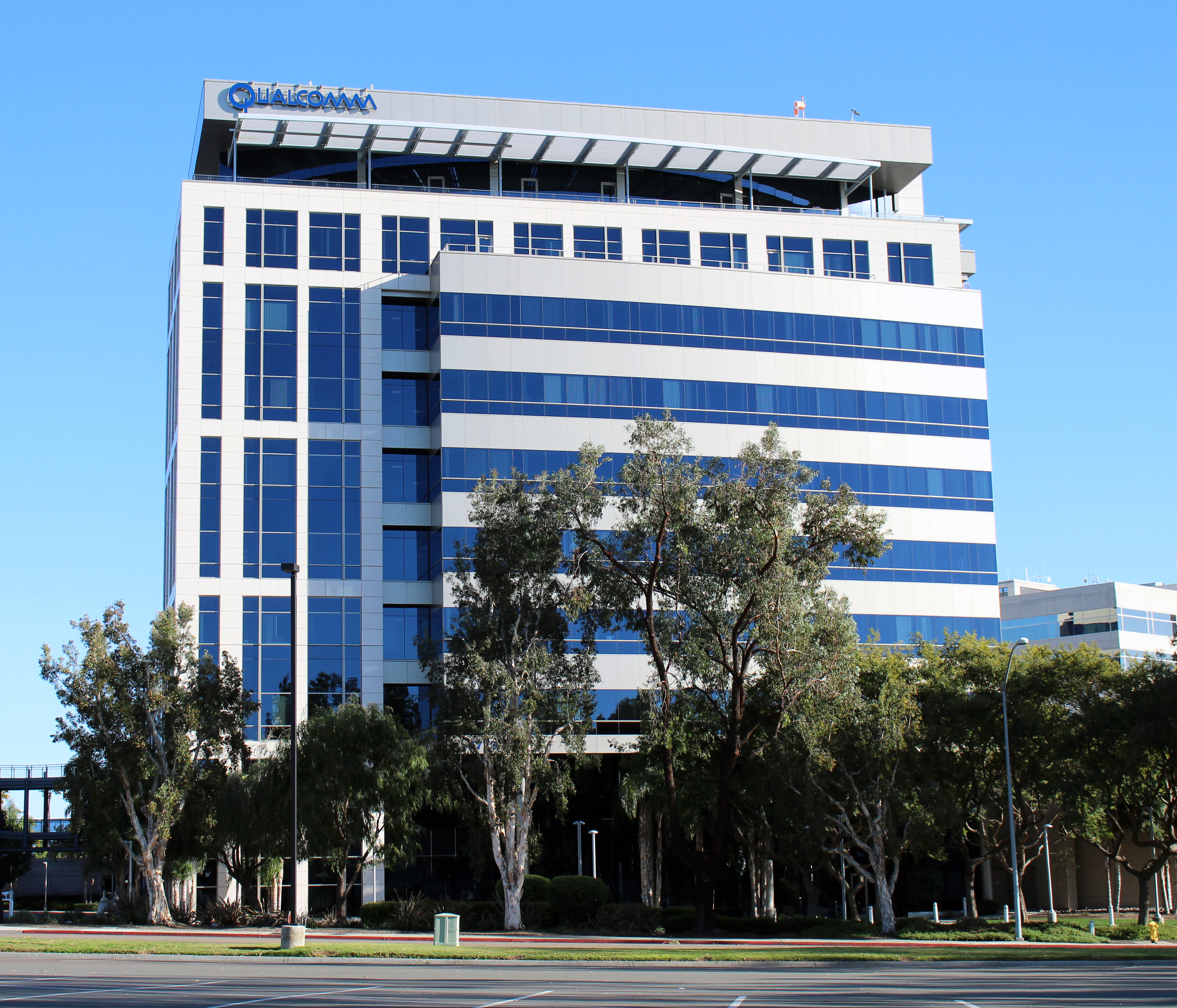
Image: Coolcaesar / Wikimedia Commons, CC BY-SA 4.0. Qualcomm headquarters, San Diego. Archive photograph taken on 26 December 2015; image unmodified.