iPhone Duo divides the battery and changes the route for heat
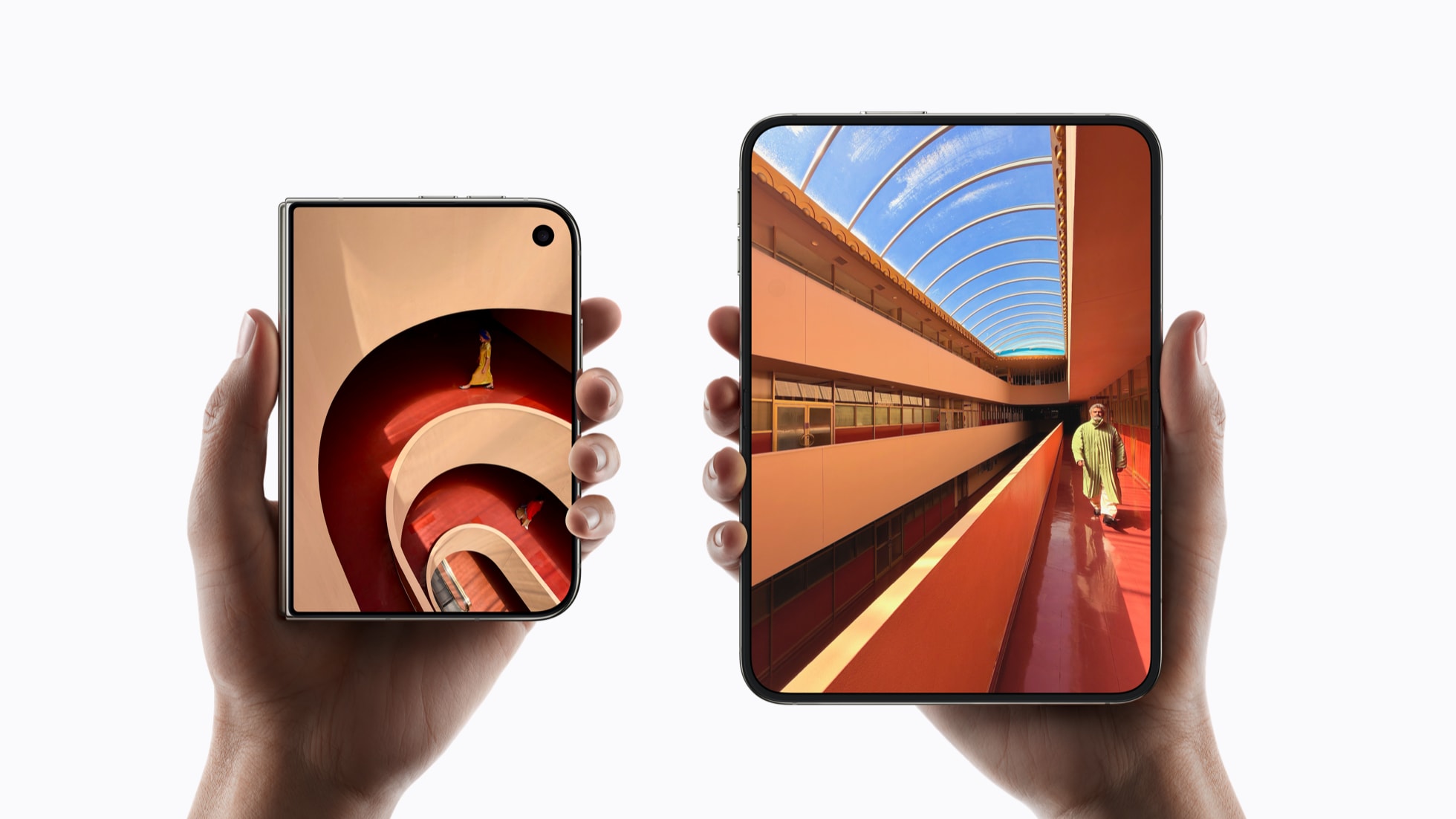
Apple’s first folding iPhone places a battery in each half and connects its A20 Pro package directly to a custom vapour chamber. With iPhone Duo now on sale, those choices offer a more useful engineering story than the hinge alone.
Splitting a phone changes the space available for energy storage. Apple says it uses one high energy battery on each side, with silicon and energy rebalancing algorithms allowing the pair to operate as one supply.
A pair of cells creates scope to distribute capacity through otherwise awkward internal volumes. It also leaves the power system managing two physical sources whose temperature and state of charge need not remain identical. Apple has not identified whether the cells share a direct parallel connection or use independently controlled conversion paths.
Heat spreading starts at the package
The direct connection between A20 Pro and the vapour chamber is particularly interesting. A heat spreader has limited value if the thermal resistance between it and the silicon is high. Bringing the spreading structure into the package design can shorten that part of the thermal path, although sustained performance still depends on where the heat is ultimately rejected.
Apple claims up to 35% better sustained performance than iPhone 17 Pro. Both the processor and the thermal design have changed, so that comparison does not isolate the chamber’s contribution.
Nor does an unfolded device automatically provide twice the useful cooling area. Heat has to reach the surfaces available to dissipate it. A thin structure, separated compartments and the paths across the hinge all affect that distribution. The published information does not reveal enough of the internal thermal network to calculate it.
The displays create different operating loads
The new display engine can drive the inner and outer panels simultaneously, including the camera preview visible on the outside while the device is open. The power demand therefore depends on which panels are active as well as the workload on A20 Pro.
Apple rates video playback at up to 31 hours using the inner display and 44 hours using the outer one. Those system level test figures show different operating endurance, but do not directly measure either panel’s standalone power consumption.
The folding display also needs movement within its own stack. Apple describes glass layers and custom adhesives that allow layers to slide relative to one another, with a titanium support plate underneath. That relative movement accommodates bending strain. It also makes the adhesive system part of the mechanical design, rather than simply a means of holding the display together.
Sources
Image: iPhone Duo folded and unfolded. Apple Newsroom press image. Image source.