The Friday Briefing: The AI boom is being sold in advance

AI-generated editorial illustration: The Electronics Brief
Vantage’s agreement to reserve more than a gigawatt of power equipment manufacturing capacity makes the AI investment story look reassuringly substantial. There is a customer, a supplier and a plan to turn future demand into equipment. Set it alongside Verizon’s fibre supply agreement running through 2032, though, and the story becomes less comfortable. Companies with the money and confidence to commit early are not simply forecasting demand. They are securing places in production schedules that stretch well beyond the current spending cycle.
The supply chain is not waiting passively for the boom to arrive. It is being booked in advance, and the next cab off the rank is often being chosen before the queue has even formed.
The concern came through clearly in our reader poll. When we asked whether electronics was sleepwalking into another global chip shortage, the strongest response pointed to shortages in selected components, with concern about a broader squeeze close behind. Broadly stable supply attracted much less confidence.
That leaves room for an industry that is growing strongly while remaining distinctly uncomfortable to buy from. Availability only has to deteriorate in one awkward corner of a bill of materials to hold up a finished product, regardless of how much spare capacity exists elsewhere.
Last week’s Briefing asked who would get the capacity. This week, some of the largest customers showed how they intend to secure it. Their commitments reach beyond processors into the power and communications infrastructure needed to put those processors to work. Meta’s account of its Prometheus supercluster adds another layer, showing how much additional hardware may be required simply to keep a large installation productive.
There is plenty to welcome here. Suppliers need credible demand before committing to expensive expansion, and customers prepared to make firm commitments help provide it. But there is a difference between creating capacity and making it available.
A new factory will have a process mix, a qualification programme and customers whose requirements helped justify its construction. By the time it opens, part of its output may already have a destination. The investment total alone tells us very little about what will be available to a customer who has yet to place an order.
The same applies to the data centre itself. Nvidia says its new DSX POD reference design could reduce deployment at a prepared site from six months to as little as 14 days, with partner deliveries expected in early 2027. That is a remarkable claim, but it needs to be described carefully. It is not a universal claim that every data centre can be built from scratch in two weeks. It refers to the deployment and commissioning of increasingly standardised, pre-integrated AI infrastructure once the site, power, cooling, networking and other enabling work are ready. Nvidia’s DSX POD announcement.
The result is beginning to resemble the Lego sets many of us played with as children. A collection of standardised modules can be combined quickly, provided the right pieces have already been made, are waiting in the box and have not rolled under the sofa or the television.
The final installation can move at software like speed only because much of the complexity has been pushed earlier in the process: into factory built systems, repeatable designs, prequalified suppliers and equipment reserved before it is needed. Faster deployment therefore strengthens the case for planning the manufacturing chain in advance. If a customer can bring a prepared AI installation online in weeks, a missing power system, fibre assembly or qualified component can become the limiting factor.
If the biggest buyers are already reserving tomorrow’s supply, are we really looking at a capacity expansion, or simply a more orderly way for the strongest customers to get to the front of the queue?
Fibre suppliers cannot manufacture their way out of this overnight
Monday’s optical fibre research from TrendForce gives that concern some substance. The firm expects shortages to persist until at least 2028, estimating that global capacity utilisation has reached 92% while inventories have fallen from four months in 2024 to one month.
This is not a shortage caused by a single missing component. It is a supply chain running with very little slack. The constraint starts upstream of the cable itself: expanding preform production requires deposition equipment and established production processes, which TrendForce says can take 18 to 24 months to put in place. Demand can therefore reach the order book long before the manufacturing response reaches the drawing tower.
The timing is awkward. Data centre deployment could accelerate to weeks at a prepared site; the equipment needed to support it may take years to add. Nvidia’s proposed reduction in deployment time makes that mismatch more important, not less. Faster commissioning compresses the final stage of delivery, leaving less room for a late fibre, power or networking component to catch up.
TrendForce’s price forecasts reflect that pressure, although the differences between applications deserve attention. Average 2026 prices for bend-insensitive fibre used within data centres are expected to exceed five times their 2025 level. That forecast concerns a specified fibre category; it cannot be applied indiscriminately to finished cable prices or existing supply contracts. TrendForce research.
Verizon’s September agreement with Corning shows how a large customer is approaching the longer term. Covering more than 80 million fibre miles and connectivity solutions for delivery between 2027 and 2032, it supports broadband expansion alongside the networks connecting AI infrastructure.
For Corning, that commitment provides a basis for planning investment. Verizon gains a supply relationship extending years beyond a spot purchase. Neither side has to pretend that future availability will take care of itself. That is sensible procurement, but it is also a reminder that the fibre market is being shaped by customers willing to make very large commitments years ahead of delivery. Verizon and Corning agreement.
Vantage is buying its place in the production schedule
The agreement between Vantage and Heron Power Electronics brings the same approach into power conversion, where the choice of architecture also determines which equipment needs to be manufactured.
Vantage has secured more than 1 GW of manufacturing capacity for Heron Link solid-state transformers. The proposed system converts medium-voltage grid power to 800 VDC with integrated energy storage, targeting conversion efficiency above 98.5%.
The wording matters. This is reserved capacity to manufacture equipment, not a gigawatt of electricity newly available at a site. Even so, it is a substantial commitment to a supplier and an architecture before the resulting deployment programme is complete. Vantage is not merely saying that it expects to need the equipment; it is helping determine whether the equipment will be there when the need arrives.
The attraction is understandable. Reducing conversion stages may simplify the electrical installation, but the equipment still has to arrive in time to support the campus programme. Reserving its manufacture brings one of those dependencies into a commercial agreement, giving Vantage something firmer to plan around than an expectation that a suitable system will be available when required. Vantage and Heron announcement.
That is the broader pattern emerging across the industry: demand is being converted into reservations before it becomes a shipment.
It also helps explain Nvidia’s claim of reducing prepared-site deployment from six months to as little as two weeks. A standardised AI data centre can be assembled quickly only when the major elements have already been specified, manufactured, delivered and coordinated. The speed is therefore partly a construction achievement and partly a supply chain achievement. It depends on moving uncertainty out of the final installation and into earlier commitments.
The Lego analogy is useful here, but only up to a point. The modules may be standardised, yet they are not interchangeable toys. A power conversion system, fibre assembly or cooling unit still has to match the site, the electrical architecture and the required performance. The speed comes from assembling known pieces, not from making every piece generic.
Some of Meta’s GPU spending buys recovery time
Meta’s explanation of its Prometheus supercluster adds a different complication to the demand figures. The hardware purchased for a training job can substantially exceed the hardware actively doing the training.
Its example provisions 37,656 GPUs for a run with 32,768 active GPUs, a difference of 4,888 processors. Within each NVL72 domain, the training slice uses 64 GPUs, leaving eight available as spares, with additional racks held to cover failures that remove an entire rack from service.
The provisioned total is therefore approximately 15% above the active GPU count. That margin has an engineering purpose: when a component fails, replacement capacity can shorten recovery and protect a much larger investment in the rest of the cluster. At this scale, waiting for a replacement can interrupt an expensive training run and leave thousands of other processors underused.
The result is a more complicated picture of demand. Some of the spending is buying resilience, and the return comes through the performance of the complete system rather than every purchased GPU participating in every training step.
From the manufacturing side, however, that distinction does not reduce the requirement. The spare processors still need to be built and supplied. Redundancy creates real hardware demand even when the hardware’s immediate purpose is to wait. Engineering at Meta.
The order book moves faster than the factory
The commitments from Vantage, Verizon and Meta all point to the same problem: the demand signal is arriving before the supply response.
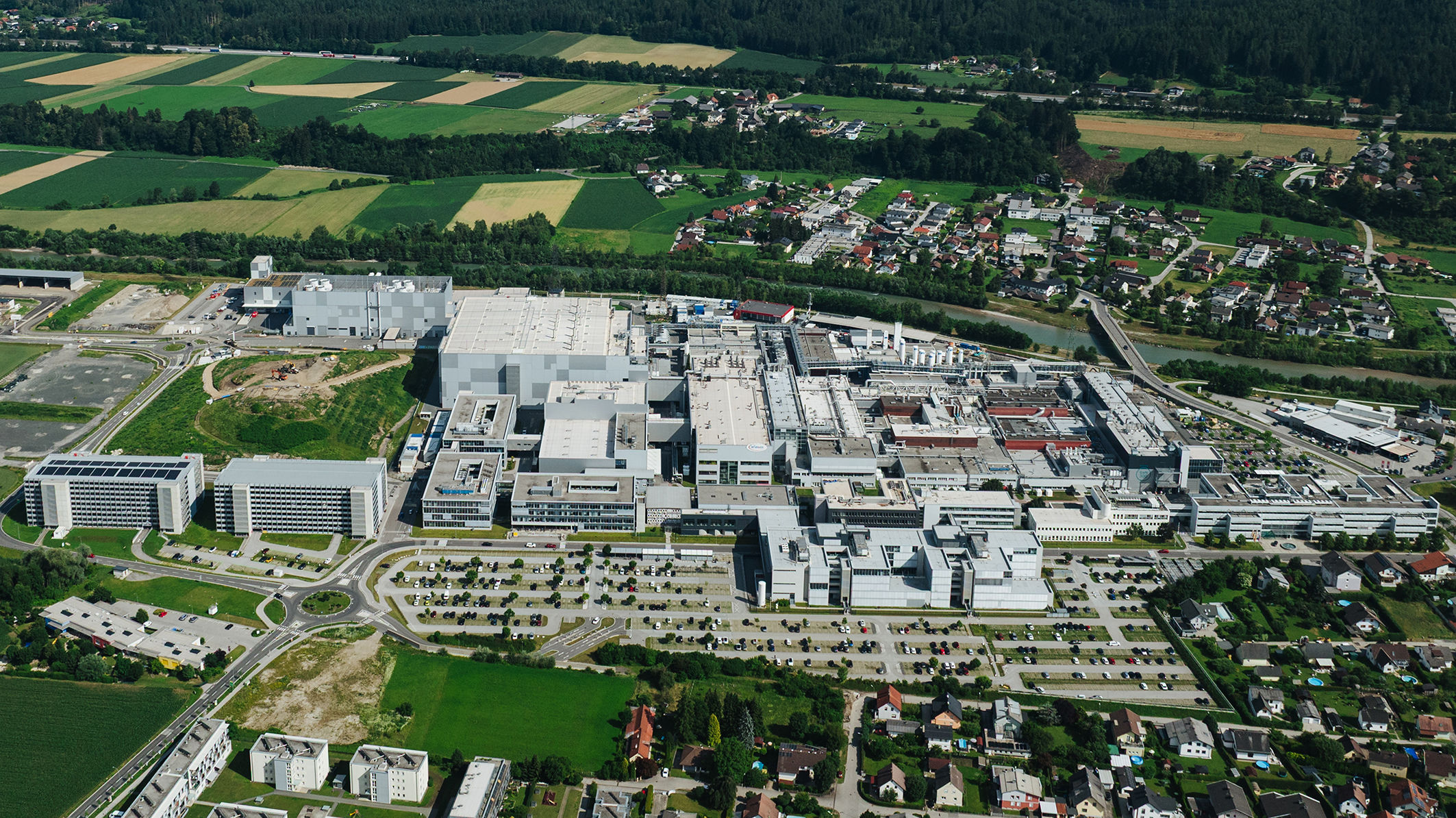
Intel’s Wednesday update put a date against another part of that response. Construction and tool installation are under way at Fab 62 in Arizona, with operations expected to begin by the end of 2028. Its Ohio project has also reached the installation of the first major structural truss. Intel Foundry update.
Axcelis, meanwhile, announced a $35m expansion in Pyeongtaek, adding approximately 200,000 square feet for manufacturing ion implantation equipment. Production there is scheduled to begin in the second half of 2028. Axcelis announcement.
These projects address different parts of the manufacturing chain. Intel is preparing a fab for operation; Axcelis is expanding its ability to build equipment used in semiconductor production. Both involve substantial work before the investment can affect the availability of finished devices.
The process mix matters as much as the headline capacity. A fab is not a generic pool of semiconductor output. Its usefulness depends on the technologies installed, the products qualified, the materials and equipment available, the yields achieved and the customers whose designs can run through it. The same is true of a fibre plant, a power conversion line or a facility making semiconductor equipment. New square footage does not automatically translate into the particular component another customer needs.
That interval helps explain why customers are making commitments now. A production forecast can change within a quarter, while the capacity intended to serve it must pass through construction, installation and production readiness. The mismatch gives early customers unusual influence: their commitments can help suppliers justify expansion, but they can also shape the output of that expansion before anyone else has had a chance to place an order.
Whether the resulting facilities improve availability elsewhere will depend on their technologies, output and existing commitments. A building opening in 2028 is welcome news, but it is a poor substitute for knowing which devices it will supply and who has already claimed them.
The proposed two-week deployment figure makes the distinction especially clear. The final deployment may be fast, but the factory lead times remain long. A customer that wants to move from site readiness to operational AI infrastructure in weeks cannot wait until the site is ready to begin ordering the equipment. It has to secure the process mix, the manufacturing slot and the delivery schedule much earlier.
The boom will not extend a discontinued sensor’s life
The other side of that timetable is visible in Sensirion’s SDP5xx discontinuation notice. Four affected pressure sensors reach their published final delivery and production stop date on Monday, 26 October, following a last time buy deadline in July.
Sensirion identifies corresponding SDP6xx devices as drop-in replacements. Its suggested route for longer-term supply security, the SDP800 series, is mechanically equivalent but uses a different I²C command set, bringing firmware into the migration decision. Sensirion discontinuation notice.
There is no evidence here of a withdrawal caused by AI, and the notice itself dates from January. Its relevance this week is the approaching deadline and the work still required to maintain a product beyond it. Investment in another process or factory cannot settle that particular interface change.
This is where your poll responses provide a useful counterweight to the investment announcements. Concern about selected components can coexist with strong growth elsewhere. A manufacturer expanding to serve a committed customer and a team qualifying the replacement for a retiring sensor may be operating in the same industry while facing entirely different supply conditions.
One company may be negotiating for millions of dollars of future capacity. Another may be trying to secure a final batch of a sensor that fits an existing design. Both are supply chain problems; they simply arrive with different headlines.
The uncomfortable possibility is that both experiences continue. AI investment can support substantial new manufacturing while its largest customers reserve much of what they expect to need. Everyone else’s position will be determined by the capacity left available in the right technology, on workable terms and within a useful delivery window.
Until those details are clear, another impressive investment total offers limited reassurance.
Something you might have missed: active cooling small enough for glasses
Away from the largest installations, xMEMS says its XMC-2400 and XMC-4800 cooling chips entered mass production this week, with the first commercial products using XMC-2400 expected in early 2027.
The devices use MEMS structures to move air in spaces too small for a conventional fan. Their intended applications include compact consumer devices and local cooling duties in enterprise SSDs, where the available volume and the location of the heat source constrain what can be fitted.
It is a useful reminder that the hardware story is not only about gigawatt-scale campuses and thousands of GPUs. Some of the more interesting constraints are much smaller: a sealed enclosure, a hot component and nowhere obvious to put a fan.
Production availability moves the technology beyond a demonstration and into the more demanding business of integration. The next useful evidence will come from finished products, showing how the airflow path, enclosure and cooling device work together under sustained load. xMEMS announcement.