ETRI details two 650 V SiC MOSFETs for satellite power
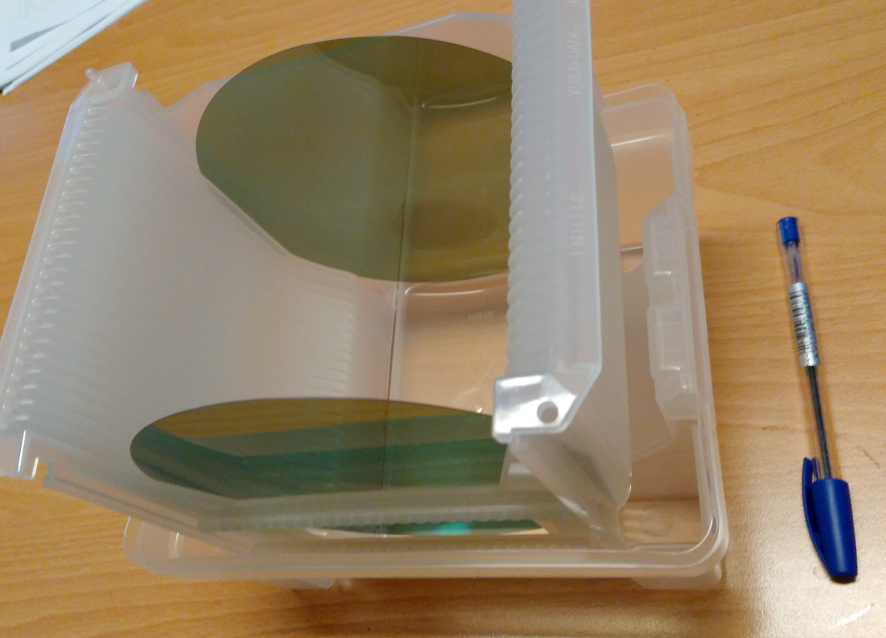
South Korea’s ETRI has developed two 650 V silicon carbide MOSFETs for satellite power systems, extending a programme that combines device design, radiation testing and hermetic packaging. The institute reports on-resistances of 27 mΩ and 15 mΩ for the devices, developed with Power Master Semiconductor and RF Materials for use in low Earth orbit.
The work targets conversion stages linking a satellite’s solar generation, batteries and electrical loads, where losses in the power devices become heat that the assembly must remove. Reducing on-resistance lowers the conduction component of those losses at a given current and temperature, while switching behaviour also contributes to the converter’s overall thermal load. ETRI has published the two resistance values without the associated gate bias, measurement temperature or switching loss curves.
Alongside electrical development, the team has characterised devices after gamma irradiation at around 300 krad and carried out proton and heavy ion testing. Gamma exposure examines accumulated dose effects, while the particle tests investigate the response to individual strikes that can disturb operation or cause failure. ETRI has not reported flight qualification or released detailed particle results and test bias conditions.
The package work addresses another part of that reliability problem: maintaining a sealed environment around the device and its connections. ETRI reports that the assemblies met fine and gross leak test requirements corresponding to MIL-STD-883 and MIL-STD-750, complementing the electrical and radiation evaluations with tests of hermetic integrity.
A June 2026 conference paper described the 27 mΩ device as a discrete 650 V component in a hermetic package, with electrical and radiation testing undertaken as part of its development. ETRI’s November announcement adds the 15 mΩ variant and a fuller account of the test programme, carried out through its Global TOP Strategic Research Group. Further reliability verification and technology development are planned, with production timing and commercial part numbers still to be announced.
Sources: ETRI research announcement, 17 November; ETRI conference paper on the 27 mΩ device.