Qnity targets thinner flex circuits for compact electronics
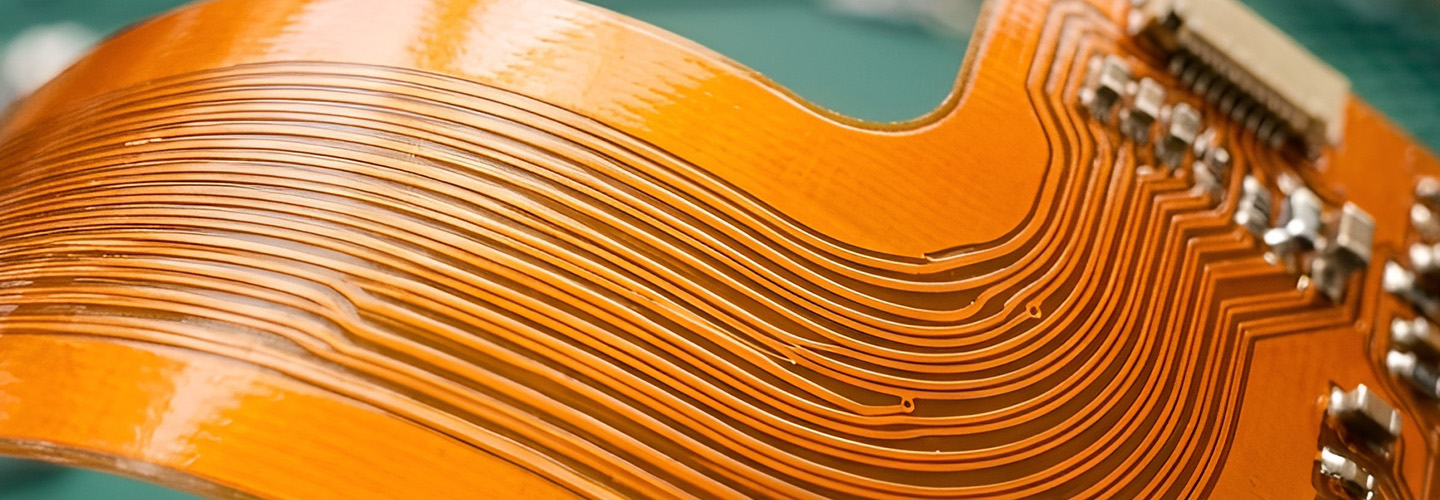
Qnity is showing ultrathin flex materials based on Kapton polyimide films and Pyralux laminates at TPCA in Taipei. The target applications include smartphones, smart glasses and other devices where the interconnect has to fit around the rest of the assembly.
Reducing the section can make a flex easier to route through a tight enclosure. Its behaviour in a bend also depends on where the copper lies relative to the neutral axis. In simple bending, the material farther from that axis experiences more strain; changing the dielectric thickness shifts the geometry of the complete section. Copper thickness, coverlay and bonding layers all remain in that calculation.
Qnity’s portfolio includes those layers as well as the laminate clad with copper. The company supplies different copper and dielectric constructions, including balanced and unbalanced versions of its established Pyralux AP material. AP uses an adhesiveless dielectric made entirely from polyimide between two copper faces. For the latest ultrathin developments, Qnity has yet to publish a grade, layer construction or bend life figure.
Qnity’s AP reference data lists dielectric constant of 3.4 at 1 MHz and 3.2 at 10 GHz, with loss tangent of 0.002 and 0.003 respectively. These published figures belong to the established AP series. The newer material programme is being presented at TPCA until 22 October.